Department of Urology, San Francisco Veterans Affairs Medical Center and University of California at San Francisco, San Francisco, California, USA.
Department of Oncology and Laboratory Medicine, Yamaguchi University Graduate School of Medicine, Yamaguchi, Japan.
Br J Cancer. 2014 Mar 18;110(6):1645-54. doi: 10.1038/bjc.2014.48. Epub 2014 Feb 6.
Recently several microRNAs (miRNAs) have been found to be regulated by genistein in cancer cells. In this study, we focused on the gene regulatory effect of genistein on microRNA and its target genes in prostate cancer (PC).
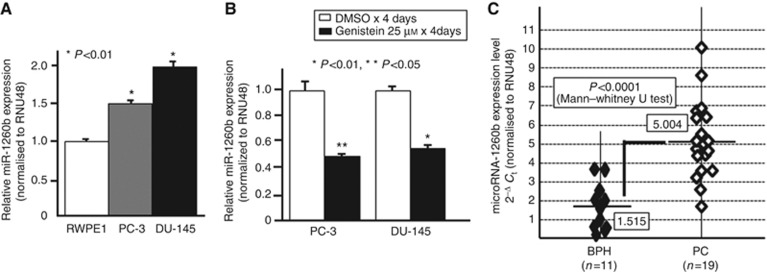
Initially, we investigated the effect of genistein on prostate cancer cells and identified that the expression of miRNA-1260b was decreased by genistein. We performed functional analyses and investigated the relationship between miRNA-1260b expression and prostate cancer patient outcomes. Two target genes (sFRP1 and Smad4) of miR-1260b were identified based on computer algorithm and 3'UTR luciferase assay was carried out to determine direct miRNA regulation of the genes.
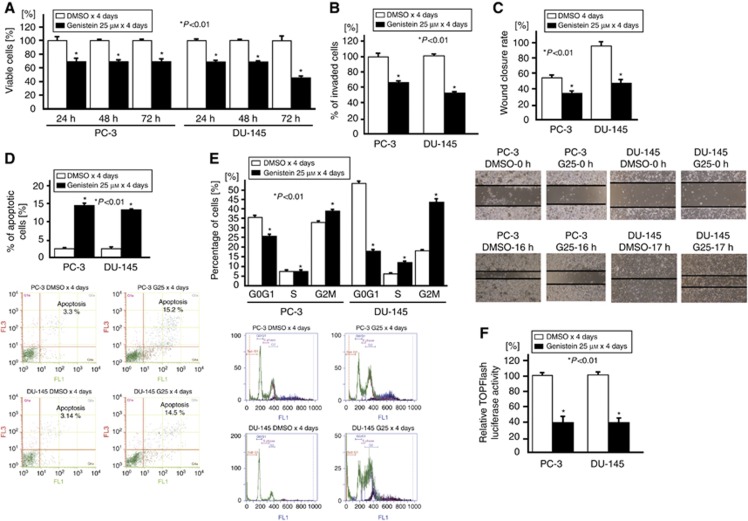
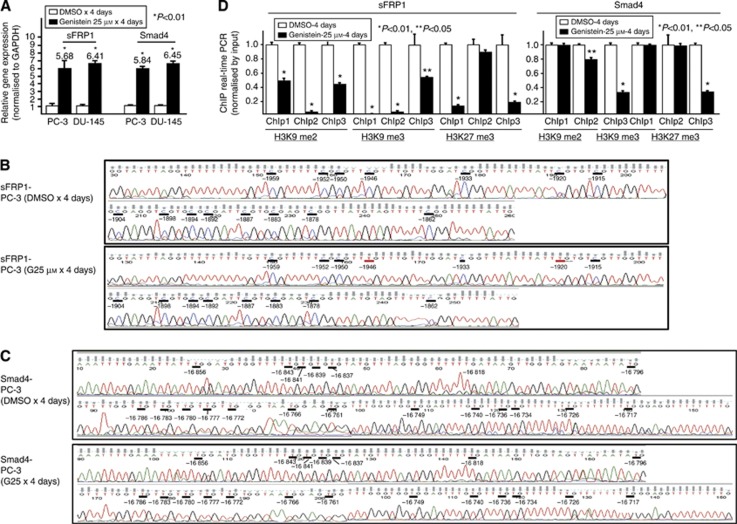
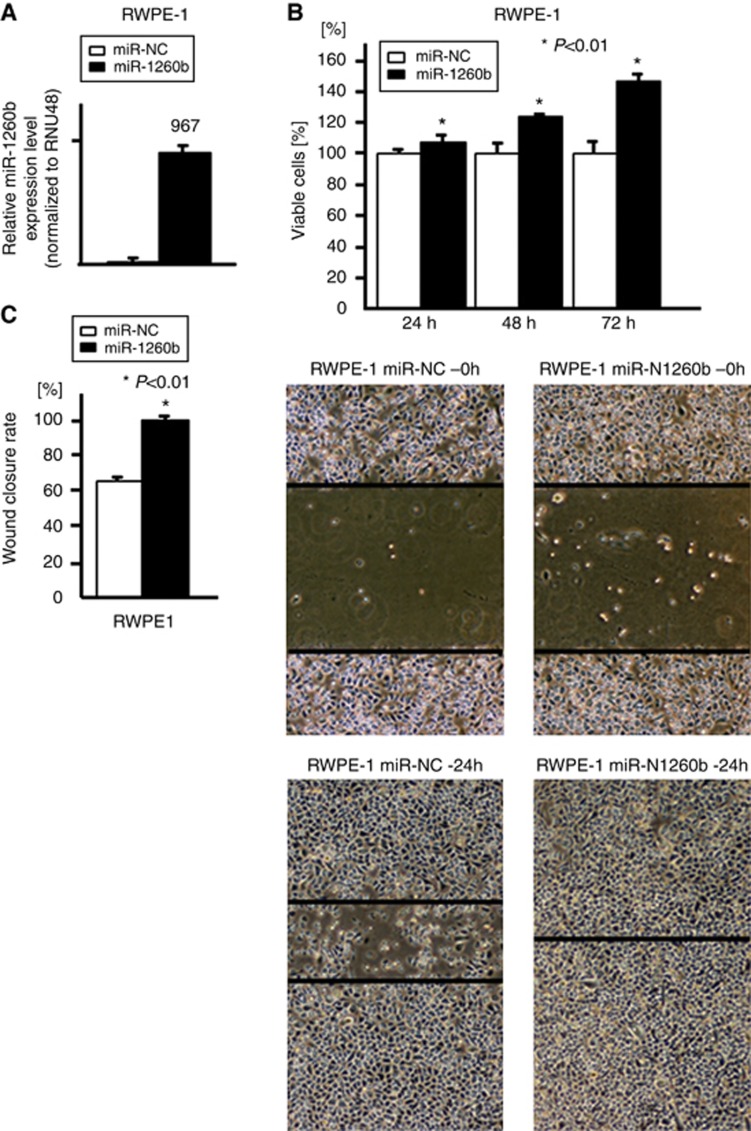
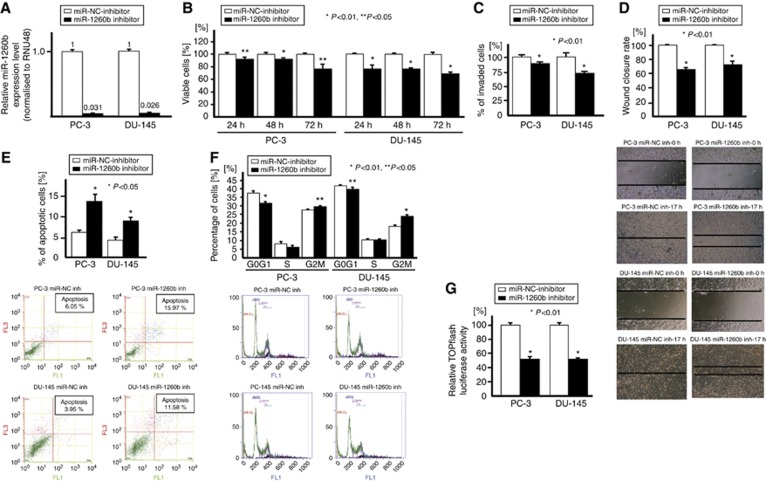
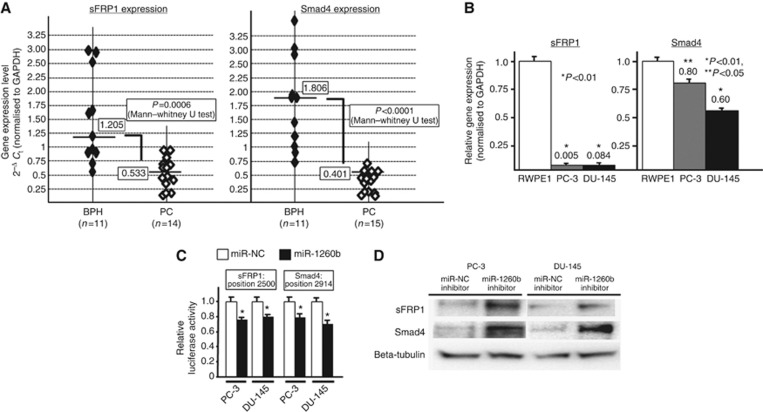
Genistein promoted apoptosis while inhibiting prostate cancer cell proliferation, invasion and TCF reporter activity in PC cells. MiR-1260b was highly expressed in prostate cancer tissues and significantly downregulated by genistein in PC cells. After knocking down miR-1260b, cell proliferation, invasion, migration and TCF reporter activity were decreased in PC cells. Western analysis and 3'UTR luciferase assay showed that the two target genes (sFRP1 and Smad4) were directly regulated by miR-1260b. The expression of sFRP1 and Smad4 was significantly decreased in prostate cancer tissues. Genistein also increased expression of these two genes via DNA demethylation and histone modifications.
Our data suggest that genistein exerts its anti-tumour effect via downregulation of miR-1260b that targeted sRRP1 and Smad4 genes in prostate cancer cells. The expression of sFRP1 and Smad4 was also modulated by genistein via DNA methylation or histone modifications in PC cell lines.
最近发现几种 microRNAs(miRNAs)在癌细胞中受染料木黄酮调控。在这项研究中,我们专注于染料木黄酮对前列腺癌(PC)中 microRNA 及其靶基因的基因调控作用。
我们最初研究了染料木黄酮对前列腺癌细胞的影响,发现 miRNA-1260b 的表达受染料木黄酮下调。我们进行了功能分析,并研究了 miRNA-1260b 表达与前列腺癌患者结局之间的关系。根据计算机算法鉴定出 miR-1260b 的两个靶基因(sFRP1 和 Smad4),并进行 3'UTR 荧光素酶测定以确定基因的直接 miRNA 调控。
在 PC 细胞中,染料木黄酮促进细胞凋亡,同时抑制前列腺癌细胞增殖、侵袭和 TCF 报告基因活性。miR-1260b 在前列腺癌组织中高表达,并在 PC 细胞中受染料木黄酮显著下调。敲低 miR-1260b 后,PC 细胞的增殖、侵袭、迁移和 TCF 报告基因活性降低。Western blot 分析和 3'UTR 荧光素酶测定表明,这两个靶基因(sFRP1 和 Smad4)受 miR-1260b 的直接调控。sFRP1 和 Smad4 的表达在前列腺癌组织中显著降低。染料木黄酮还通过 DNA 去甲基化和组蛋白修饰增加这两个基因的表达。
我们的数据表明,染料木黄酮通过下调 miR-1260b 发挥其抗肿瘤作用,miR-1260b 靶向前列腺癌细胞中的 sFRP1 和 Smad4 基因。在 PC 细胞系中,sFRP1 和 Smad4 的表达也受染料木黄酮通过 DNA 甲基化或组蛋白修饰调节。