Cambridge Centre for Health Services Research, University of Cambridge, Cambridge, United Kingdom.
Int J Cancer. 2014 Sep 1;135(5):1220-8. doi: 10.1002/ijc.28763. Epub 2014 Feb 25.
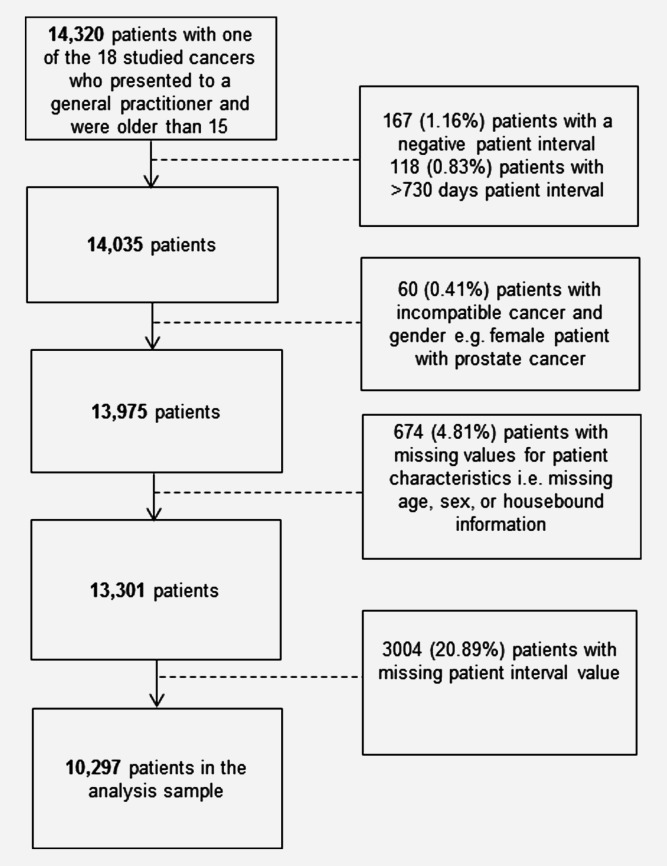
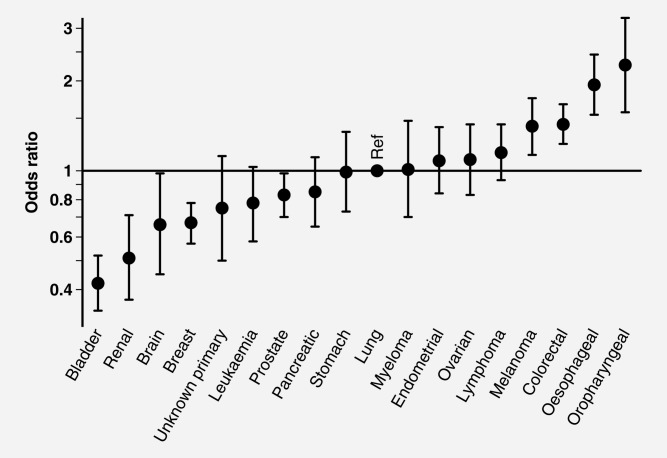
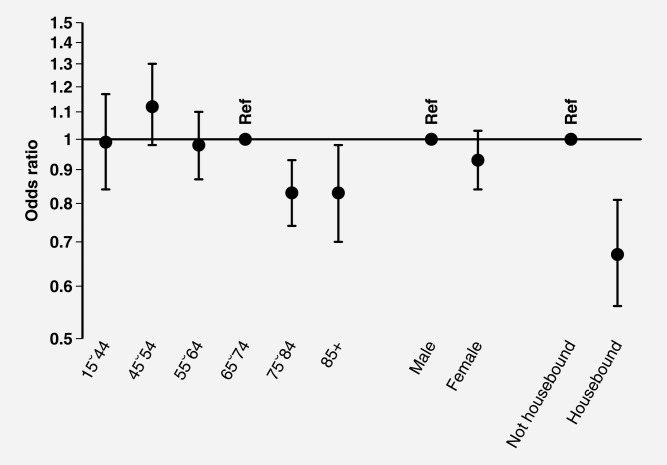
Cancer awareness public campaigns aim to shorten the interval between symptom onset and presentation to a doctor (the 'patient interval'). Appreciating variation in promptness of presentation can help to better target awareness campaigns. We explored variation in patient intervals recorded in consultations with general practitioners among 10,297 English patients subsequently diagnosed with one of 18 cancers (bladder, brain, breast, colorectal, endometrial, leukaemia, lung, lymphoma, melanoma, multiple myeloma, oesophageal, oro-pharyngeal, ovarian, pancreatic, prostate, renal, stomach, and unknown primary) using data from of the National Audit of Cancer Diagnosis in Primary Care (2009-2010). Proportions of patients with 'prompt'/'non-prompt' presentation (0-14 or 15+ days from symptom onset, respectively) were described and respective odds ratios were calculated by multivariable logistic regression. The overall median recorded patient interval was 10 days (IQR 0-38). Of all patients, 56% presented promptly. Prompt presentation was more frequent among older or housebound patients (p < 0.001). Prompt presentation was most frequent for bladder and renal cancer (74% and 70%, respectively); and least frequent for oro-pharyngeal and oesophageal cancer (34% and 39%, respectively, p <.001). Using lung cancer as reference, the adjusted odds ratios of non-prompt presentation were 2.26 (95% confidence interval 1.57-3.25) and 0.42 (0.34-0.52) for oro-pharyngeal and bladder cancer, respectively. Sensitivity analyses produced similar findings. Routinely recorded patient interval data reveal considerable variation in the promptness of presentation. These findings can help to prioritise public awareness initiatives and research focusing on symptoms of cancers associated with greater risk of non-prompt presentation, such as oro-pharyngeal and oesophageal cancer.
癌症意识宣传活动旨在缩短症状出现到就诊医生的时间(即“患者间隔”)。了解就诊及时性的差异有助于更好地确定宣传活动的目标人群。我们使用 2009-2010 年全国初级保健癌症诊断审计的数据,对 10297 名随后被诊断出患有 18 种癌症之一(膀胱癌、脑癌、乳腺癌、结直肠癌、子宫内膜癌、白血病、肺癌、淋巴瘤、黑色素瘤、多发性骨髓瘤、食道癌、口咽癌、卵巢癌、胰腺癌、前列腺癌、肾癌、胃癌和未知原发性癌)的英国患者的就诊记录中的患者间隔进行了探索。通过多变量逻辑回归描述了“及时”/“不及时”就诊的患者比例(分别为症状出现后 0-14 天或 15 天以上),并计算了各自的优势比。记录的患者间隔中位数为 10 天(IQR 0-38)。所有患者中,56%的患者就诊及时。年龄较大或行动不便的患者更有可能及时就诊(p<0.001)。膀胱癌和肾癌的就诊及时性最高(分别为 74%和 70%);口咽癌和食道癌的就诊及时性最低(分别为 34%和 39%,p<.001)。以肺癌为参照,口咽癌和膀胱癌就诊不及时的调整后优势比分别为 2.26(95%置信区间 1.57-3.25)和 0.42(0.34-0.52)。敏感性分析得出了类似的发现。常规记录的患者间隔数据显示就诊及时性存在较大差异。这些发现有助于确定优先开展公众意识倡议和研究的重点,关注与就诊不及时风险较高的癌症相关的症状,如口咽癌和食道癌。