Alam Mohammad Zubair, Aqil Farrukh, Ahmad Iqbal, Ahmad Shamim
Department of Agricultural Microbiology, Aligarh Muslim University, Aligarh, India.
Division of Microbiology, Institute of Ophthalmology, JN Medical College and Hospital, Aligarh Muslim University, Aligarh, India.
Braz J Microbiol. 2014 Jan 15;44(3):799-806. doi: 10.1590/s1517-83822013000300021. eCollection 2013.
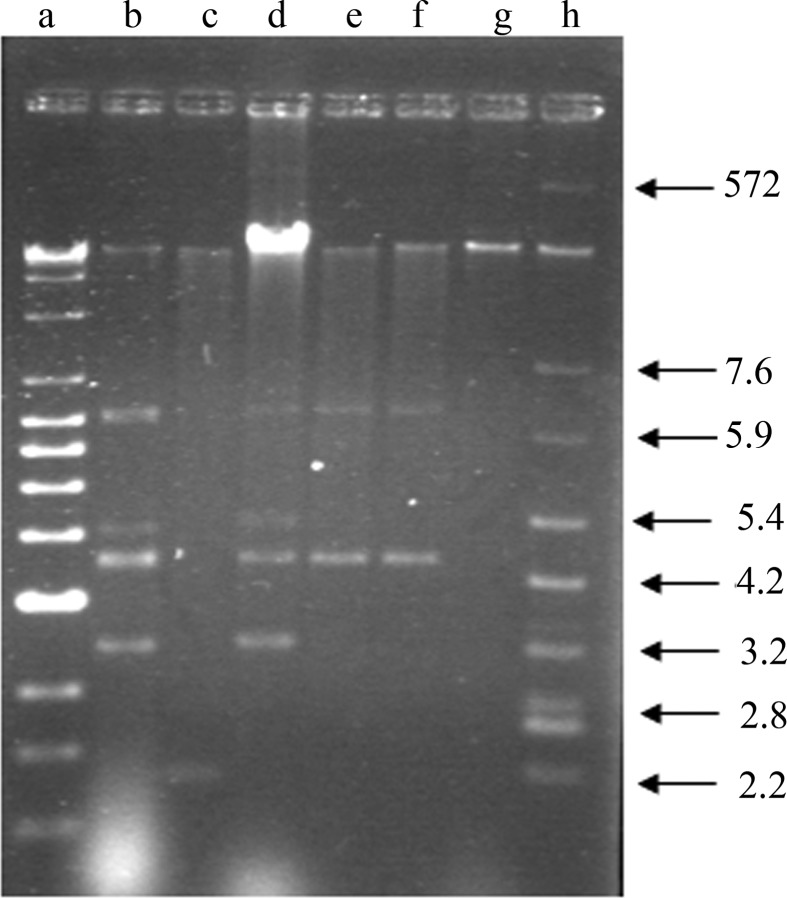
This study reports the occurrence of antibiotic resistance and production of β-lactamases including extended spectrum beta-lactamases (ESβL) in enteric bacteria isolated from hospital wastewater. Among sixty-nine isolates, tested for antibiotic sensitivity, 73.9% strains were resistant to ampicillin followed by nalidixic acid (72.5%), penicillin (63.8%), co-trimoxazole (55.1%), norfloxacin (53.6%), methicillin (52.7%), cefuroxime (39.1%), cefotaxime (23.2%) and cefixime (20.3%). Resistance to streptomycin, chloramphenicol, nitrofurantoin, tetracycline, and doxycycline was recorded in less than 13% of the strains. The minimum inhibitory concentration (MIC) showed a high level of resistance (800-1600 μg/mL) to one or more antibiotics. Sixty three (91%) isolates produced β-lactamases as determined by rapid iodometric test. Multiple antibiotic resistances were noted in both among ESβL and non-ESβL producers. The β-lactamases hydrolyzed multiple substrates including penicillin (78.8% isolates), ampicillin (62.3%), cefodroxil (52.2%), cefotoxime (21.7%) and cefuroxime (18.8%). Fifteen isolates producing ESβLs were found multidrug resistant. Four ESβL producing isolates could transfer their R-plasmid to the recipient strain E. coli K-12 with conjugation frequency ranging from 7.0 × 10(-3) to 8.8 × 10(-4). The findings indicated that ESβL producing enteric bacteria are common in the waste water. Such isolates may disseminate the multiple antibiotic resistance traits among bacterial community through genetic exchange mechanisms and thus requires immediate attention.
本研究报告了从医院废水中分离出的肠道细菌中抗生素耐药性的发生情况以及β-内酰胺酶(包括超广谱β-内酰胺酶[ESβL])的产生情况。在接受抗生素敏感性测试的69株分离菌中,73.9%的菌株对氨苄西林耐药,其次是萘啶酸(72.5%)、青霉素(63.8%)、复方新诺明(55.1%)、诺氟沙星(53.6%)、甲氧西林(52.7%)、头孢呋辛(39.1%)、头孢噻肟(23.2%)和头孢克肟(20.3%)。对链霉素、氯霉素、呋喃妥因、四环素和强力霉素的耐药率在不到13%的菌株中被记录到。最低抑菌浓度(MIC)显示对一种或多种抗生素具有高水平耐药性(800 - 1600μg/mL)。通过快速碘量法检测,63株(91%)分离菌产生β-内酰胺酶。在ESβL产生菌和非ESβL产生菌中均发现了多重抗生素耐药性。β-内酰胺酶水解多种底物,包括青霉素(78.8%的分离菌)、氨苄西林(62.3%)、头孢羟氨苄(52.2%)、头孢噻肟(21.7%)和头孢呋辛(18.8%)。发现15株产生ESβL的分离菌具有多重耐药性。4株产生ESβL的分离菌能够通过接合将其R质粒转移至受体菌株大肠杆菌K - 12,接合频率范围为7.0×10⁻³至8.8×10⁻⁴。研究结果表明,产生ESβL的肠道细菌在废水中很常见。此类分离菌可能通过基因交换机制在细菌群落中传播多重抗生素耐药性状,因此需要立即予以关注。