Hsieh Ying-Hen, Tsai Chen-An, Lin Chien-Yu, Chen Jin-Hua, King Chwan-Chuen, Chao Day-Yu, Cheng Kuang-Fu
Department of Public Health, China Medical University, Taichung 40402, Taiwan.
BMC Infect Dis. 2014 Feb 12;14:80. doi: 10.1186/1471-2334-14-80.
Studies indicate that asymptomatic infections do indeed occur frequently for both seasonal and pandemic influenza, accounting for about one-third of influenza infections. Studies carried out during the 2009 pH1N1 pandemic have found significant antibody response against seasonal H1N1 and H3N2 vaccine strains in schoolchildren receiving only pandemic H1N1 monovalent vaccine, yet reported either no symptoms or only mild symptoms.
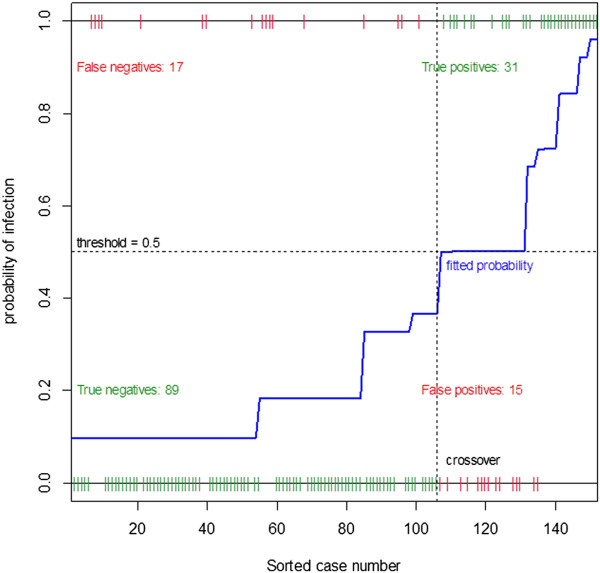
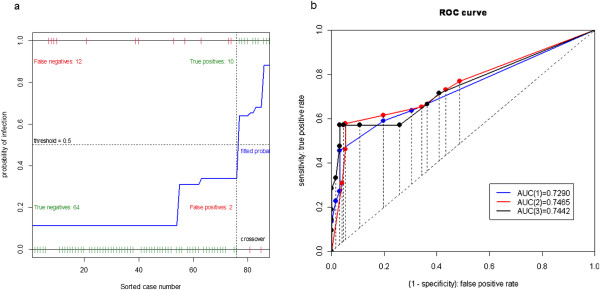
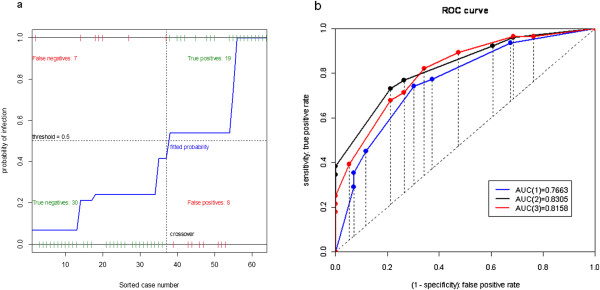
Serum samples of 255 schoolchildren, who had not received vaccination and had pre-season HI Ab serotiters <40, were collected from urban, rural areas and an isolated island in Taiwan during the 2005-2006 influenza season. Their hemagglutination inhibition antibody (HI Ab) serotiters against the 2005 A/New Caledonia/20/99 (H1N1) vaccine strain at pre-season and post-season were measured to determine the symptoms with the highest correlation with infection, as defined by 4-fold rise in HI titer. We estimate the asymptomatic ratio, or the proportion of asymptomatic infections, for schoolchildren during the 2005-6 influenza season when this vaccine strain was found to be antigenically related to the circulating H1N1 strain.
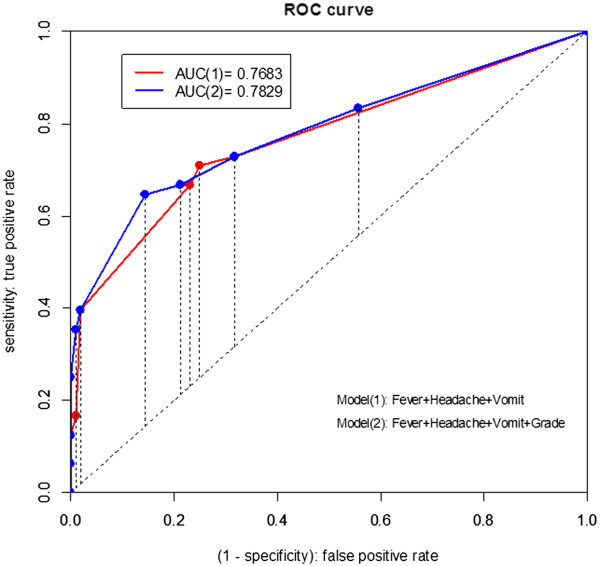
Fever has the highest correlation with the 2005-06 seasonal influenza A(H1N1) infection, followed by headache, cough, vomiting, and sore throat. Asymptomatic ratio for the schoolchildren is found to range between 55.6% (95% CI: 44.7-66.4)-77.9% (68.8-87.0) using different sets of predictive symptoms. Moreover, the asymptomatic ratio was 66.9% (56.6-77.2) when using US-CDC criterion of fever + (cough/sore throat), and 73.0 (63.3-82.8) when under Taiwan CDC definition of Fever + (cough or sore throat or nose) + ( headache or pain or fatigue).
Asymptomatic ratio for children is found to be substantially higher than that of the general population in literature. In providing reasonable quantification of the asymptomatic infected children spreading pathogens to others in a seasonal epidemic or a pandemic, our estimates of symptomatic ratio of infected children has important clinical and public health implications.
研究表明,季节性流感和大流行性流感确实都经常出现无症状感染,约占流感感染病例的三分之一。在2009年甲型H1N1流感大流行期间开展的研究发现,仅接种甲型H1N1流感单价疫苗的学童对季节性H1N1和H3N2疫苗株有显著的抗体反应,但报告无症状或仅有轻微症状。
在2005 - 2006年流感季节,从台湾的城市、农村地区和一个离岛收集了255名未接种疫苗且季前血凝抑制抗体(HI Ab)滴度<40的学童的血清样本。测量他们在季前和季后针对2005年A/新喀里多尼亚/20/99(H1N1)疫苗株的血凝抑制抗体(HI Ab)滴度,以确定与感染相关性最高的症状,感染定义为HI滴度升高4倍。我们估计了2005 - 2006年流感季节学童的无症状感染率,即无症状感染的比例,当时发现该疫苗株与流行的H1N1毒株存在抗原相关性。
发热与2005 - 2006年季节性甲型H1N1流感感染的相关性最高,其次是头痛、咳嗽、呕吐和喉咙痛。使用不同组别的预测症状,学童的无症状感染率在55.6%(95%可信区间:44.7 - 66.4)至77.9%(68.8 - 87.0)之间。此外,按照美国疾病控制与预防中心(US - CDC)发热 +(咳嗽/喉咙痛)的标准,无症状感染率为66.9%(56.6 - 77.2);按照台湾疾病控制中心发热 +(咳嗽或喉咙痛或流鼻涕)+(头痛或疼痛或疲劳)的定义,无症状感染率为73.0(63.3 - 82.8)。
发现儿童的无症状感染率显著高于文献中一般人群的无症状感染率。在合理量化无症状感染儿童在季节性流行或大流行中将病原体传播给他人方面,我们对感染儿童有症状感染率的估计具有重要的临床和公共卫生意义。