Varani J, Nickoloff B J, Riser B L, Mitra R S, O'Rourke K, Dixit V M
Department of Pathology, University of Michigan Medical School, Ann Arbor 48109.
J Clin Invest. 1988 May;81(5):1537-44. doi: 10.1172/JCI113486.
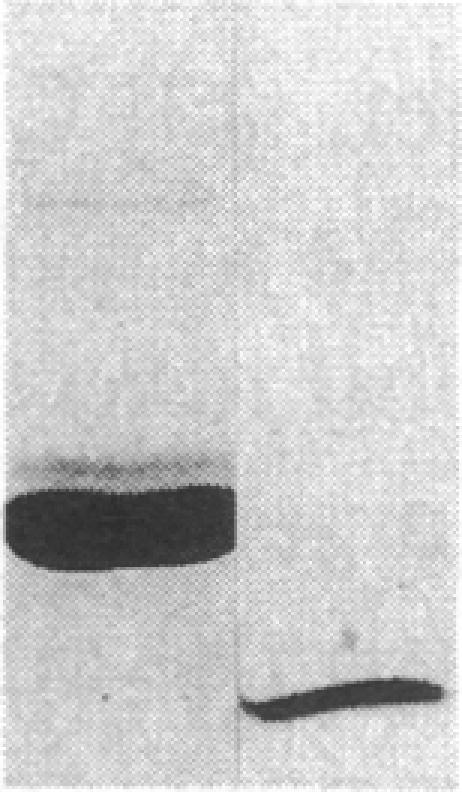
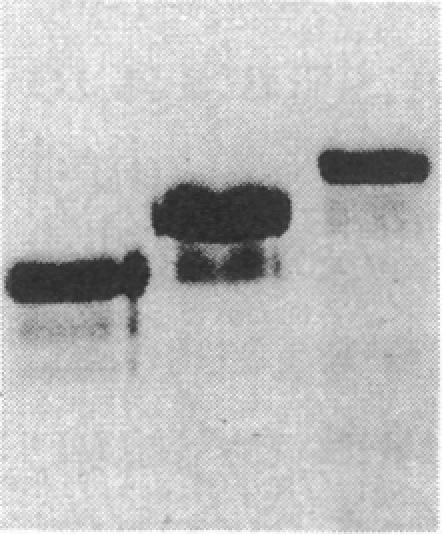
Human epidermal keratinocytes obtained from normal skin attached and spread on thrombospondin (TSP)-coated plastic dishes but failed to attach and spread on untreated plastic culture dishes or dishes coated with fibronectin or laminin. These cells produced minimal amounts of immunoreactive TSP. Keratinocytes established in culture on MCDB 153 medium and maintained for one to three passages in an undifferentiated state by continued cultivation in this low Ca2+-containing medium attached and spread on plastic dishes as well as on TSP-coated dishes. These cells also secreted significant amounts of TSP into the culture medium. When the keratinocytes were incubated for one day in MCDB 153 medium supplemented with high Ca2+ or in MEM (which also contains high Ca2+), there was decreased secretion of TSP into the culture medium concomitant with a reduction in attachment and spreading on plastic culture dishes. Proteolytic fragments of TSP were examined for stimulation of keratinocyte attachment and spreading. A 140-kd fragment produced by removal of the 25-kd heparin-binding domain had similar activity to the intact molecule while the 25-kd fragment was without effect. Further proteolytic treatment of the 140-kd fragment gave rise to a fragment consisting of 120 kd and 18-D moieties held together in disulphide linkage. This fragment did not support attachment or spreading. This study reveals that normal epidermal keratinocytes grown under conditions that maintain the undifferentiated state are able to produce TSP and utilize it as an attachment factor. When keratinocytes are grown under conditions that promote differentiation, ability to produce and utilize TSP is diminished. Since TSP is present at the dermal-epidermal junction and because TSP promotes keratinocyte attachment and spreading, this molecule may play an important role in maintaining normal growth of the basal cell layer and may also participate in reepithelialization during wound repair.
从正常皮肤获取的人表皮角质形成细胞能附着并铺展在包被有血小板反应蛋白(TSP)的塑料培养皿上,但无法附着和铺展在未处理的塑料培养皿或包被有纤连蛋白或层粘连蛋白的培养皿上。这些细胞产生的免疫反应性TSP量极少。在MCDB 153培养基中培养并通过在这种低钙培养基中持续培养维持一至三代未分化状态的角质形成细胞,能附着并铺展在塑料培养皿以及包被有TSP的培养皿上。这些细胞还向培养基中分泌大量TSP。当角质形成细胞在添加了高钙的MCDB 153培养基或MEM(其中也含有高钙)中孵育一天时,培养基中TSP的分泌减少,同时在塑料培养皿上的附着和铺展也减少。检测了TSP的蛋白水解片段对角质形成细胞附着和铺展的刺激作用。去除25-kd肝素结合结构域产生的140-kd片段与完整分子具有相似的活性,而25-kd片段则无作用。对140-kd片段进一步进行蛋白水解处理产生了一个由120 kd和18-D部分通过二硫键连接在一起的片段。该片段不支持附着或铺展。本研究表明,在维持未分化状态的条件下生长的正常表皮角质形成细胞能够产生TSP并将其用作附着因子。当角质形成细胞在促进分化的条件下生长时,产生和利用TSP的能力会减弱。由于TSP存在于真皮-表皮交界处,且TSP促进角质形成细胞的附着和铺展,该分子可能在维持基底层正常生长中起重要作用,也可能参与伤口修复过程中的再上皮化。