Hsu Pei-Chun, Chiou Bin-Hao, Huang Chun-Ming
Department of Biomedical Electronics and Bioinformatics, National Taiwan University, Taipei, Taiwan.
Department of Systems Biology and Bioinformatics, National Central University, Jhongli, Taiwan.
PeerJ. 2018 Jan 5;6:e4138. doi: 10.7717/peerj.4138. eCollection 2018.
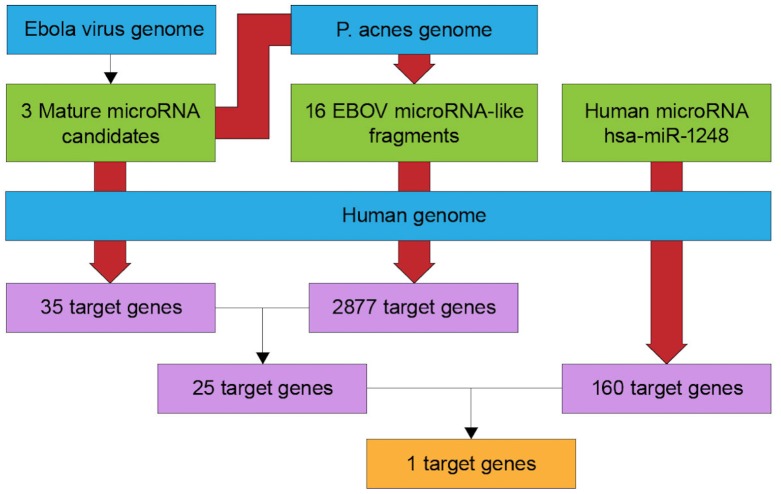
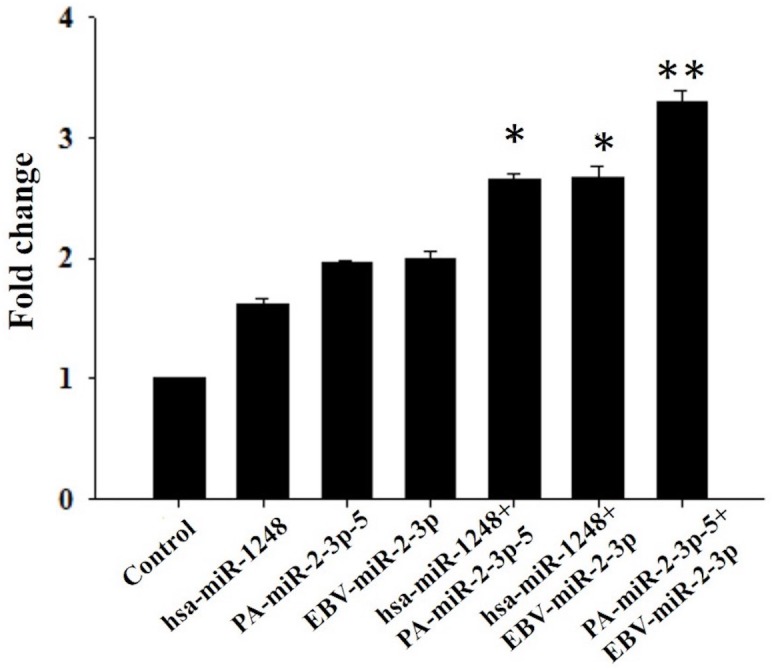
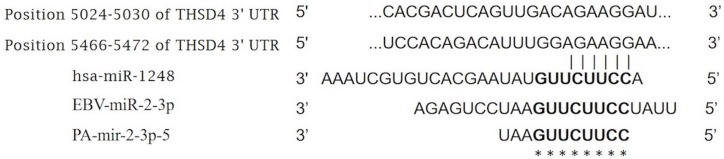
Ebola virus, a negative-sense single-stranded RNA virus, causes severe viral hemorrhagic fever and has a high mortality rate. Histopathological and immunopathological analyses of Ebola virus have revealed that histopathological changes in skin tissue are associated with various degrees of endothelial cell swelling and necrosis. The interactions of microbes within or on a host are a crucial for the skin immune shield. The discovery of microRNAs (miRNAs) in Ebola virus implies that immune escape, endothelial cell rupture, and tissue dissolution during Ebola virus infection are a result of the effects of Ebola virus miRNAs. Keratinocytes obtained from normal skin can attach and spread through expression of the thrombospondin family of proteins, playing a role in initiation of cell-mediated immune responses in the skin. Several miRNAs have been shown to bind the 3' untranslated region of thrombospondin mRNA, thereby controlling its stability and translational activity. In this study, we discovered short RNA sequences that may act as miRNAs from using a practical workflow of bioinformatics methods. Subsequently, we deciphered the common target gene. These RNA sequences tended to bind to the same thrombospondin protein, THSD4, emphasizing the potential importance of the synergistic binding of miRNAs from Ebola virus, , and humans to the target. These results provide important insights into the molecular mechanisms of thrombospondin proteins and miRNAs in Ebola virus infection.
埃博拉病毒是一种负链单链RNA病毒,可导致严重的病毒性出血热,死亡率很高。对埃博拉病毒的组织病理学和免疫病理学分析表明,皮肤组织的组织病理学变化与不同程度的内皮细胞肿胀和坏死有关。宿主内部或表面微生物的相互作用对皮肤免疫屏障至关重要。在埃博拉病毒中发现微小RNA(miRNA)意味着埃博拉病毒感染期间的免疫逃逸、内皮细胞破裂和组织溶解是埃博拉病毒miRNA作用的结果。从正常皮肤获取的角质形成细胞可通过血小板反应蛋白家族蛋白的表达进行附着和扩散,在皮肤细胞介导的免疫反应启动中发挥作用。已证实几种miRNA可与血小板反应蛋白mRNA的3'非翻译区结合,从而控制其稳定性和翻译活性。在本研究中,我们使用生物信息学方法的实际工作流程,从[具体来源]中发现了可能作为miRNA的短RNA序列。随后,我们破译了共同的靶基因。这些RNA序列倾向于与同一种血小板反应蛋白THSD4结合,强调了来自埃博拉病毒、[具体来源]和人类的miRNA协同结合到靶标的潜在重要性。这些结果为血小板反应蛋白和miRNA在埃博拉病毒感染中的分子机制提供了重要见解。