Bruckbauer Antje, Zemel Michael B
Research and Development, NuSirt Sciences Incorporated, Knoxville, Tennessee, United States of America.
PLoS One. 2014 Feb 14;9(2):e89166. doi: 10.1371/journal.pone.0089166. eCollection 2014.
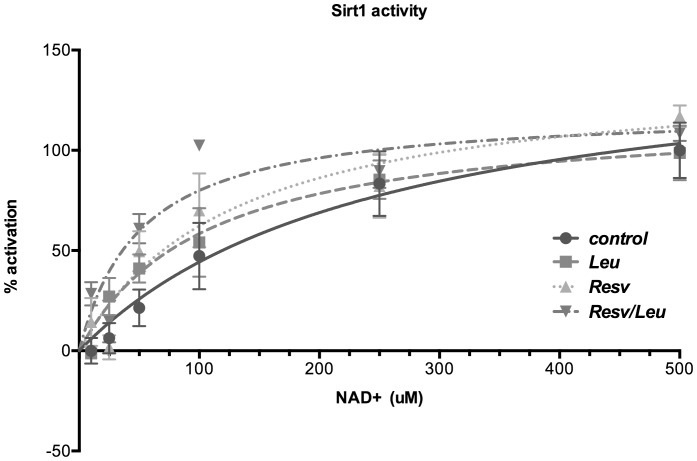
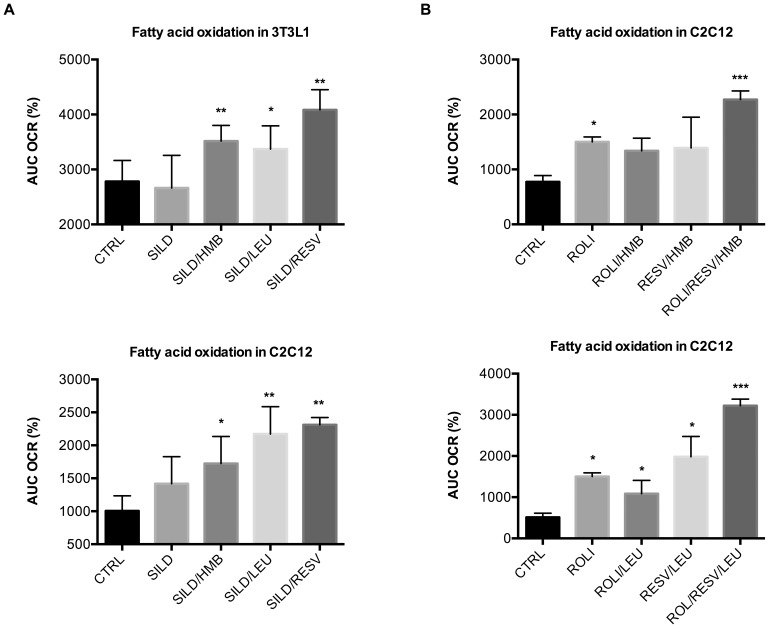
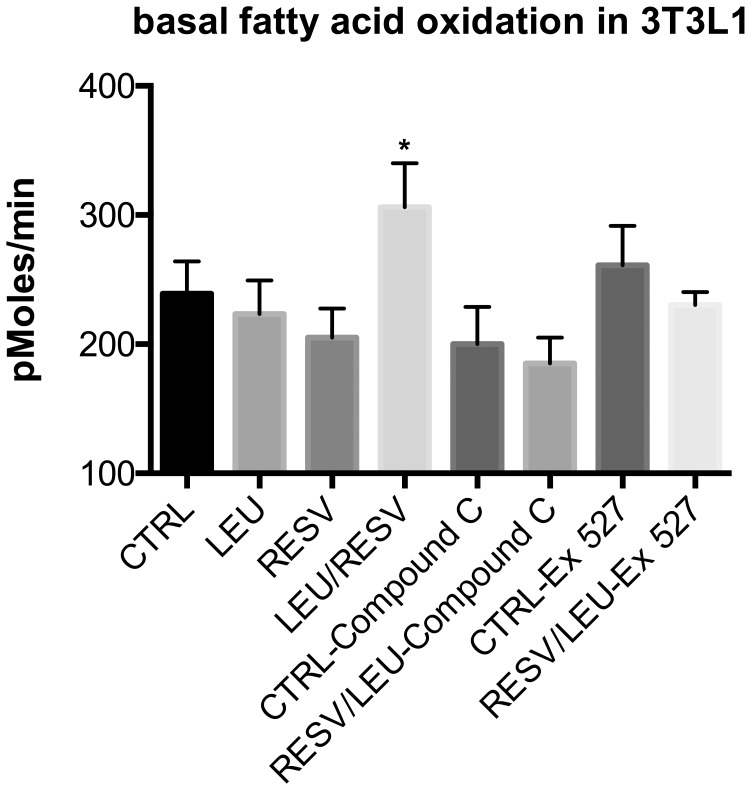
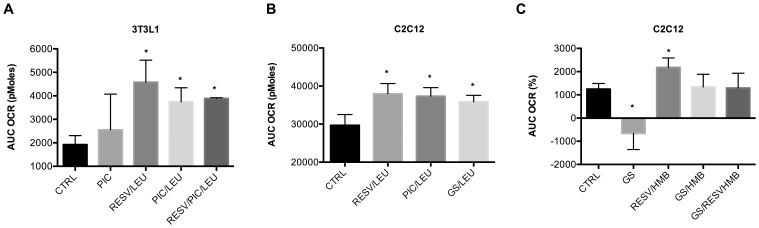
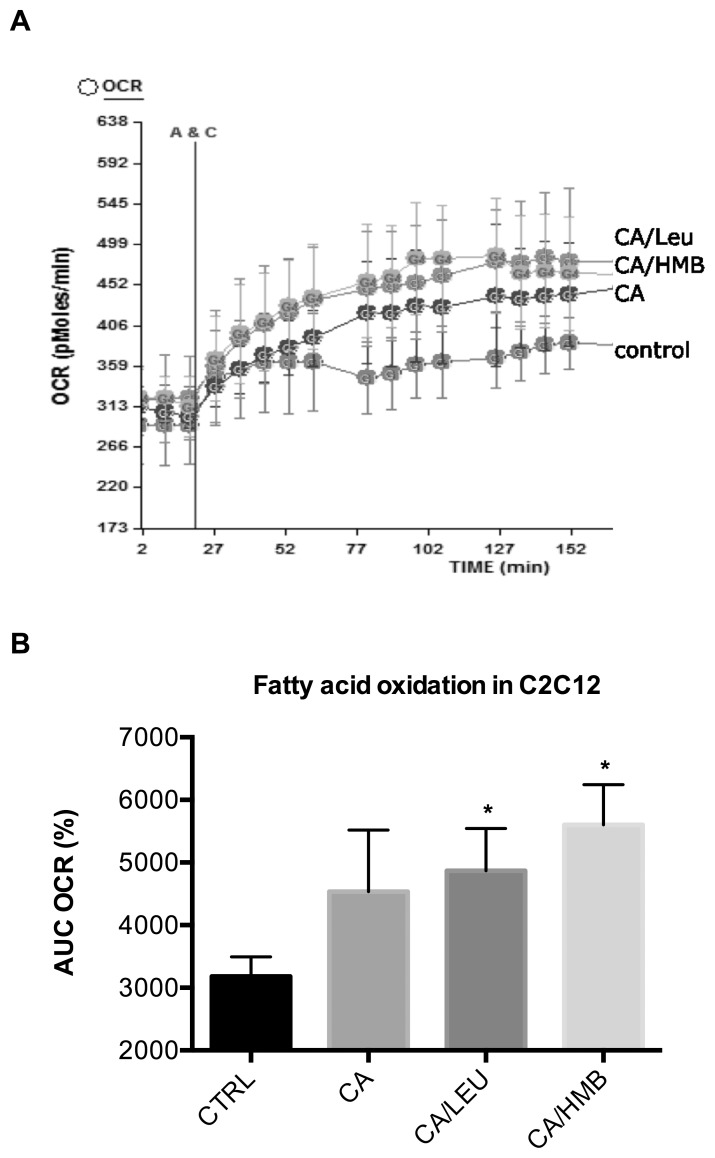
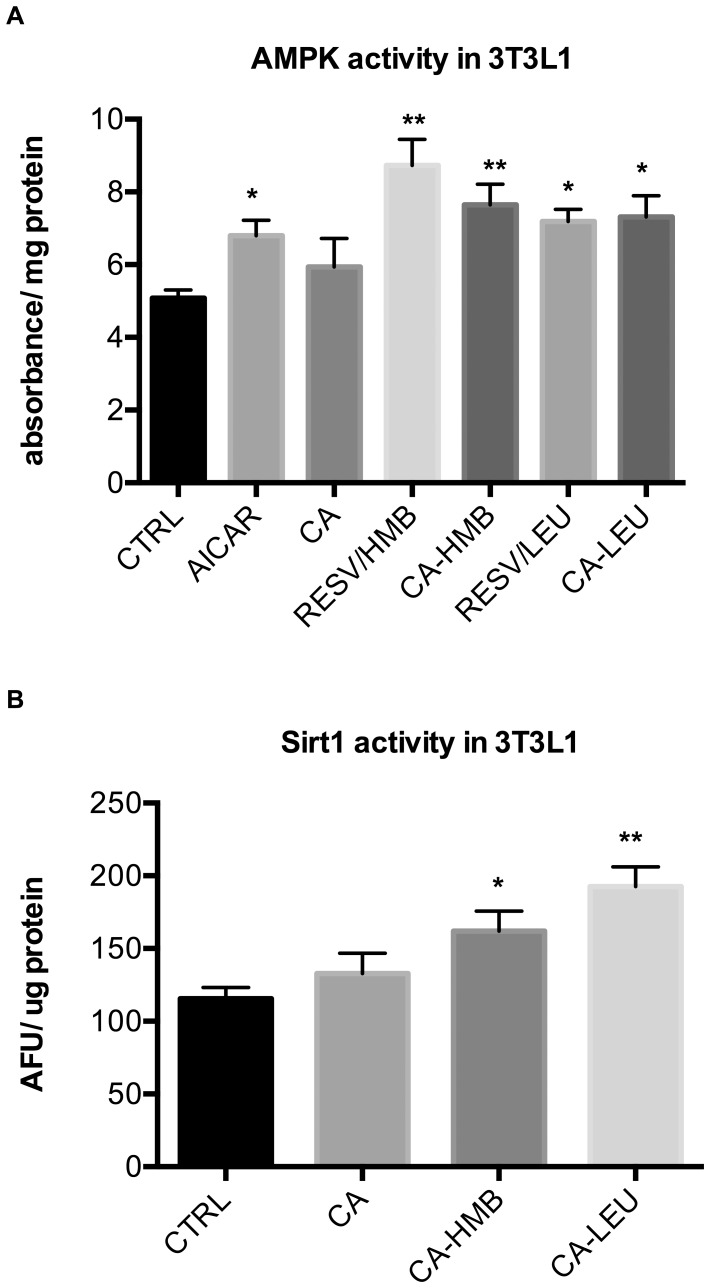
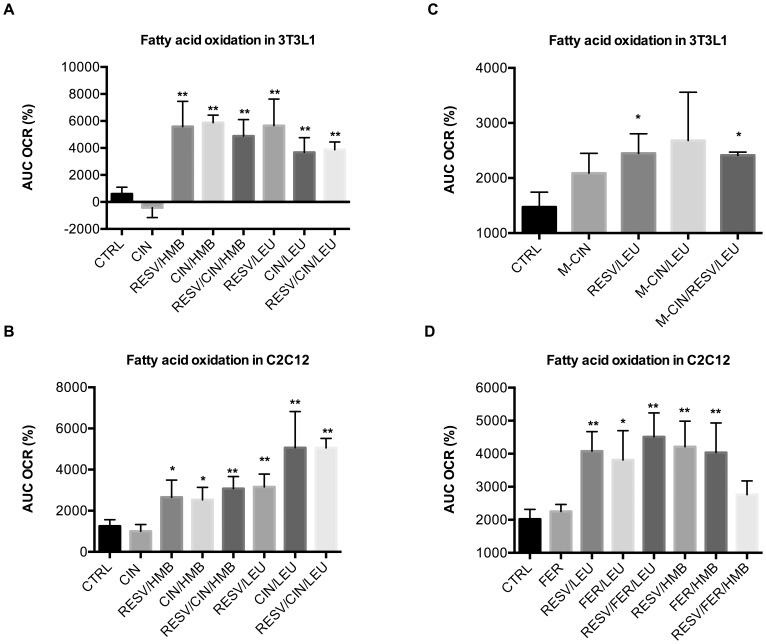
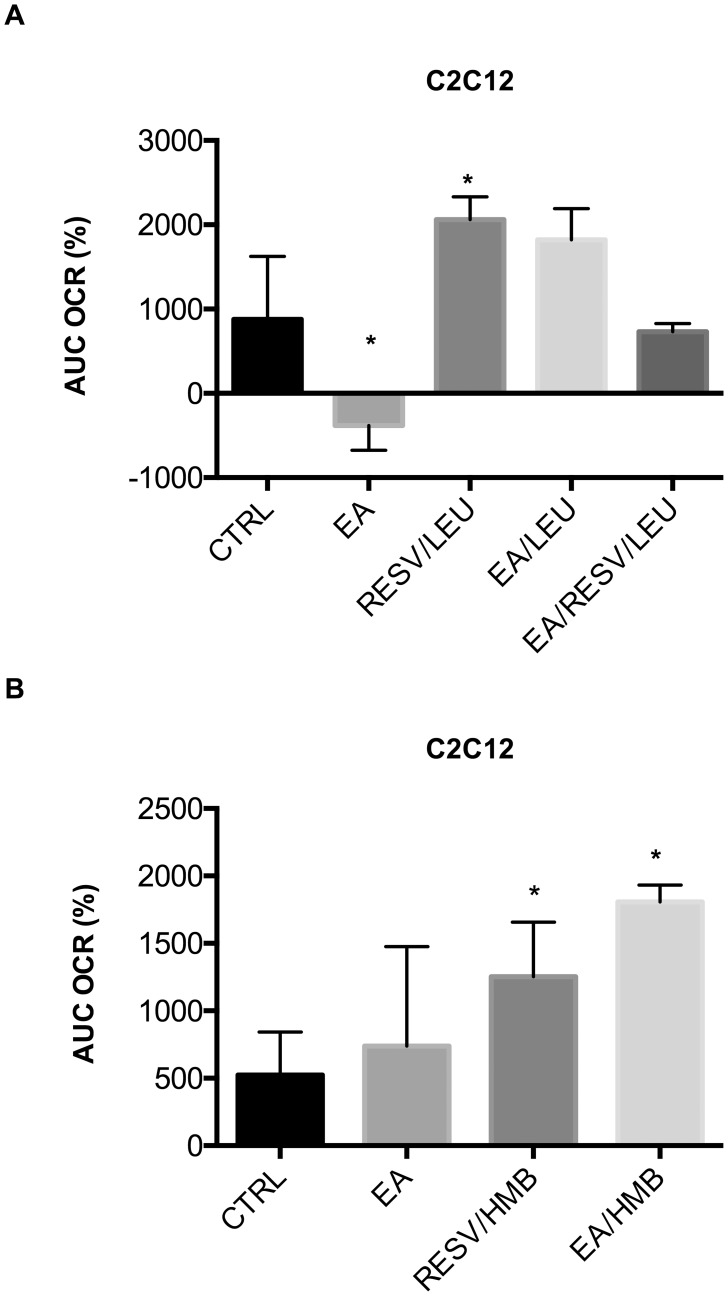
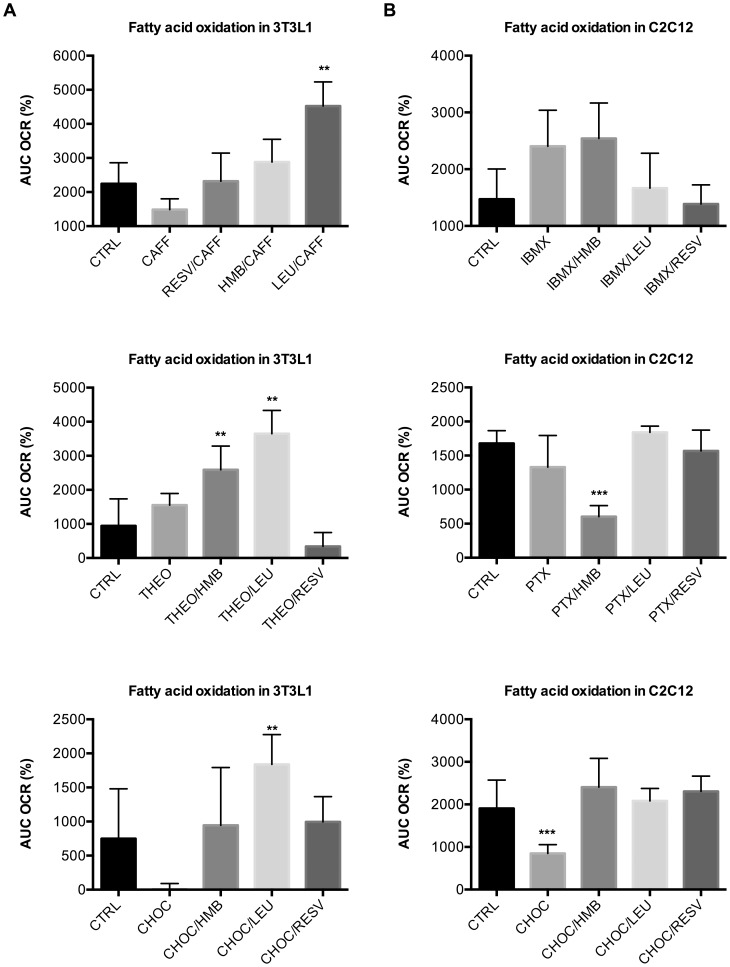
The AMPK-Sirt1 pathway is an important regulator of energy metabolism and therefore a potential target for prevention and therapy of metabolic diseases. We recently demonstrated leucine and its metabolite β-hydroxy-β-methylbutyrate (HMB) to synergize with low-dose resveratrol (200 nM) to activate sirtuin signaling and stimulate energy metabolism. Here we show that leucine exerts a direct effect on Sirt1 kinetics, reducing its Km for NAD(+) by >50% and enabling low doses of resveratrol to further activate the enzyme (p = 0.012). To test which structure elements of resveratrol are necessary for synergy, we assessed potential synergy of structurally similar and dissimilar polyphenols as well as other compounds converging on the same pathways with leucine using fatty acid oxidation (FAO) as screening tool. Dose-response curves for FAO were constructed and the highest non-effective dose (typically 1-10 nM) was used with either leucine (0.5 mM) or HMB (5 µM) to treat adipocytes and myotubes for 24 h. Significant synergy was detected for stilbenes with FAO increase in adipocytes by 60-70% (p<0.05) and in myotubes >2000% (p<0.01). Sirt1 and AMPK activities were stimulated by ∼65% (p<0.001) and ∼50% (p<0.03), respectively. Similarly, hydroxycinnamic acids and derivatives (chlorogenic, cinnamic, and ferulic acids) combined with leucine/HMB increased FAO (300-1300%, p<0.01), AMPK activity (50-150%, p<0.01), and Sirt1 activity (∼70%, p<0.001). In contrast, more complex polyphenol structures, such as ellagic acid and epigallocatechin gallate required higher concentrations (>1 µM) and exhibited little or no synergy. Thus, the six-carbon ring structure bound to a carboxylic group seems to be a necessary element for leucine/HMB synergy with other stilbenes and hydroxycinnamic acids to stimulate AMPK/Sirt1 dependent FAO; these effects occur at concentrations that produce no independent effects and are readily achievable via oral administration.
AMPK-Sirt1信号通路是能量代谢的重要调节因子,因此是预防和治疗代谢性疾病的潜在靶点。我们最近证明,亮氨酸及其代谢产物β-羟基-β-甲基丁酸酯(HMB)可与低剂量白藜芦醇(200 nM)协同作用,激活沉默调节蛋白信号并刺激能量代谢。在此我们表明,亮氨酸对Sirt1动力学有直接影响,使其对NAD(+)的Km降低超过50%,并使低剂量白藜芦醇能够进一步激活该酶(p = 0.012)。为了测试白藜芦醇的哪些结构元素对协同作用是必需的,我们使用脂肪酸氧化(FAO)作为筛选工具,评估了结构相似和不同的多酚以及其他汇聚于相同信号通路的化合物与亮氨酸之间的潜在协同作用。构建了FAO的剂量反应曲线,并使用最高无效剂量(通常为1 - 10 nM)与亮氨酸(0.5 mM)或HMB(5 µM)一起处理脂肪细胞和肌管24小时。在脂肪细胞中,检测到芪类化合物与FAO有显著协同作用,FAO增加60 - 70%(p<0.05),在肌管中增加超过2000%(p<0.01)。Sirt1和AMPK活性分别被刺激约65%(p<0.001)和约50%(p<0.03)。同样,羟基肉桂酸及其衍生物(绿原酸、肉桂酸和阿魏酸)与亮氨酸/HMB联合使用可增加FAO(300 - 1300%,p<0.01)、AMPK活性(50 - 150%,p<0.01)和Sirt1活性(约70%,p<0.001)。相比之下,更复杂的多酚结构,如鞣花酸和表没食子儿茶素没食子酸酯需要更高浓度(>1 µM),且几乎没有或没有协同作用。因此,与羧基相连 的六碳环结构似乎是亮氨酸/HMB与其他芪类化合物和羟基肉桂酸协同刺激AMPK/Sirt1依赖性FAO的必要元素;这些作用在产生独立作用的浓度下不会发生,且通过口服给药很容易实现。