Farhadi Leila, Mohammadi-Motlagh Hamid-Reza, Seyfi Parivash, Mostafaie Ali
Department of Immunology, School of Medicine, Kermanshah University of Medical Sciences, Kermanshah, Iran.
Medical Biology Research Center, Kermanshah University of Medical Sciences, Kermanshah, Iran.
Int J Mol Cell Med. 2014 Winter;3(1):16-25.
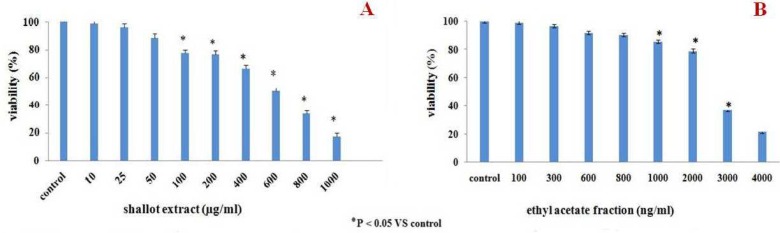
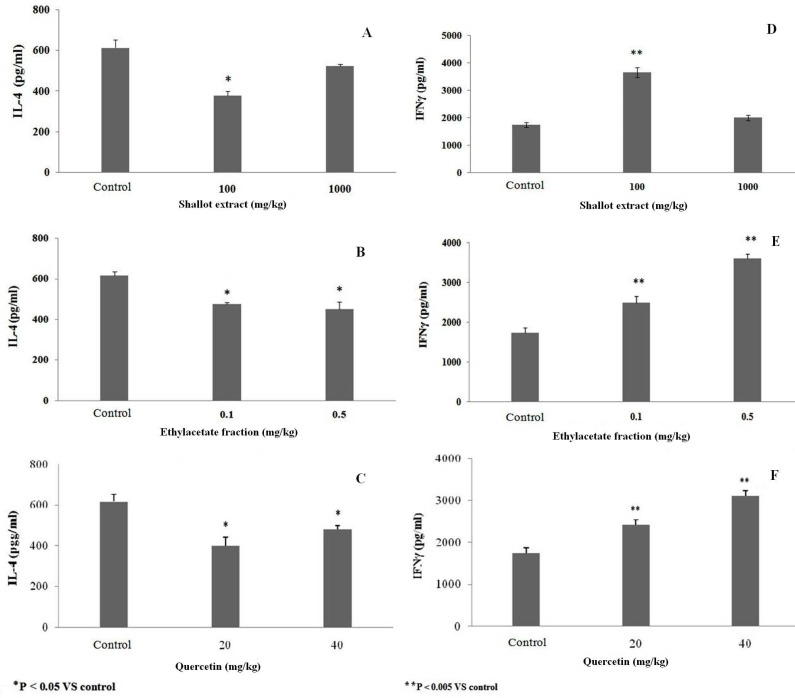
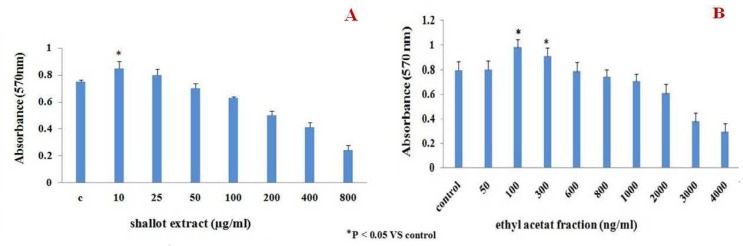
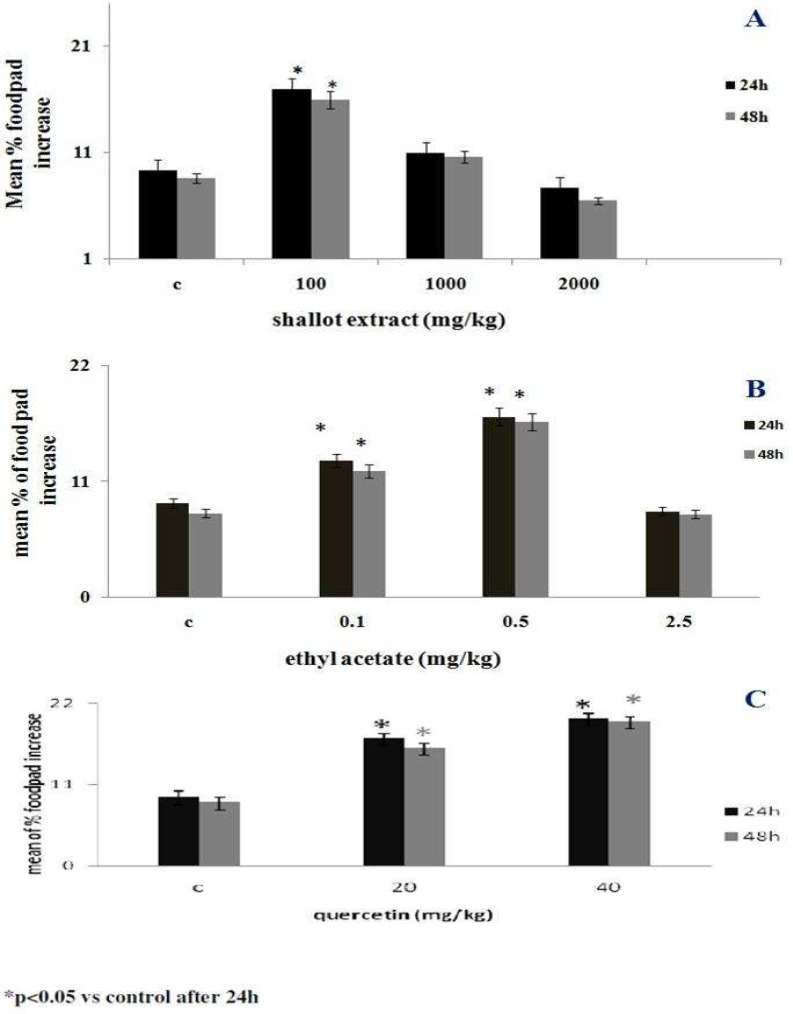
Flavonoids are potentially immunomodulatory factors and it may be inferred that these phytochemicals contribute to immunomodulatory properties of the Allium family. In the present study, we investigated the potential mechanism underlying the immunomodulatory effect of shallot and its ethyl acetate (EA) fraction as flavonoid-rich sources. Ex vivo, effects of a hydroalcoholic extract of shallot, its fractions and quercetin on lymphocyte viability were evaluated. The proliferative effects of the fractions were examined using naive mouse lymphocytes to determine the fraction with highest impact/ activity. In addition, in a mouse model, both delayed- type hypersensitivity (DTH) responses and production of a key cytokine (interferon [IFN]-ᵧ) were evaluated. Both the shallot extract and its fractions inhibited lymphocytes cell growth and survival in a concentration- dependent manner. The findings also showed that the extract and especially the ethyl acetate (EA) fraction could induce lymphocyte proliferation. The evaluation of the extract and its EA fraction on DTH responses indicated that both caused a significant increase in DTH response. Furthermore, they triggered significant increases in IFNγ and decreases in interleukin (IL)-4 production by splenic mononuclear cells. Because of the significant immunomodulatory activity displayed in these studies, it is plausible that shallot could have a potential use as an immunomodulatory agent in clinical settings.
黄酮类化合物是潜在的免疫调节因子,可以推断这些植物化学物质有助于葱属植物的免疫调节特性。在本研究中,我们研究了青葱及其富含黄酮类化合物的乙酸乙酯(EA)组分免疫调节作用的潜在机制。在体外,评估了青葱的水醇提取物、其组分和槲皮素对淋巴细胞活力的影响。使用未接触过抗原的小鼠淋巴细胞检测各组分的增殖作用,以确定影响最大/活性最高的组分。此外,在小鼠模型中,评估了迟发型超敏反应(DTH)和关键细胞因子(干扰素[IFN]-γ)的产生。青葱提取物及其组分均以浓度依赖性方式抑制淋巴细胞的生长和存活。研究结果还表明,提取物尤其是乙酸乙酯(EA)组分可诱导淋巴细胞增殖。对提取物及其EA组分对DTH反应的评估表明,二者均导致DTH反应显著增加。此外,它们还引发脾脏单核细胞产生的IFNγ显著增加,白细胞介素(IL)-4产生减少。鉴于这些研究中显示出显著的免疫调节活性,青葱在临床环境中作为免疫调节剂具有潜在用途是合理的。