Université de Lyon, VetAgro Sup, USC 1233/Equipe « Pathogènes émergents et rongeurs sauvages (PERS), F-69280 Marcy-L'Etoile, France.
Virol J. 2014 Feb 20;11:32. doi: 10.1186/1743-422X-11-32.
Hantaviruses are single-stranded RNA viruses, which are transmitted to humans primarily via inhalation of aerosolised virus in contaminated rodent urine and faeces. Whilst infected reservoir hosts are asymptomatic, human infections can lead to two clinical manifestations, haemorrhagic fever with renal syndrome (HFRS) and hantavirus cardiopulmonary syndrome (HCPS), with varying degrees of clinical severity. The incidence of rodent and human cases of Seoul virus (SEOV) in Europe has been considered to be low, and speculated to be driven by the sporadic introduction of infected brown rats (Rattus norvegicus) via ports.
Between October 2010 and March 2012, 128 brown rats were caught at sites across the Lyon region in France.
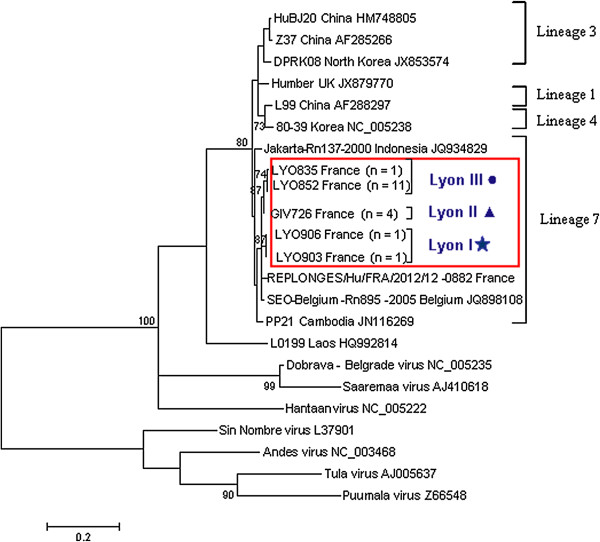
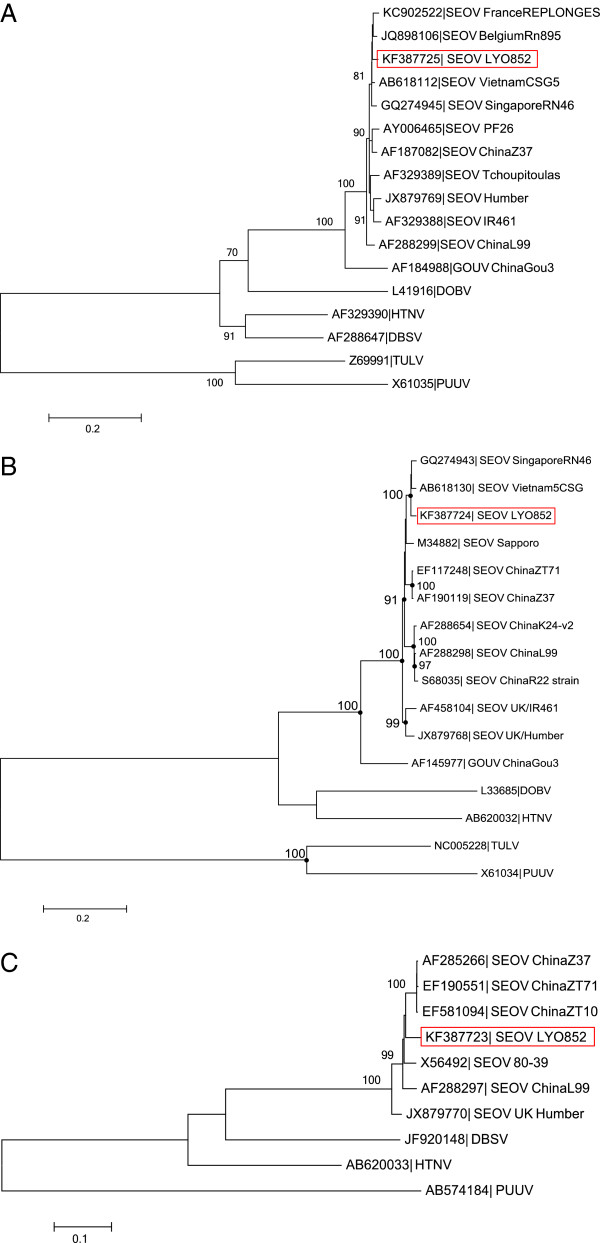
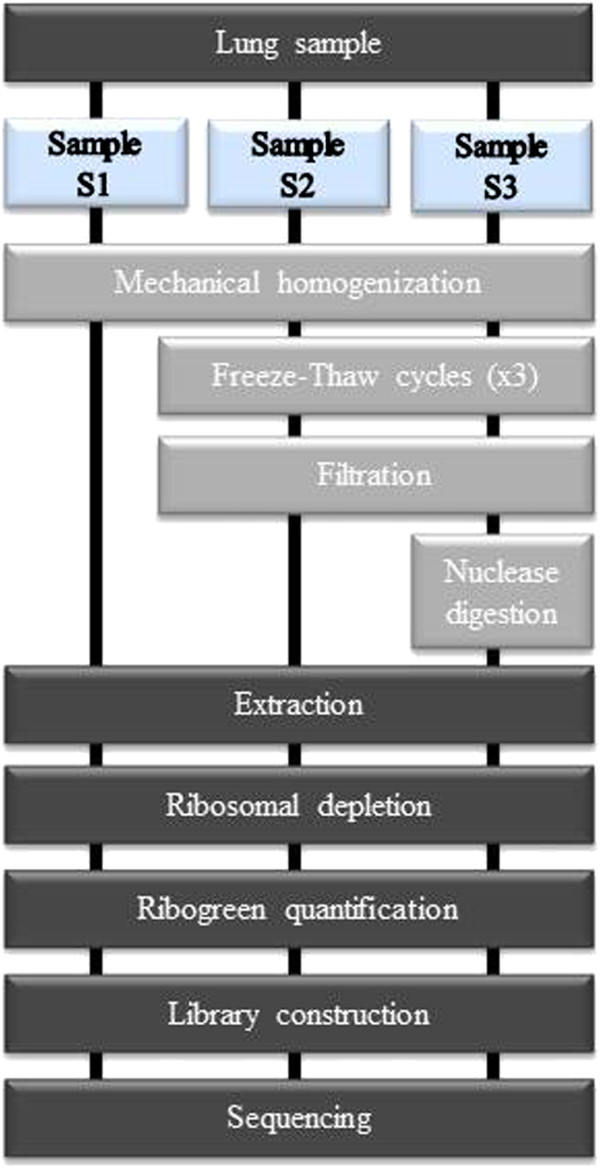
SEOV RNA was detected in the lungs of 14% (95% CI 8.01-20.11) of brown rats tested using a nested pan-hantavirus RT-PCR (polymerase gene). Phylogenetic analysis supports the inclusion of the Lyon SEOV within Lineage 7 with SEOV strains originating from SE Asia and the previously reported French & Belgian SEOV strains. Sequence data obtained from the recent human SEOV case (Replonges) was most similar to that obtained from one brown rat trapped in a public park in Lyon city centre. We obtained significantly improved recovery of virus genome sequence directly from SEOV infected lung material using a simple viral enrichment approach and NGS technology.
The detection of SEOV in two wild caught brown rats in the UK and the multiple detection of SEOV infected brown rats in the Lyon region of France, suggests that SEOV is circulating in European brown rats. Under-reporting and difficulties in identifying the hantaviruses associated with HFRS may mask the public health impact of SEOV in Europe.
汉坦病毒是单链 RNA 病毒,主要通过吸入受污染的啮齿动物尿液和粪便中的气溶胶化病毒传播给人类。虽然感染的储存宿主无症状,但人类感染可导致两种临床表现,即肾综合征出血热(HFRS)和汉坦病毒心肺综合征(HCPS),其临床严重程度不同。欧洲的汉城病毒(SEOV)啮齿动物和人类病例的发病率被认为较低,据推测是由受感染的褐鼠(褐家鼠)通过港口零星引入所致。
2010 年 10 月至 2012 年 3 月,在法国里昂地区的多个地点捕获了 128 只褐鼠。
使用巢式泛汉坦病毒 RT-PCR(聚合酶基因)检测,14%(95%CI8.01-20.11)的褐鼠肺中检测到 SEOV RNA。系统进化分析支持将里昂 SEOV 纳入 7 谱系,其中 SEOV 株源自东南亚,以及之前报道的法国和比利时 SEOV 株。从最近的人类 SEOV 病例(雷蓬斯)获得的序列数据与从里昂市中心公共公园捕获的一只褐鼠的序列数据最相似。我们使用简单的病毒富集方法和 NGS 技术,从感染 SEOV 的肺组织中直接获得病毒基因组序列,从而显著提高了病毒基因组序列的回收率。
在英国的两只野生捕获褐鼠和法国里昂地区的多只检测到感染 SEOV 的褐鼠中检测到 SEOV,表明 SEOV 在欧洲褐鼠中传播。报告不足和难以识别与 HFRS 相关的汉坦病毒可能掩盖了 SEOV 在欧洲的公共卫生影响。