Korea Ginseng Corporation Research Institute, Korea Ginseng Corporation, Daejeon, Korea.
Department of Agricultural Biotechnology, Seoul National University, Seoul, Korea.
J Ginseng Res. 2014 Jan;38(1):59-65. doi: 10.1016/j.jgr.2013.11.011. Epub 2013 Dec 8.
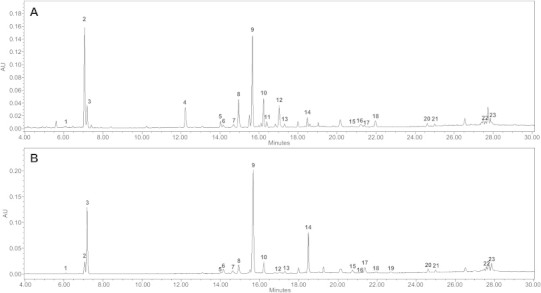
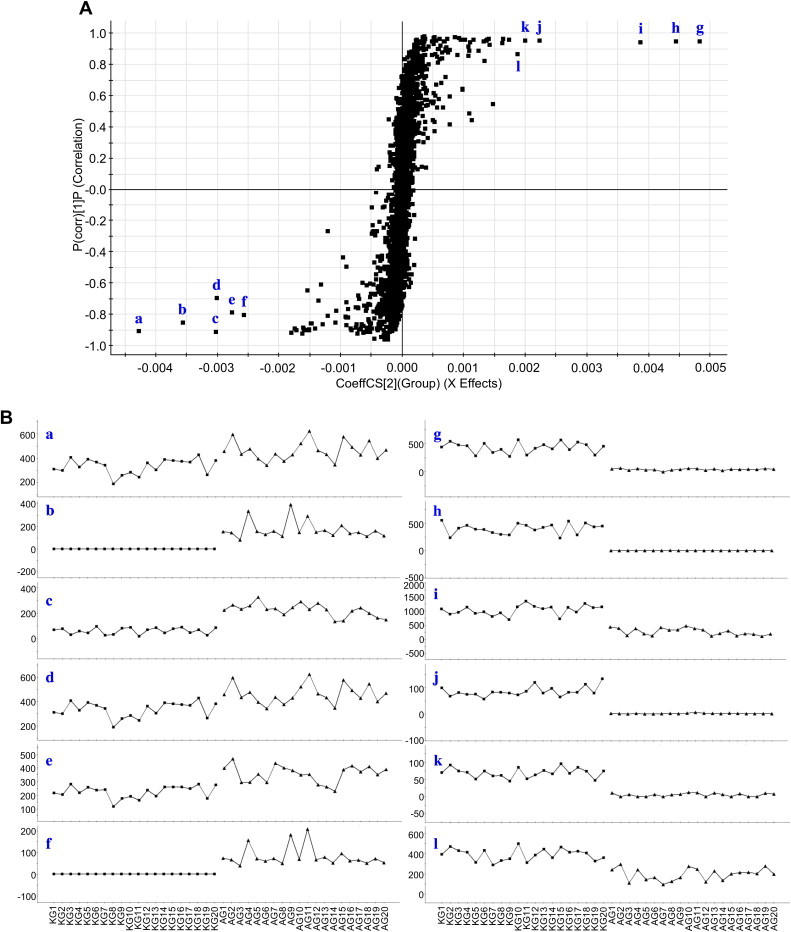
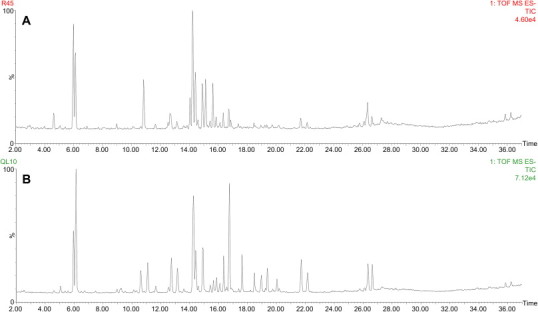
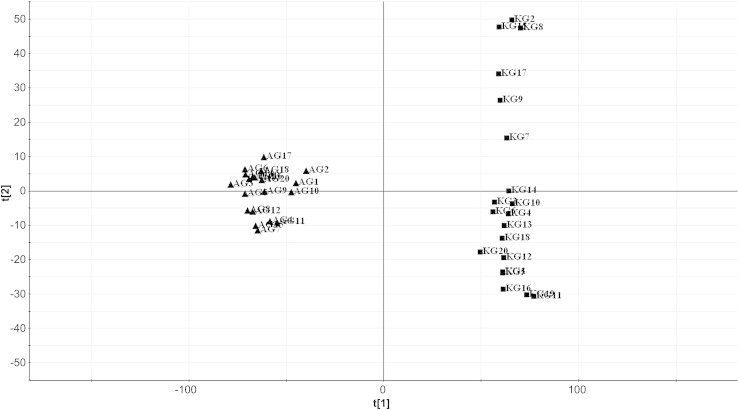
Discriminating between two herbal medicines (Panax ginseng and Panax quinquefolius), with similar chemical and physical properties but different therapeutic effects, is a very serious and difficult problem. Differentiation between two processed ginseng genera is even more difficult because the characteristics of their appearance are very similar. An ultraperformance liquid chromatography-quadrupole time-of-flight mass spectrometry (UPLC-QTOF MS)-based metabolomic technique was applied for the metabolite profiling of 40 processed P. ginseng and processed P. quinquefolius. Currently known biomarkers such as ginsenoside Rf and F11 have been used for the analysis using the UPLC-photodiode array detector. However, this method was not able to fully discriminate between the two processed ginseng genera. Thus, an optimized UPLC-QTOF-based metabolic profiling method was adapted for the analysis and evaluation of two processed ginseng genera. As a result, all known biomarkers were identified by the proposed metabolomics, and additional potential biomarkers were extracted from the huge amounts of global analysis data. Therefore, it is expected that such metabolomics techniques would be widely applied to the ginseng research field.
鉴别两种草药(人参和西洋参),它们具有相似的化学和物理性质,但治疗效果不同,这是一个非常严重和困难的问题。区分两种加工的人参属更加困难,因为它们的外观特征非常相似。应用基于超高效液相色谱-四极杆飞行时间质谱(UPLC-QTOF MS)的代谢组学技术对 40 种加工的人参和加工的西洋参进行代谢产物分析。目前已知的生物标志物,如人参皂苷 Rf 和 F11,已用于使用 UPLC-光电二极管阵列检测器的分析。然而,这种方法不能完全区分两种加工的人参属。因此,采用了优化的基于 UPLC-QTOF 的代谢组学分析方法来分析和评估两种加工的人参属。结果,通过提出的代谢组学鉴定了所有已知的生物标志物,并从大量的全局分析数据中提取了额外的潜在生物标志物。因此,预计这种代谢组学技术将广泛应用于人参研究领域。