Kim Hyun Woo, Kim Dae Hyun, Ryu Byeol, Chung You Jin, Lee Kyungha, Kim Young Chang, Lee Jung Woo, Kim Dong Hwi, Jang Woojong, Cho Woohyeon, Shim Hyeonah, Sung Sang Hyun, Yang Tae-Jin, Kang Kyo Bin
College of Pharmacy and Integrated Research Institute for Drug Development, Dongguk University, Seoul, Republic of Korea.
Research Institute of Pharmaceutical Sciences, College of Pharmacy, Seoul National University, Seoul, Republic of Korea.
J Ginseng Res. 2024 Mar;48(2):149-162. doi: 10.1016/j.jgr.2024.01.004. Epub 2024 Jan 19.
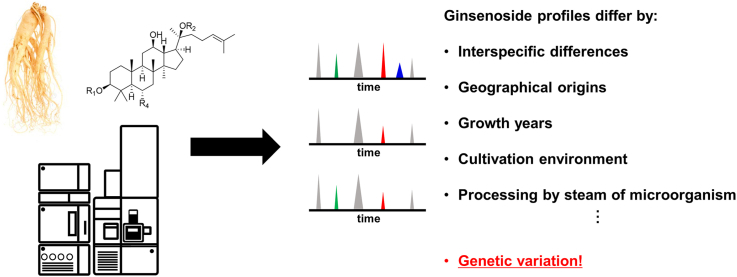
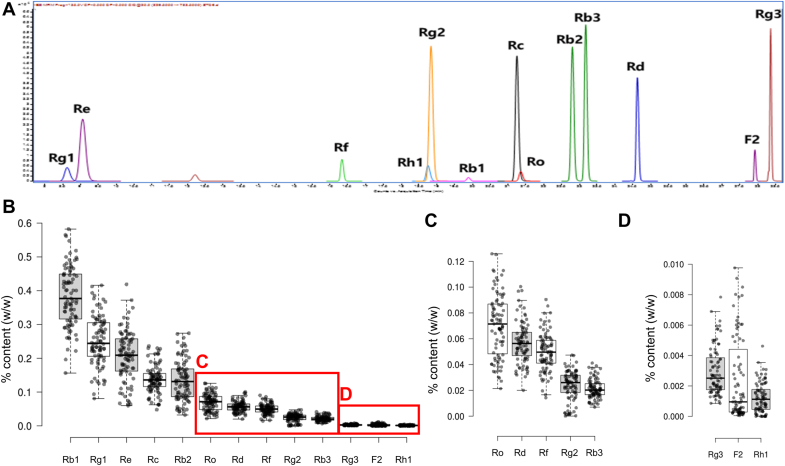
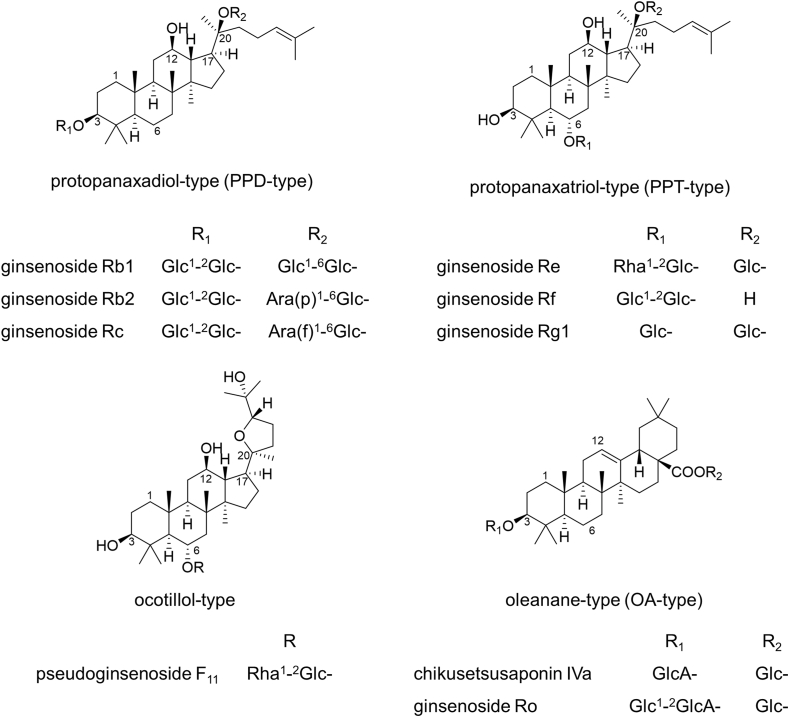
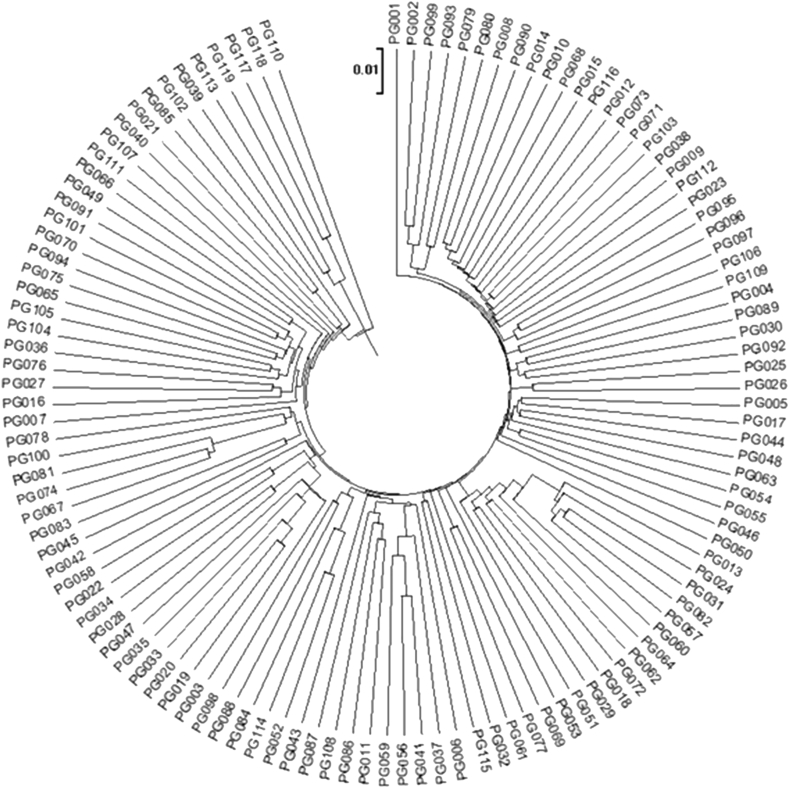
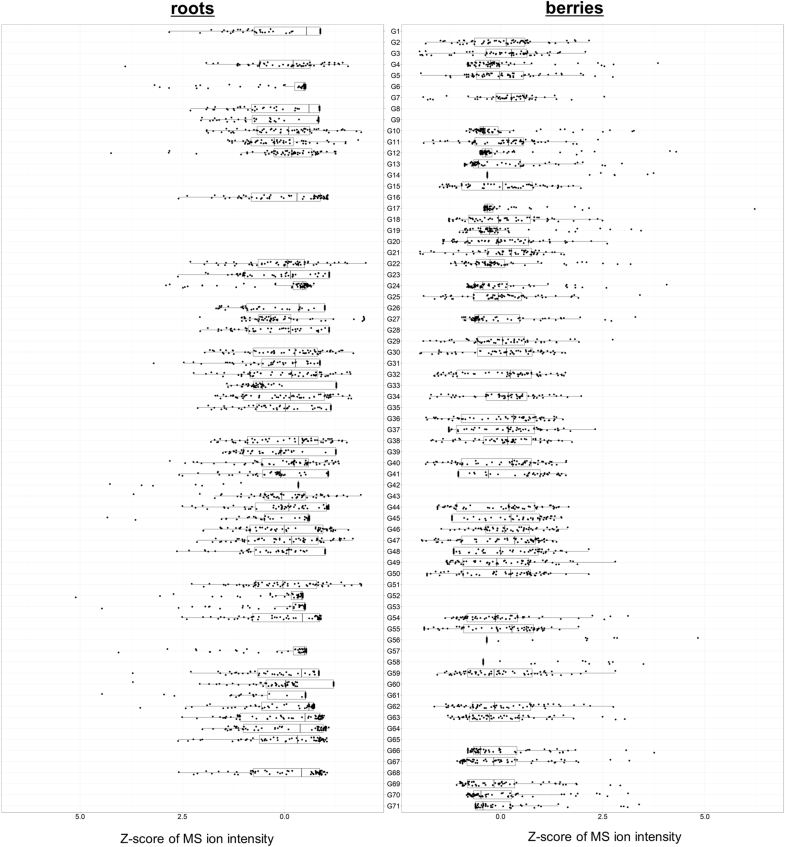
Ginseng, the roots of species, is an important medicinal herb used as a tonic. As ginsenosides are key bioactive components of ginseng, holistic chemical profiling of them has provided many insights into understanding ginseng. Mass spectrometry has been a major methodology for profiling, which has been applied to realize numerous goals in ginseng research, such as the discrimination of different species, geographical origins, and ages, and the monitoring of processing and biotransformation. This review summarizes the various applications of ginsenoside profiling in ginseng research over the last three decades that have contributed to expanding our understanding of ginseng. However, we also note that most of the studies overlooked a crucial factor that influences the levels of ginsenosides: genetic variation. To highlight the effects of genetic variation on the chemical contents, we present our results of untargeted and targeted ginsenoside profiling of different genotypes cultivated under identical conditions, in addition to data regarding genome-level genetic diversity. Additionally, we analyze the other limitations of previous studies, such as imperfect variable control, deficient metadata, and lack of additional effort to validate causation. We conclude that the values of ginsenoside profiling studies can be enhanced by overcoming such limitations, as well as by integrating with other -omics techniques.
人参是一种重要的药用植物,其根被用作滋补品。人参皂苷是人参与其他植物不同的主要活性成分,对其进行整体化学分析有助于深入了解人参。质谱法一直是人参皂苷分析的主要方法,该方法已被应用于人参研究的众多目标,如区分不同品种、产地和年份,监测加工过程和生物转化。本文综述了过去三十年中人参皂苷分析在人参研究中的各种应用,这些应用有助于加深我们对人参的理解。然而,我们也注意到,大多数研究忽略了一个影响人参皂苷含量的关键因素:基因变异。为了突出基因变异对化学成分的影响,我们展示了在相同条件下种植的不同基因型人参的非靶向和靶向人参皂苷分析结果,以及基因组水平的遗传多样性数据。此外,我们分析了以往研究的其他局限性,如变量控制不完善、元数据不足以及缺乏验证因果关系的额外努力。我们得出结论,克服这些局限性并与其他组学技术相结合,可以提高人参皂苷分析研究的价值。