Chazya R, Muma J B, Mwacalimba K K, Karimuribo E, Mkandawire E, Simuunza M
Department of Veterinary Services, Ministry of Agriculture and Livestock, P.O. Box 830011, Mumbwa, Zambia ; Department of Disease Control, School of Veterinary Medicine, University of Zambia, P.O. Box 32379, Lusaka, Zambia.
Department of Disease Control, School of Veterinary Medicine, University of Zambia, P.O. Box 32379, Lusaka, Zambia.
Vet Med Int. 2014;2014:202618. doi: 10.1155/2014/202618. Epub 2014 Jan 12.
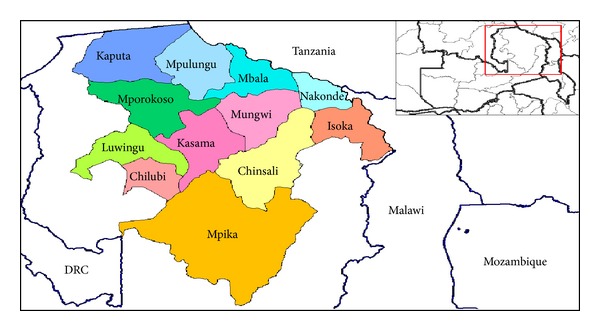
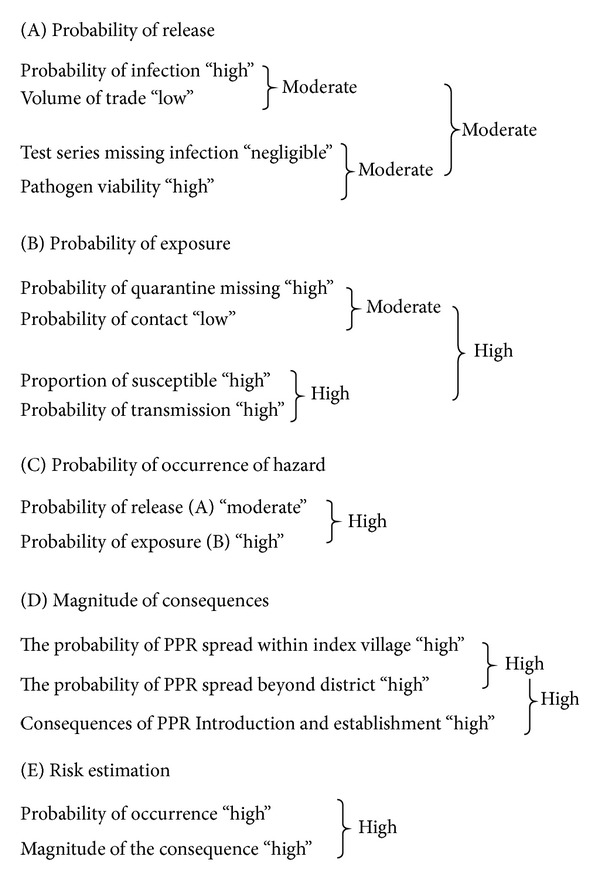
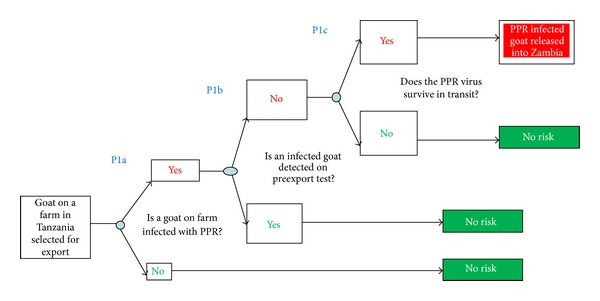
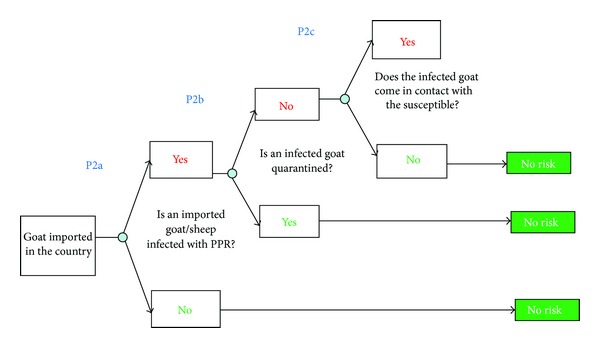
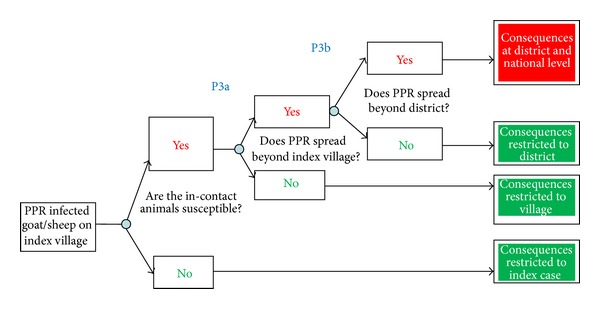
A qualitative risk assessment was performed to evaluate the risk of introducing Peste des petits ruminants virus into northern Zambia from Tanzania via live goat trade. Data was collected during a mission to Tanzania and northern Zambia and also from literature and interviews with experts. The risk of PPRV introduction was evaluated as a function of the probability of hazard (PPRV) release, exposure of susceptible hosts, and the consequences of spread using the following parameters: prevalence of infection, volume of trade, C-ELISA and quarantine screening missing an infected animal, PPRV viability (remaining infective) in transit, and the virus potential for infection. The magnitude of the consequences was derived from the probability of transmission and spread and the impact of PPRV introduction and establishment. Accordingly, the probability of occurrence of PPRV in northern Zambia from Tanzania was rated as "high" and the economic consequences were also rated as "high." Finally, the overall risk of introducing PPRV into northern Zambia from Tanzania at the time of the assessment was rated "high." It was concluded that import of goats and sheep be prohibited until efficient and adequate measures to reduce the risk have been put in place.
进行了定性风险评估,以评估通过活羊贸易将小反刍兽疫病毒从坦桑尼亚引入赞比亚北部的风险。数据收集于对坦桑尼亚和赞比亚北部的考察期间,也来自文献以及与专家的访谈。使用以下参数,将小反刍兽疫病毒引入的风险评估为危害(小反刍兽疫病毒)释放概率、易感宿主暴露情况以及传播后果的函数:感染率、贸易量、竞争酶联免疫吸附测定(C-ELISA)和检疫筛查漏检感染动物的情况、小反刍兽疫病毒在运输过程中的活力(保持感染性)以及病毒的感染潜力。后果的严重程度源自传播和扩散的概率以及小反刍兽疫病毒引入和定殖的影响。因此,小反刍兽疫病毒从坦桑尼亚传入赞比亚北部的发生概率被评为“高”,经济后果也被评为“高”。最后,在评估时,从坦桑尼亚将小反刍兽疫病毒引入赞比亚北部的总体风险被评为“高”。得出的结论是,在采取有效且充分的风险降低措施之前,应禁止山羊和绵羊的进口。