Chima Sylvester C
BMC Med Ethics. 2013;14 Suppl 1(Suppl 1):S3. doi: 10.1186/1472-6939-14-S1-S3. Epub 2013 Dec 19.
Informed consent is a legal and ethical doctrine derived from the principle of respect for autonomy. Generally two rights derived from autonomy are accorded legal protection. The constitutional right to bodily integrity followed by the right to bodily well-being, protected by professional negligence rules. Therefore healthcare professionals treating patients' without valid consent may be guilty of infringing patients' rights. Many challenges are experienced by doctors obtaining informed consent in complex multicultural societies like South Africa. These include different cultural ethos, multilingualism, poverty, education, unfamiliarity with libertarian rights based autonomy, and power asymmetry between doctors and patients. All of which could impact on the ability of doctors to obtain legally valid informed consent.
The objective of this study was to evaluate whether the quality of informed consent obtained by doctors practicing in South Africa is consistent with international ethical standards and local regulations. Responses from 946 participants including doctors, nurses and patients was analyzed, using a semi-structured self-administered questionnaire and person triangulation in selected public hospitals in Durban, KwaZulu-Natal, South Africa.
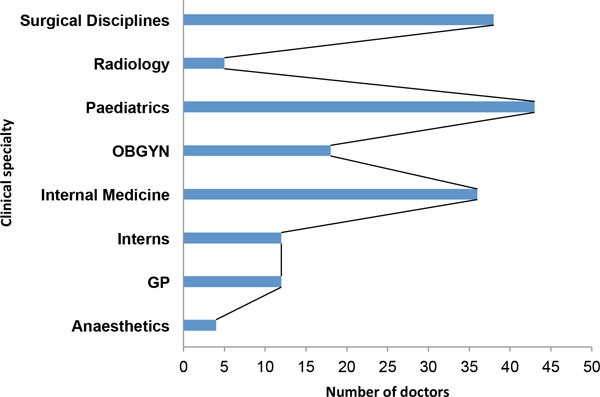
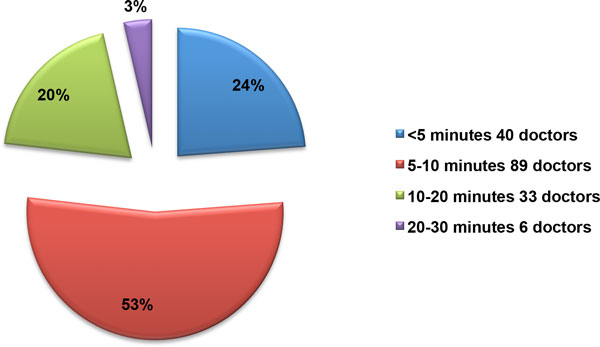
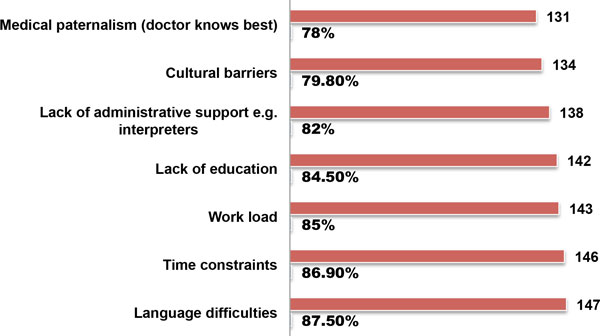
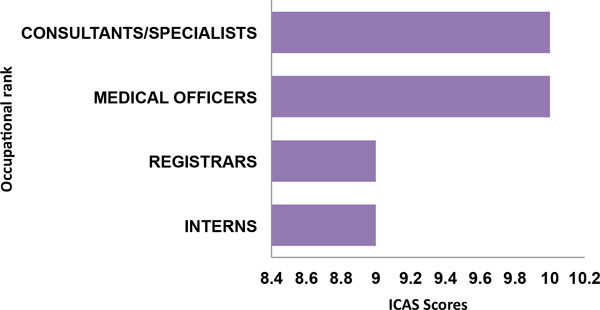
The median age of 168 doctors participating was 30 years with 51% females, 28% interns, 16% medical officers, 26% registrars, 30% consultant/specialists. A broad range of clinical specialties were represented. Challenges to informed consent practice include language difficulties, lack of interpreters, workload, and time constraints. Doctors spent 5-10 minutes on consent, disclosed most information required to patients, however knowledge of essential local laws was inadequate. Informed consent aggregate scores (ICAS) showed that interns/registrars scored lower than consultants/specialists. ICAS scores were statistically significant by specialty (p = 0.005), with radiologists and anaesthetists scoring lowest, while internists, GPs and obstetricians/gynaecologists scored highest. Comparative ICAS scores showed that professional nurses scored significantly lower than doctors (p ≤ 0.001).
This study shows that though doctors had general knowledge of informed consent requirements, execution in practice was inadequate, with deficiency in knowledge of basic local laws and regulations. Remedying identified deficiencies may require a 'corps' of interpreters in local hospitals to assist doctors in dealing with language difficulties, and continuing education in medical law and ethics to improve informed consent practices and overall quality of healthcare service delivery.
知情同意是一项源自尊重自主权原则的法律和伦理准则。一般来说,源自自主权的两项权利受到法律保护。首先是身体完整性的宪法权利,其次是受专业过失规则保护的身体安康权。因此,未经有效同意治疗患者的医护人员可能会侵犯患者的权利。在南非这样多元文化的复杂社会中,医生在获取知情同意方面面临诸多挑战。这些挑战包括不同的文化精神、多语言环境、贫困、教育程度、对基于自由主义权利的自主权的不熟悉,以及医患之间的权力不对称。所有这些都可能影响医生获得具有法律效力的知情同意的能力。
本研究的目的是评估在南非执业的医生所获得的知情同意的质量是否符合国际伦理标准和当地法规。使用半结构化自填式问卷并在南非夸祖鲁 - 纳塔尔省德班的选定公立医院进行人员三角测量,对包括医生、护士和患者在内的946名参与者的回复进行了分析。
参与研究的168名医生的年龄中位数为30岁,其中女性占51%,实习生占28%,医务人员占16%,住院医师占26%,顾问/专家占30%。涵盖了广泛的临床专业。知情同意实践面临的挑战包括语言困难、缺乏口译员、工作量和时间限制。医生在同意过程中花费5 - 10分钟,向患者披露了大多数所需信息,然而对当地基本法律的了解不足。知情同意综合评分(ICAS)显示,实习生/住院医师的得分低于顾问/专家。ICAS评分在不同专业之间具有统计学显著性(p = 0.005),放射科医生和麻醉科医生得分最低,而内科医生、全科医生和妇产科医生得分最高。比较ICAS评分显示,专业护士的得分显著低于医生(p≤0.001)。
本研究表明,尽管医生对知情同意要求有一般了解,但在实践中的执行情况并不理想,对当地基本法律法规的了解存在不足。弥补已发现的不足可能需要在当地医院配备一批口译员,以协助医生应对语言困难,并开展医疗法律和伦理方面的继续教育,以改善知情同意实践和医疗服务提供的整体质量。