Makerere University College of Health Sciences, Kampala, Uganda.
BMC Med Ethics. 2012 Aug 21;13:21. doi: 10.1186/1472-6939-13-21.
The process of obtaining informed consent continues to be a contentious issue in clinical and public health research carried out in resource-limited settings. We sought to evaluate this process among human research participants in randomly selected active research studies approved by the School of Medicine Research and Ethics Committee at the College of Health Sciences, Makerere University.
Data were collected using semi-structured interviewer-administered questionnaires on clinic days after initial or repeat informed consent procedures for the respective clinical studies had been administered to each study participant.
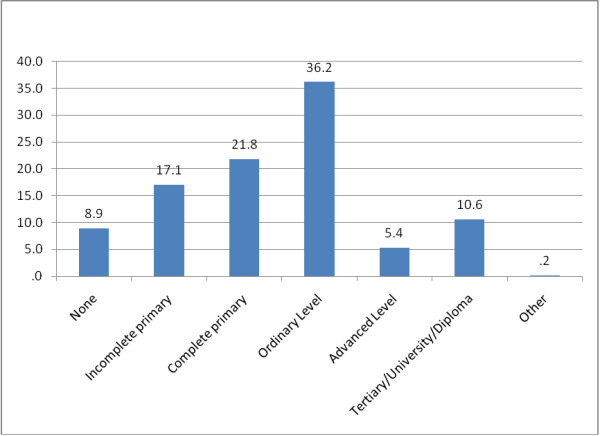
Of the 600 participants interviewed, two thirds (64.2%, 385/600) were female. Overall mean age of study participants was 37.6 (SD = 7.7) years. Amongst all participants, less than a tenth (5.9%, 35/598) reported that they were not given enough information before making a decision to participate. A similar proportion (5.7%, 34/597) reported that they had not signed a consent form prior to making a decision to participate in the study. A third (33.7%, 201/596) of the participants were not aware that they could, at any time, voluntarily withdraw participation from these studies. Participants in clinical trials were 50% less likely than those in observational studies [clinical trial vs. observational; (odds ratio, OR = 0.5; 95% CI: 0.35-0.78)] to perceive that refusal to participate in the parent research project would affect their regular medical care.
Most of the participants signed informed consent forms and a vast majority felt that they received enough information before deciding to participate. On the contrary, several were not aware that they could voluntarily withdraw their participation. Participants in observational studies were more likely than those in clinical trials to perceive that refusal to participate in the parent study would affect their regular medical care.
在资源有限的环境中开展临床和公共卫生研究时,获取知情同意的过程仍然是一个有争议的问题。我们试图评估在乌干达马凯雷雷大学健康科学学院医学研究和伦理委员会批准的随机选择的活跃研究中,人体研究参与者的这一过程。
在为每个研究参与者进行初始或重复的知情同意程序后,在诊所日收集使用半结构式访谈员管理的问卷收集数据。
在接受采访的 600 名参与者中,三分之二(64.2%,385/600)为女性。研究参与者的总体平均年龄为 37.6(SD=7.7)岁。在所有参与者中,不到十分之一(5.9%,35/598)报告说,在做出参与决定之前,他们没有得到足够的信息。同样比例(5.7%,34/597)报告说,他们在做出参与研究的决定之前没有签署同意书。三分之一(33.7%,201/596)的参与者不知道他们可以随时自愿退出这些研究。与观察性研究相比,临床试验参与者拒绝参与主要研究项目更有可能影响他们的常规医疗护理[临床试验与观察性研究;(比值比,OR=0.5;95%置信区间:0.35-0.78)]。
大多数参与者签署了知情同意书,绝大多数人表示,在决定参与之前,他们收到了足够的信息。相反,一些人不知道他们可以自愿退出他们的参与。与临床试验参与者相比,观察性研究参与者更有可能认为拒绝参与主要研究项目会影响他们的常规医疗护理。