mBio. 2014 Feb 25;5(2):e01089-13. doi: 10.1128/mBio.01089-13.
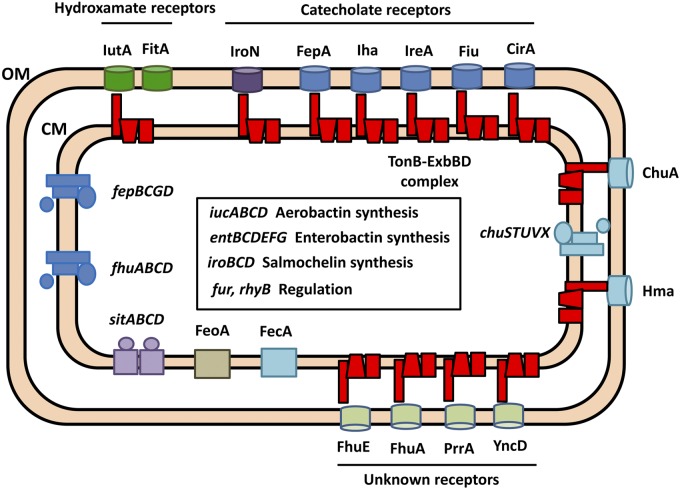
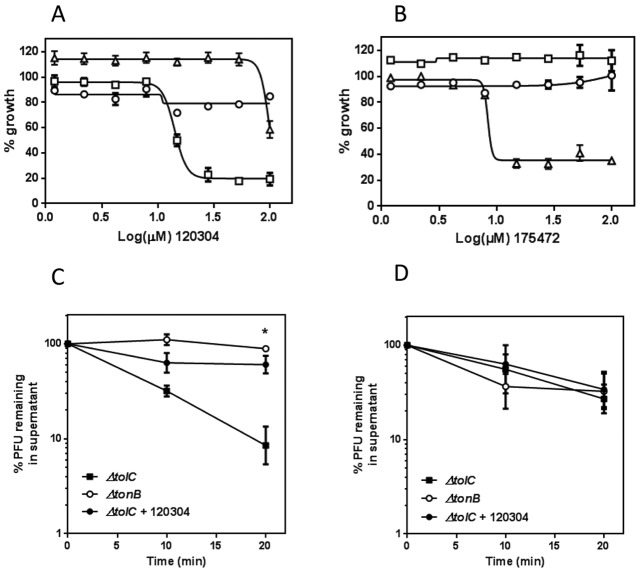
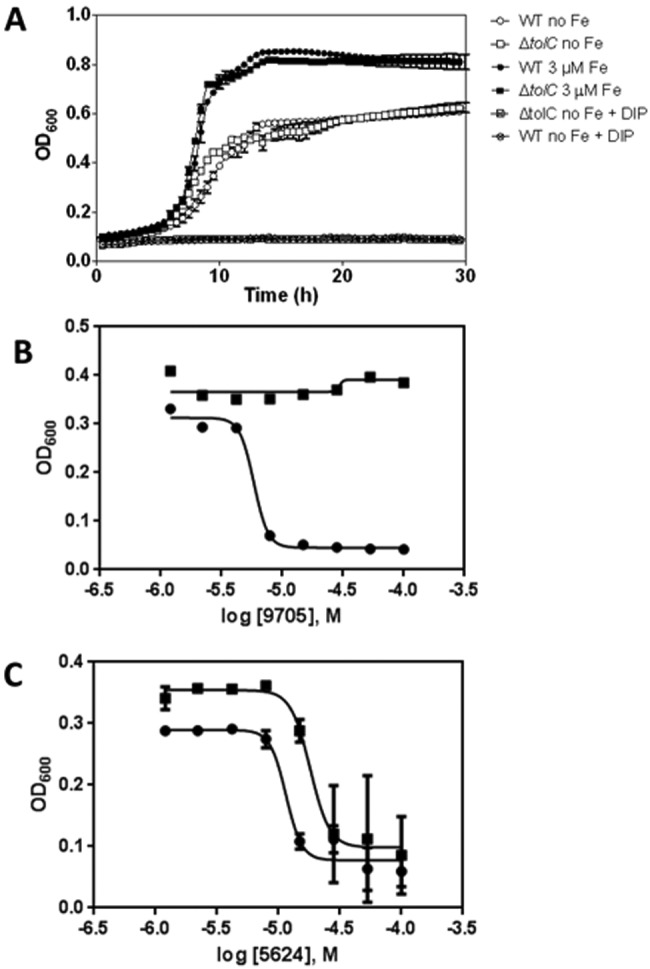
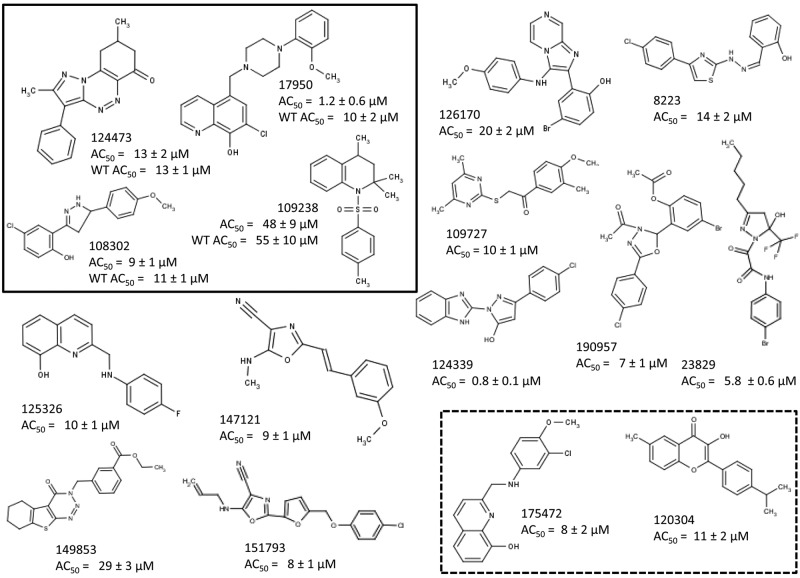
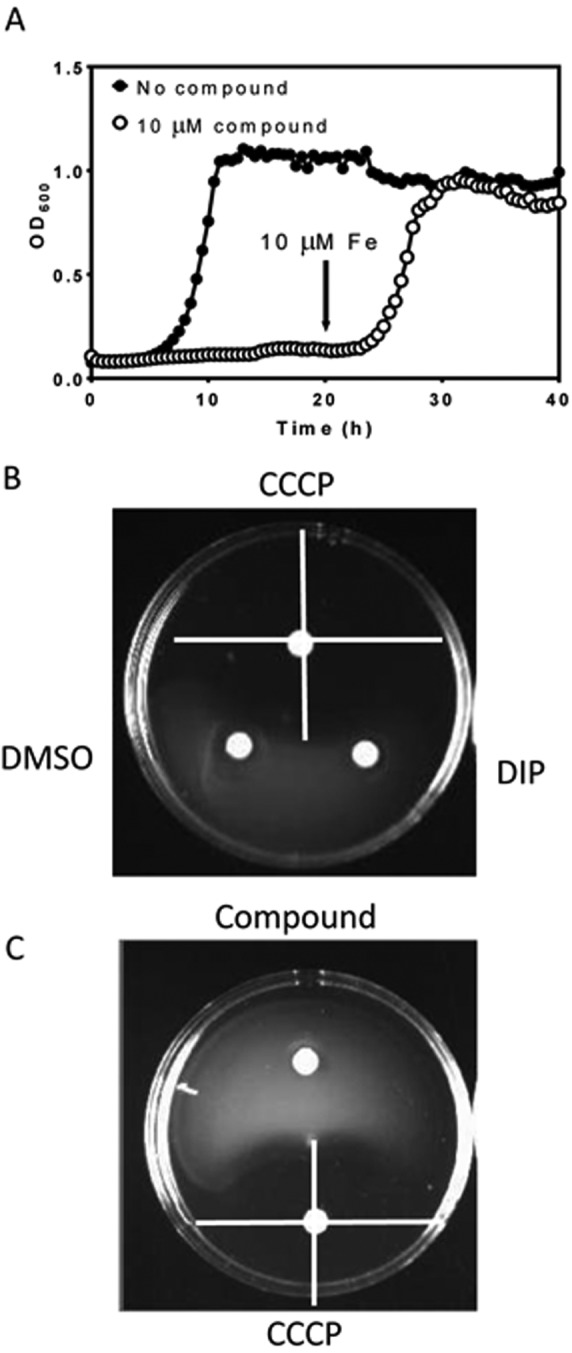
The urinary tract is one of the most common sites of infection in humans, and uropathogenic Escherichia coli (UPEC) is the main causative agent of urinary tract infections. Bacteria colonizing the urinary tract face extremely low iron availability. To counteract this, UPEC expresses a wide variety of iron acquisition systems. To exploit iron acquisition in UPEC as a global target for small-molecule inhibition, we developed and carried out a whole-cell growth-based high throughput screen of 149,243 compounds. Our primary assay was carried out under iron-limiting conditions. Hits in the primary screen were assayed using two counterscreens that ruled out iron chelators and compounds that inhibit growth by means other than inhibition of iron acquisition. We determined dose-response curves under two different iron conditions and purchased fresh compounds for selected hits. After retesting dose-response relationships, we identified 16 compounds that arrest growth of UPEC only under iron-limiting conditions. All compounds are bacteriostatic and do not inhibit proton motive force. A loss-of-target strategy was employed to identify the cellular target of these inhibitors. Two compounds lost inhibitory activity against a strain lacking TonB and were shown to inhibit irreversible adsorption of a TonB-dependent bacteriophage. Our results validate iron acquisition as a target for antibacterial strategies against UPEC and identify TonB as one of the cellular targets. IMPORTANCE Half of women will suffer at least one episode of urinary tract infection (UTI) during their lifetime. The current treatment for UTI involves antibiotic therapy. Resistance to currently used antibiotics has steadily increased over the last decade, generating a pressing need for the development of new therapeutic agents. Since iron is essential for colonization and scarce in the urinary tract, targeting iron acquisition would seem to be an attractive strategy. However, the multiplicity and redundancy of iron acquisition systems in uropathogenic Escherichia coli (UPEC) make it difficult to pinpoint a specific cellular target. Here, we identified 16 iron acquisition inhibitors through a whole-cell high-throughput screen, validating iron acquisition as a target for antibacterial strategies against UPEC. We also identified the cellular target of two of the inhibitors as the TonB system.
尿路是人体最常见的感染部位之一,而尿路致病性大肠杆菌(UPEC)是尿路感染的主要病原体。定植在尿路中的细菌面临着极低的铁供应。为了对抗这种情况,UPEC 表达了各种各样的铁获取系统。为了将 UPEC 的铁获取作为小分子抑制的全局靶点,我们开发并进行了针对 149,243 种化合物的基于全细胞生长的高通量筛选。我们的初步测定是在缺铁条件下进行的。在初筛中的阳性结果通过两个副筛选进行了测定,这两个副筛选排除了铁螯合剂和通过抑制铁摄取以外的方式抑制生长的化合物。我们在两种不同的铁条件下测定了剂量-反应曲线,并为选定的阳性结果购买了新鲜的化合物。在重新测试剂量-反应关系后,我们确定了 16 种仅在缺铁条件下能阻止 UPEC 生长的化合物。所有化合物均为抑菌剂,不抑制质子动力势。我们采用了失靶策略来确定这些抑制剂的细胞靶标。两种化合物在缺乏 TonB 的菌株中失去了抑制活性,并显示出抑制 TonB 依赖性噬菌体不可逆吸附的作用。我们的结果验证了铁摄取作为针对 UPEC 的抗菌策略的靶标,并确定了 TonB 是细胞靶标之一。
重要性 女性中有一半在其一生中至少会经历一次尿路感染(UTI)。目前 UTI 的治疗方法涉及抗生素治疗。在过去的十年中,对抗生素的耐药性稳步增加,迫切需要开发新的治疗药物。由于铁对定植是必需的,而且在尿路中稀缺,因此靶向铁获取似乎是一种有吸引力的策略。然而,尿路致病性大肠杆菌(UPEC)中的铁获取系统的多样性和冗余性使得难以确定特定的细胞靶标。在这里,我们通过全细胞高通量筛选鉴定了 16 种铁获取抑制剂,验证了铁获取作为针对 UPEC 的抗菌策略的靶标。我们还确定了两种抑制剂的细胞靶标为 TonB 系统。