National Engineering Research Center of Edible Fungi and Key Laboratory of Applied Mycological Resources and Utilization, Ministry of Agriculture and Shanghai Key Laboratory of Agricultural Genetics and Breeding and Institute of Edible Fungi, Shanghai Academy of Agriculture Science, Shanghai 201403, China.
Key Laboratory of Systems Biomedicine, Shanghai Center for Systems Biomedicine, Shanghai Jiao Tong University, Shanghai 200240, China.
Biomed Res Int. 2014;2014:281912. doi: 10.1155/2014/281912. Epub 2014 Jan 19.
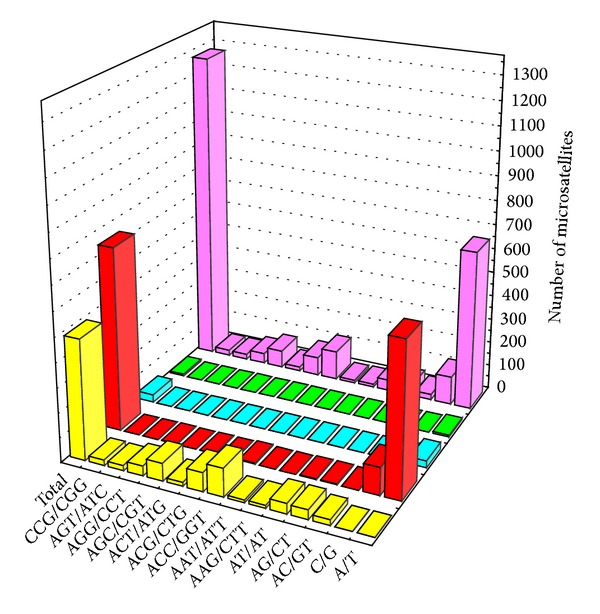
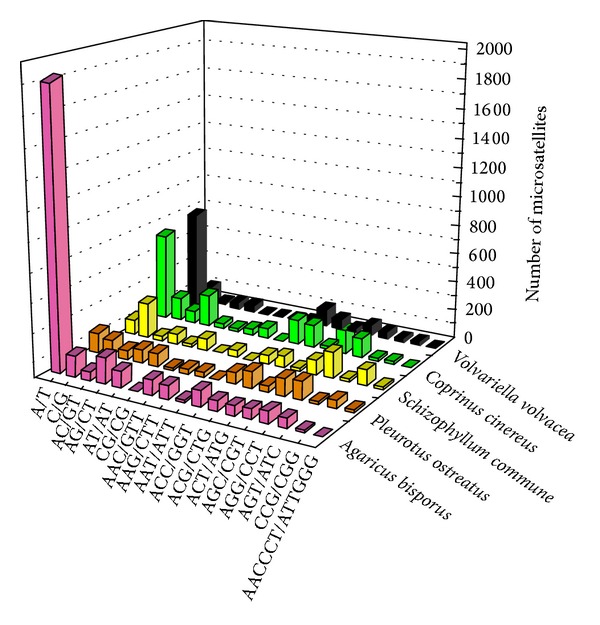
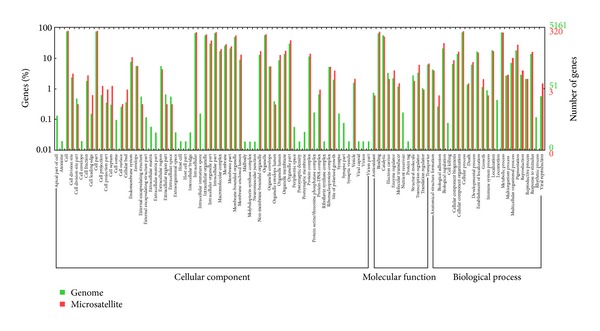
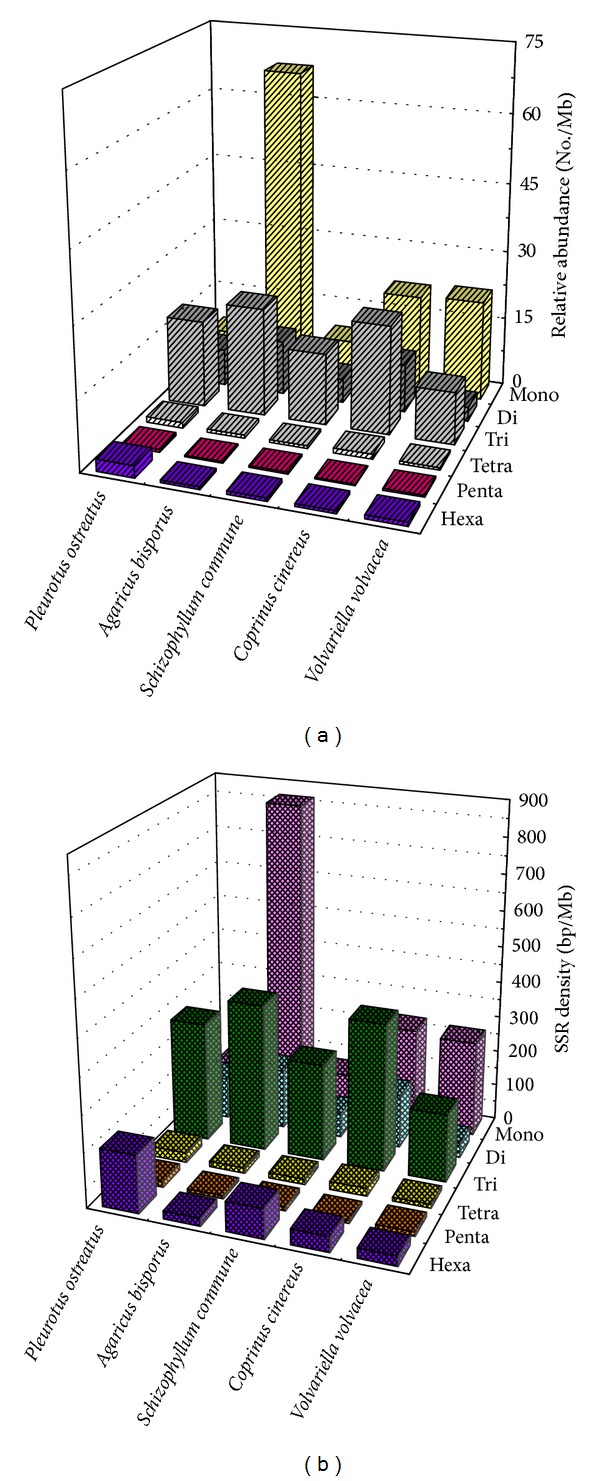
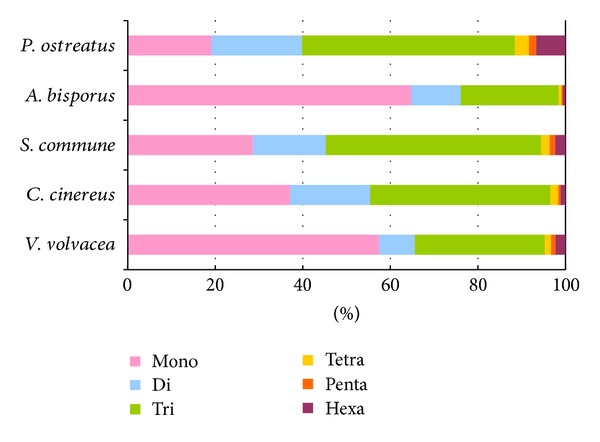
Using bioinformatics software and database, we have characterized the microsatellite pattern in the V. volvacea genome and compared it with microsatellite patterns found in the genomes of four other edible fungi: Coprinopsis cinerea, Schizophyllum commune, Agaricus bisporus, and Pleurotus ostreatus. A total of 1346 microsatellites have been identified, with mono-nucleotides being the most frequent motif. The relative abundance of microsatellites was lower in coding regions with 21 No./Mb. However, the microsatellites in the V. volvacea gene models showed a greater tendency to be located in the CDS regions. There was also a higher preponderance of trinucleotide repeats, especially in the kinase genes, which implied a possible role in phenotypic variation. Among the five fungal genomes, microsatellite abundance appeared to be unrelated to genome size. Furthermore, the short motifs (mono- to tri-nucleotides) outnumbered other categories although these differed in proportion. Data analysis indicated a possible relationship between the most frequent microsatellite types and the genetic distance between the five fungal genomes.
利用生物信息学软件和数据库,我们对金针菇基因组中的微卫星模式进行了特征描述,并将其与另外四种可食用真菌(毛栓菌、裂褶菌、双孢蘑菇和糙皮侧耳)的基因组中的微卫星模式进行了比较。共鉴定出 1346 个微卫星,其中单核苷酸是最常见的基序。微卫星在编码区的相对丰度较低,为 21 个/ Mb。然而,金针菇基因模型中的微卫星更倾向于位于 CDS 区。三核苷酸重复也更为普遍,尤其是在激酶基因中,这暗示它们可能在表型变异中发挥作用。在这五个真菌基因组中,微卫星丰度似乎与基因组大小无关。此外,尽管比例不同,但短基序(单核苷酸至三核苷酸)的数量超过了其他类别。数据分析表明,最常见的微卫星类型与五个真菌基因组之间的遗传距离之间可能存在关系。