Onraedt Thomas, Koster Ernst H W
Department of Experimental-Clinical and Health Psychology, Ghent University, Ghent, Belgium.
PLoS One. 2014 Mar 3;9(3):e90632. doi: 10.1371/journal.pone.0090632. eCollection 2014.
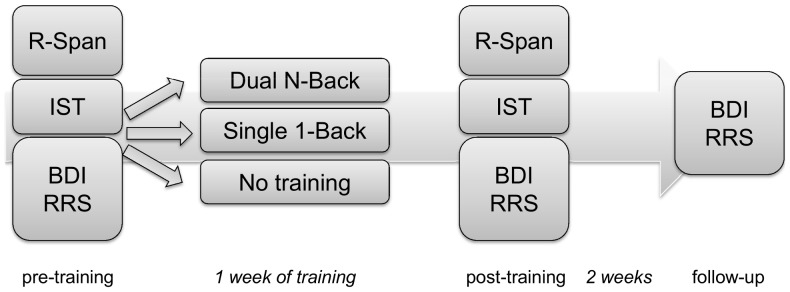
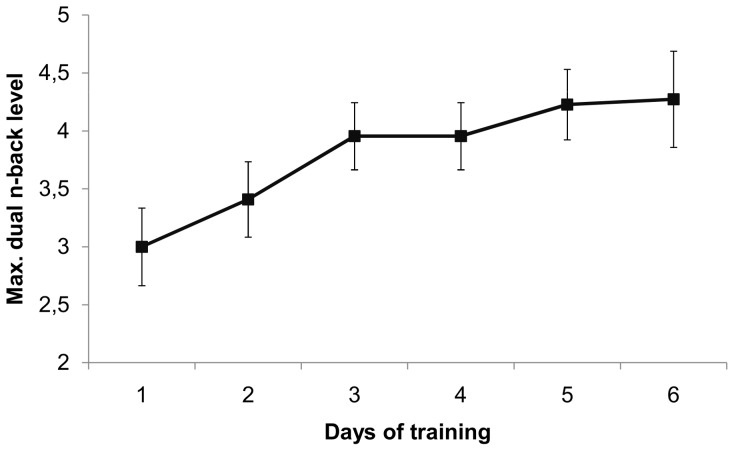
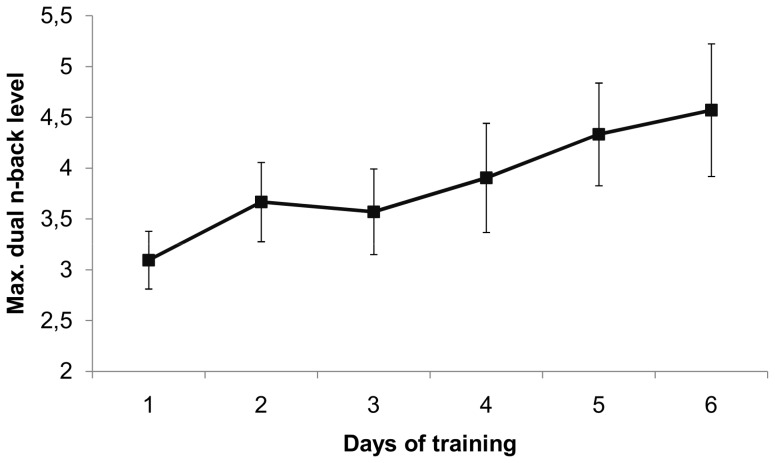
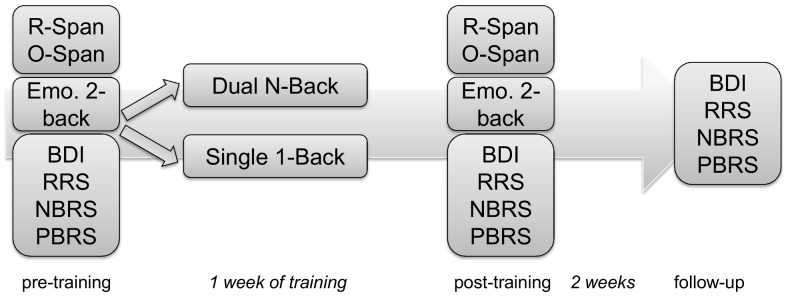
Cognitive symptoms of depression, such as rumination, have shown to be associated with deficits in working memory functioning. More precisely, the capacity to expel irrelevant negative information from working memory seems to be affected. Even though these associations have repeatedly been demonstrated, the nature and causal direction of this association is still unclear. Therefore, within an experimental design, we tried to manipulate working memory functioning of participants with heightened rumination scores in two similar experiments (n = 72 and n = 45) using a six day working memory training compared to active and passive control groups. Subsequently the effects on the processing of non-emotional and emotional information in working memory were monitored. In both experiments, performance during the training task significantly increased, but this performance gain did not transfer to the outcome working memory tasks or rumination and depression measures. Possible explanations for the failure to find transfer effects are discussed.
抑郁症的认知症状,如沉思,已被证明与工作记忆功能缺陷有关。更确切地说,从工作记忆中排除无关负面信息的能力似乎受到了影响。尽管这些关联已被反复证实,但这种关联的性质和因果方向仍不明确。因此,在一项实验设计中,我们在两项类似实验(n = 72和n = 45)中,通过为期六天的工作记忆训练,试图操纵沉思分数较高的参与者的工作记忆功能,并与主动和被动对照组进行比较。随后监测了对工作记忆中处理非情感和情感信息的影响。在两项实验中,训练任务期间的表现均显著提高,但这种表现提升并未转化为工作记忆任务的结果或沉思及抑郁测量指标。文中讨论了未能发现迁移效应的可能解释。