Cheng Lin, Xia Tian-Song, Wang Yi-Fen, Zhou Wenbin, Liang Xiu-Qing, Xue Jin-Qiu, Shi Liang, Wang Ying, Ding Qiang
Jiangsu Breast Disease Center, the First Affiliated Hospital with Nanjing Medical University, Nanjing, China.
State Key Laboratory of Phytochemistry and Plant Resources in West China, Kunming Institute of Botany, Chinese Academy of Sciences, Kunming, China.
PLoS One. 2014 Mar 6;9(6):e90848. doi: 10.1371/journal.pone.0090848. eCollection 2014.
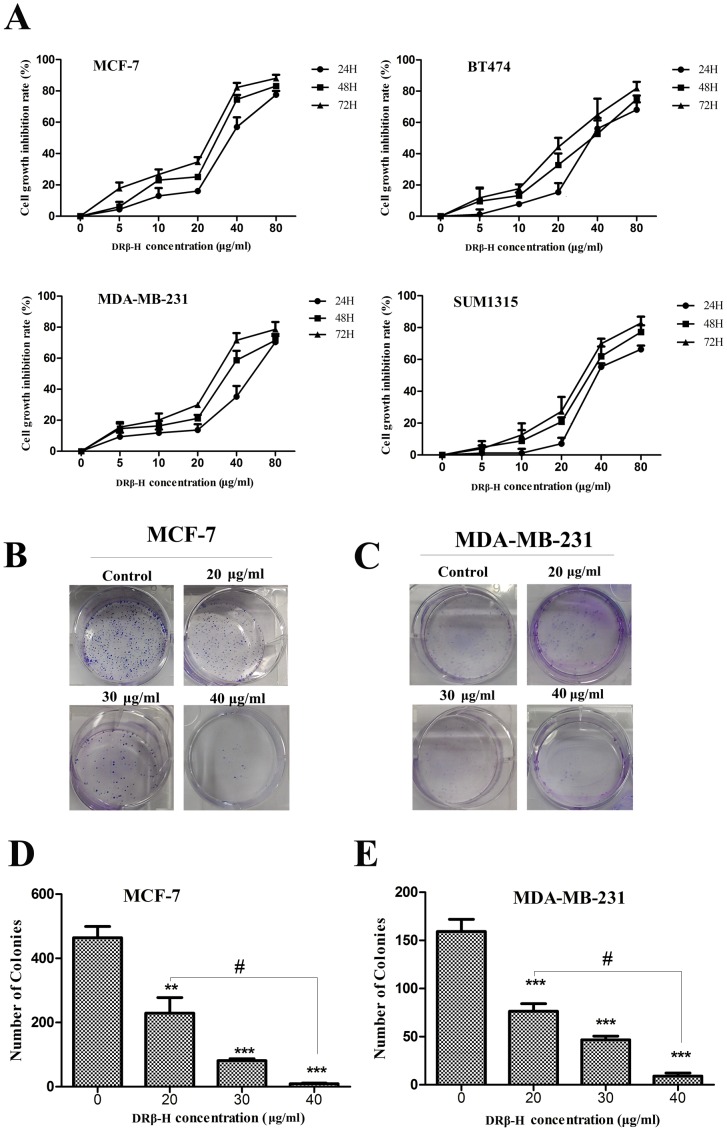
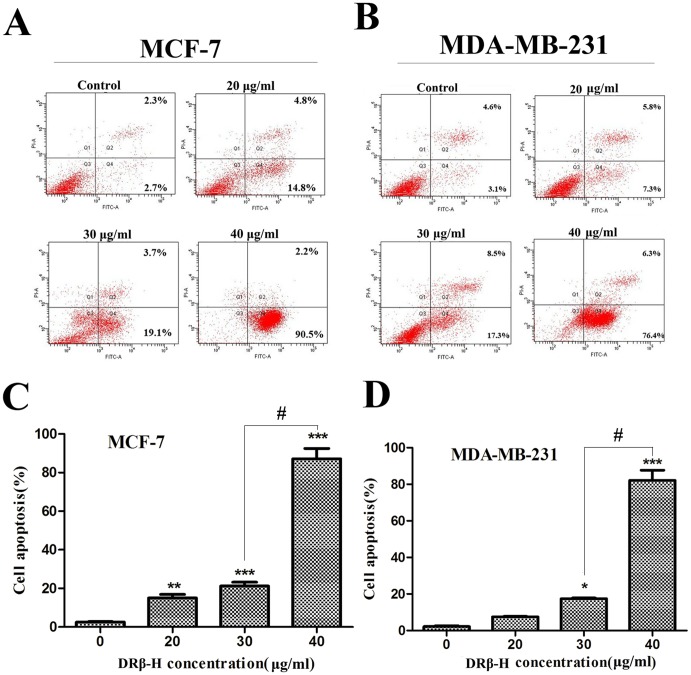
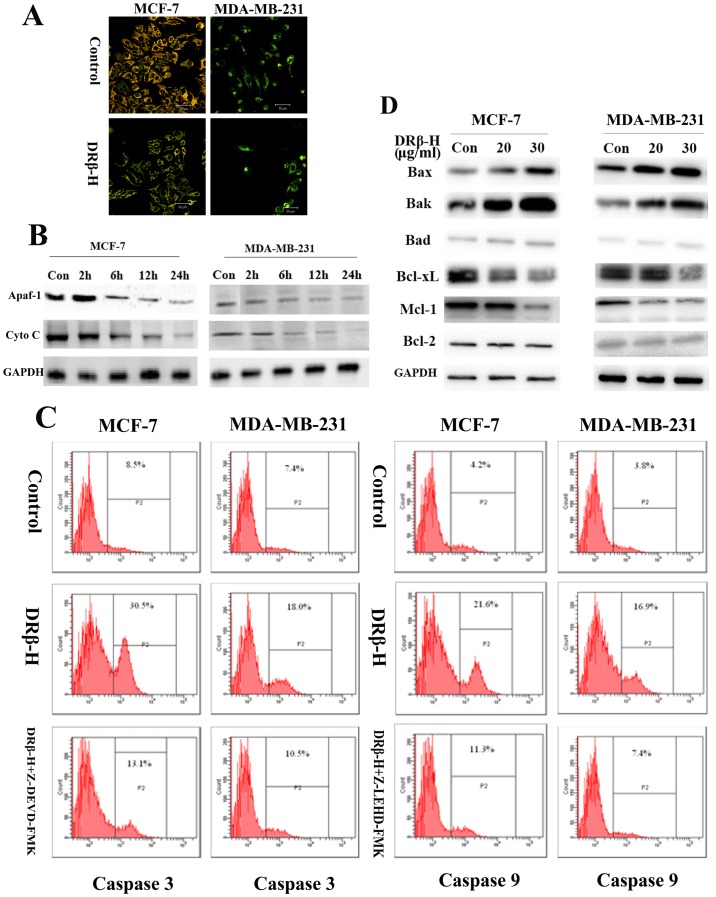
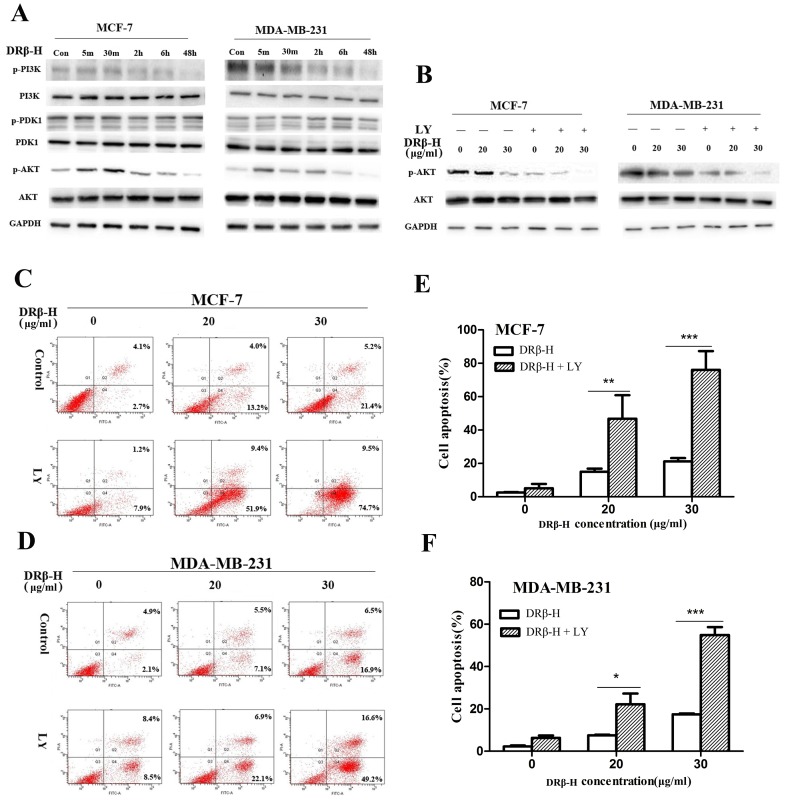
There is growing interest in development of natural products as anti-cancer and chemopreventive agents. Many triterpenoids have been proved as potential agents for chemoprevention and therapy of breast cancer. Ginsenosides from ginseng, which mostly belong to dammarane-type triterpenoids, have gained great attention for their anti-breast cancer activity with diverse mechanisms. However, studies of other kinds of triterpenoid saponins on breast cancer are limited. Previously, we purified and identified a novel oleanane-type triterpene saponin named D Rhamnose β-hederin (DRβ-H) from Clematis ganpiniana, a Chinese traditional anti-tumor herb. In the present study, DRβ-H showed strong inhibitory activity on the growth of various breast cancer cells and induced apoptosis in these cells. DRβ-H inhibited PI3K/AKT and activated ERK signaling pathway. PI3K inhibitor LY294002 synergistically enhanced DRβ-H-induced apoptosis whereas MEK inhibitor U0126 reduced the apoptosis rate. Moreover, DRβ-H regulated the ratio of pro-apoptotic and anti-apoptotic Bcl-2 family proteins. Furthermore, DRβ-H induced depolarization of mitochondrial membrane potential which released Apaf-1 and Cytochrome C from the inter membrane space into the cytosol, where they promoted caspase-9 and caspase-3 activation. This is the first report on the pro-apoptotic effects of DRβ-H, a novel oleanane-type triterpenoid saponin, on breast cancer cells and its comprehensive apoptosis pathways. It implied that oleanane-type triterpenoid saponin DRβ-H could be a promising candidate for chemotherapy of breast cancer.
天然产物作为抗癌和化学预防剂的开发正受到越来越多的关注。许多三萜类化合物已被证明是乳腺癌化学预防和治疗的潜在药物。人参中的人参皂苷大多属于达玛烷型三萜类化合物,因其具有多种抗癌机制而备受关注。然而,其他种类的三萜皂苷对乳腺癌的研究有限。此前,我们从中国传统抗肿瘤草药甘平铁线莲中纯化并鉴定出一种新型齐墩果烷型三萜皂苷,命名为D-鼠李糖β-常春藤皂苷(DRβ-H)。在本研究中,DRβ-H对多种乳腺癌细胞的生长表现出强烈的抑制活性,并诱导这些细胞凋亡。DRβ-H抑制PI3K/AKT并激活ERK信号通路。PI3K抑制剂LY294002协同增强DRβ-H诱导的凋亡,而MEK抑制剂U0126降低凋亡率。此外,DRβ-H调节促凋亡和抗凋亡Bcl-2家族蛋白的比例。此外,DRβ-H诱导线粒体膜电位去极化,使Apaf-1和细胞色素C从膜间隙释放到细胞质中,在那里它们促进caspase-9和caspase-3的激活。这是关于新型齐墩果烷型三萜皂苷DRβ-H对乳腺癌细胞的促凋亡作用及其综合凋亡途径的首次报道。这意味着齐墩果烷型三萜皂苷DRβ-H可能是乳腺癌化疗的一个有前途的候选药物。