Ryall Karen A, Bezzerides Vassilios J, Rosenzweig Anthony, Saucerman Jeffrey J
Department of Biomedical Engineering, University of Virginia, VA, USA.
Department of Cardiology, Children's Hospital Boston, Harvard Medical School, Boston, MA, USA.
J Mol Cell Cardiol. 2014 Jul;72:74-84. doi: 10.1016/j.yjmcc.2014.02.013. Epub 2014 Mar 5.
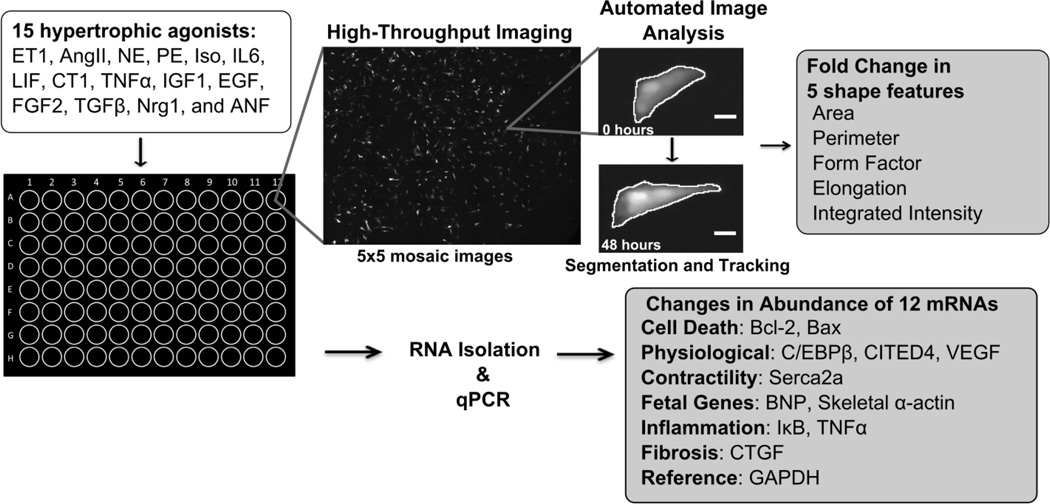
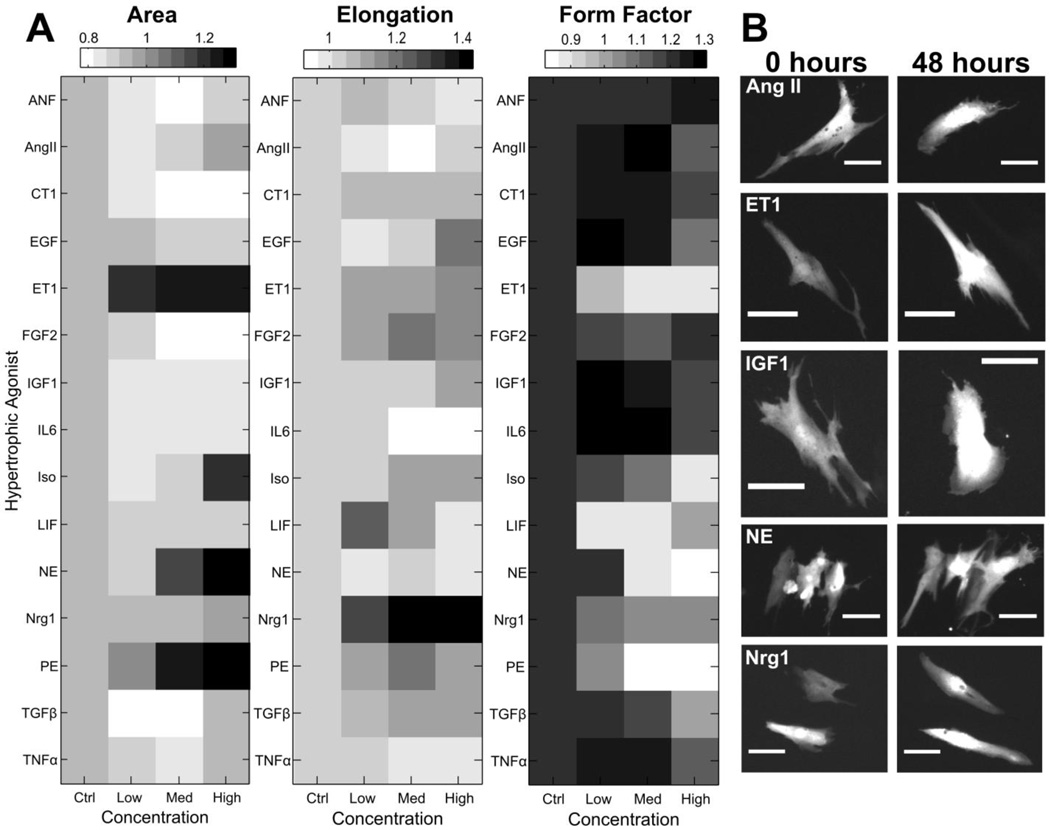
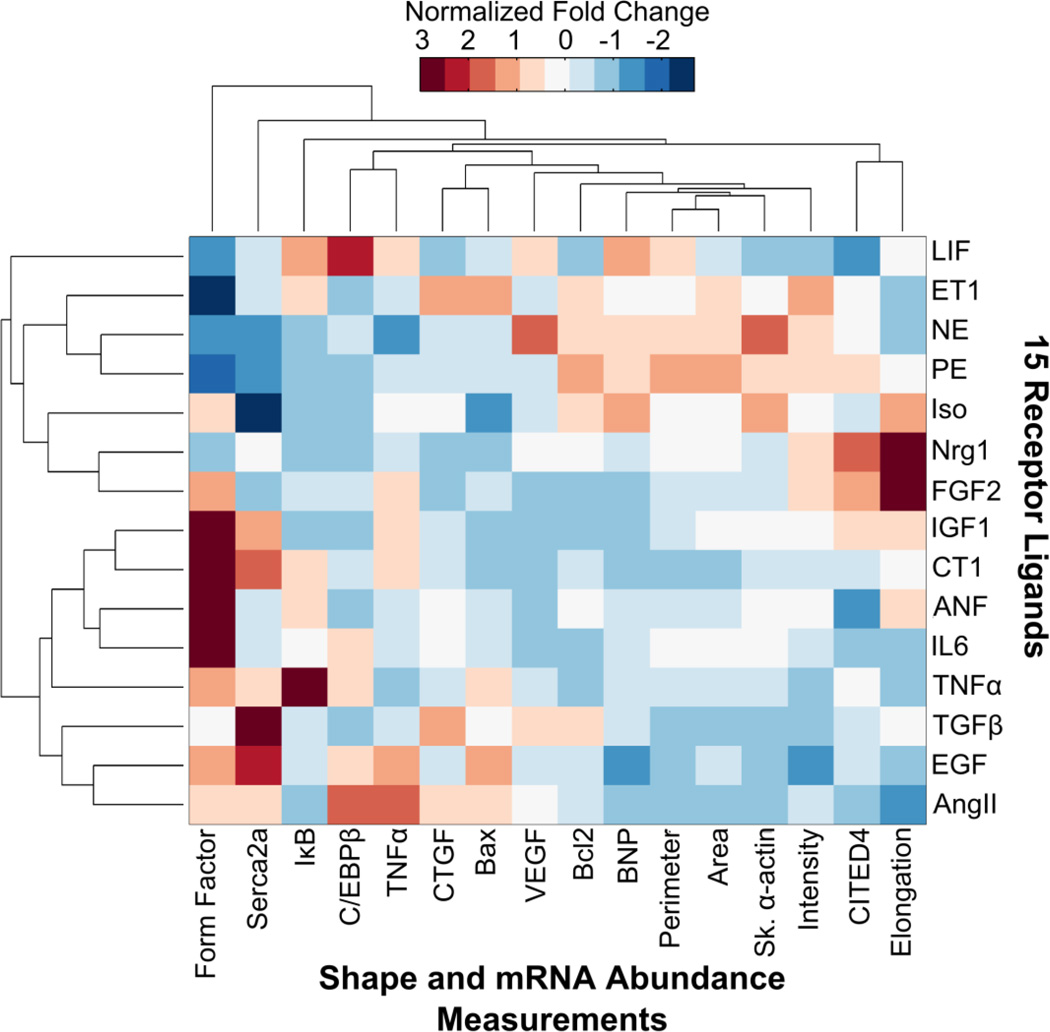
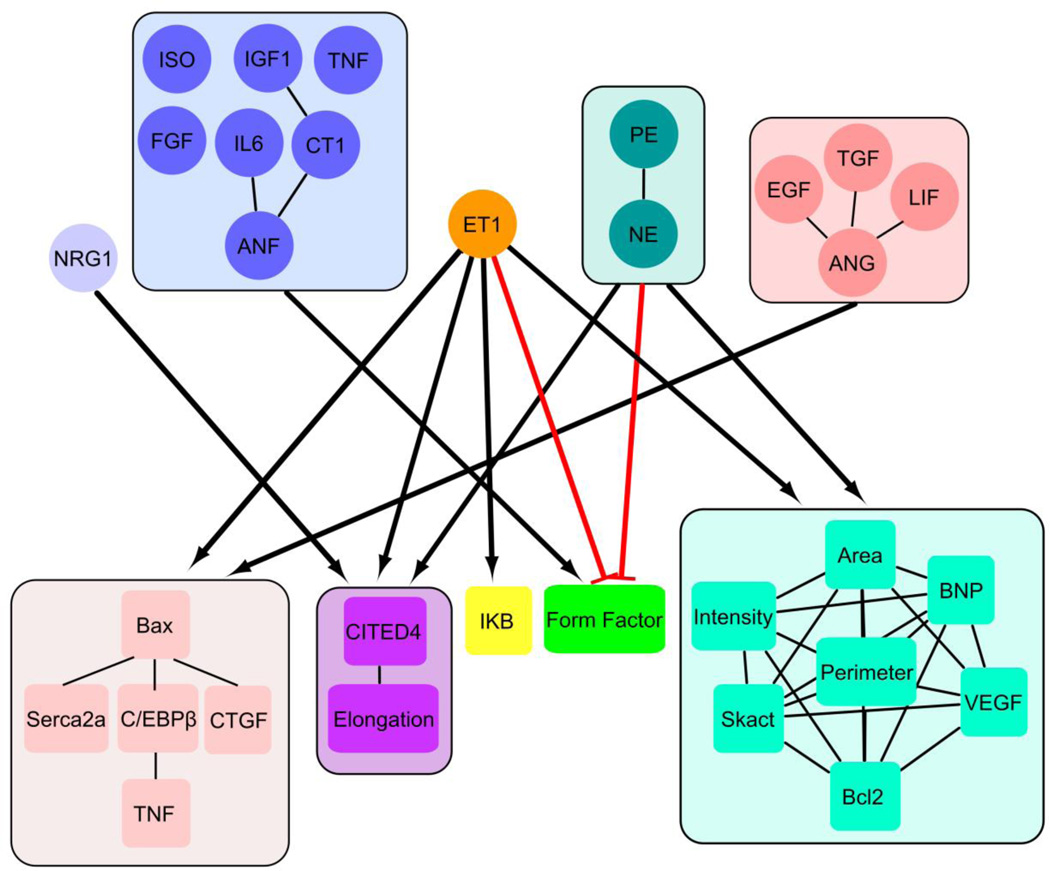
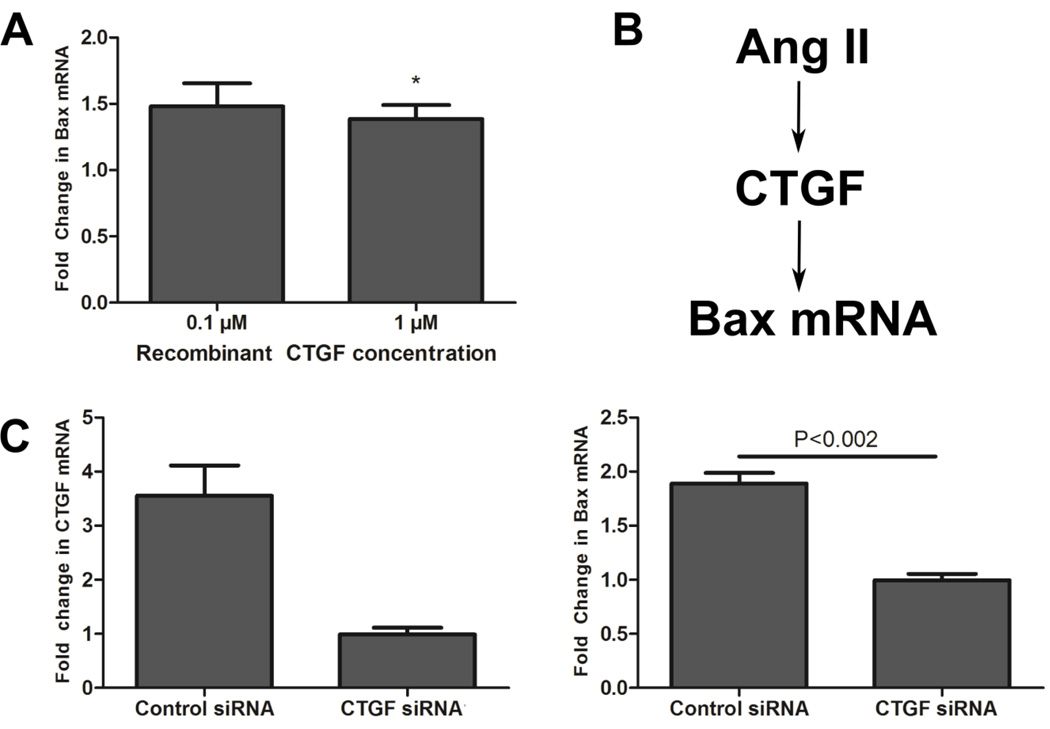
Cardiac hypertrophy is controlled by a highly connected signaling network with many effectors of cardiac myocyte size. Quantification of the contribution of individual pathways to specific changes in shape and transcript abundance is needed to better understand hypertrophy signaling and to improve heart failure therapies. We stimulated cardiac myocytes with 15 hypertrophic agonists and quantitatively characterized differential regulation of 5 shape features using high-throughput microscopy and transcript levels of 12 genes using qPCR. Transcripts measured were associated with phenotypes including fibrosis, cell death, contractility, proliferation, angiogenesis, inflammation, and the fetal cardiac gene program. While hypertrophy pathways are highly connected, the agonist screen revealed distinct hypertrophy phenotypic signatures for the 15 receptor agonists. We then used k-means clustering of inputs and outputs to identify a network map linking input modules to output modules. Five modules were identified within inputs and outputs with many maladaptive outputs grouping together in one module: Bax, C/EBPβ, Serca2a, TNFα, and CTGF. Subsequently, we identified mechanisms underlying two correlations revealed in the agonist screen: correlation between regulators of fibrosis and cell death signaling (CTGF and Bax mRNA) caused by AngII; and myocyte proliferation (CITED4 mRNA) and elongation caused by Nrg1. Follow-up experiments revealed positive regulation of Bax mRNA level by CTGF and an incoherent feedforward loop linking Nrg1, CITED4 and elongation. With this agonist screen, we identified the most influential inputs in the cardiac hypertrophy signaling network for a variety of features related to pathological and protective hypertrophy signaling and shared regulation among cardiac myocyte phenotypes.
心脏肥大受一个高度连接的信号网络控制,该网络中有许多影响心肌细胞大小的效应器。为了更好地理解肥大信号并改善心力衰竭治疗,需要量化各个信号通路对形状和转录本丰度特定变化的贡献。我们用15种肥大激动剂刺激心肌细胞,使用高通量显微镜对5种形状特征的差异调节进行定量表征,并使用qPCR对12个基因的转录水平进行定量表征。所测量的转录本与包括纤维化、细胞死亡、收缩性、增殖、血管生成、炎症和胎儿心脏基因程序等表型相关。虽然肥大信号通路高度连接,但激动剂筛选揭示了15种受体激动剂不同的肥大表型特征。然后,我们使用输入和输出的k均值聚类来识别一个将输入模块与输出模块连接起来的网络图谱。在输入和输出中识别出五个模块,许多适应不良的输出聚集在一个模块中:Bax、C/EBPβ、Serca2a、TNFα和CTGF。随后,我们确定了激动剂筛选中揭示的两种相关性的潜在机制:AngII引起的纤维化调节因子与细胞死亡信号(CTGF和Bax mRNA)之间的相关性;以及Nrg1引起的心肌细胞增殖(CITED4 mRNA)和伸长。后续实验揭示了CTGF对Bax mRNA水平的正向调节以及连接Nrg1、CITED4和伸长的非相干前馈环。通过这种激动剂筛选,我们确定了心脏肥大信号网络中对于与病理性和保护性肥大信号相关的各种特征以及心肌细胞表型之间共享调节最具影响力的输入。