Wang Hongyun, Xie Yuling, Guan Longfei, Elkin Kenneth, Xiao Junjie
Institute of Geriatrics (Shanghai University), Affiliated Nantong Hospital of Shanghai University (The Sixth People's Hospital of Nantong), School of Medicine, Shanghai University, Nantong, China.
Cardiac Regeneration and Ageing Lab, Institute of Cardiovascular Sciences, Shanghai Engineering Research Center of Organ Repair, School of Life Science, Shanghai University, Shanghai, China.
NPJ Regen Med. 2021 Apr 9;6(1):23. doi: 10.1038/s41536-021-00128-0.
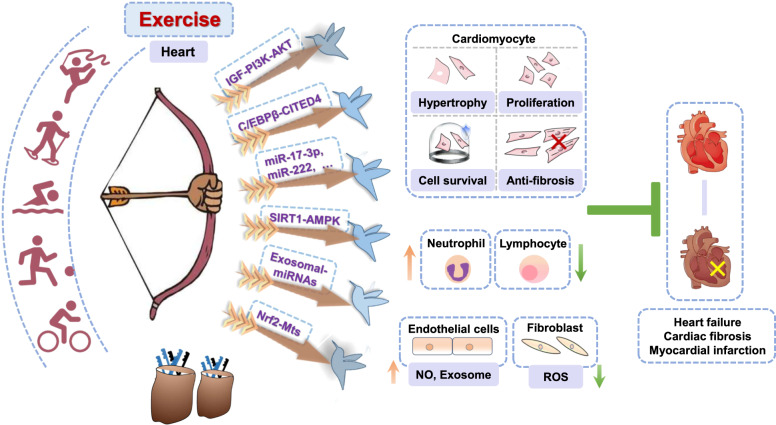
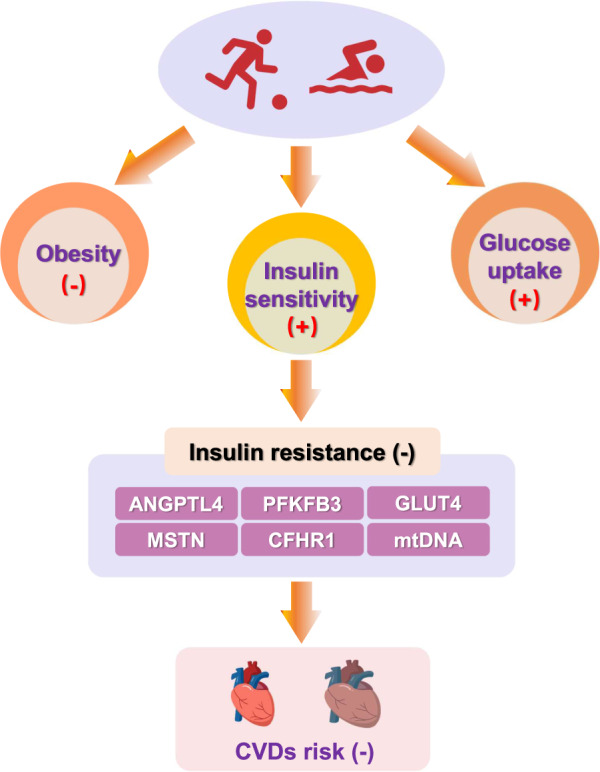
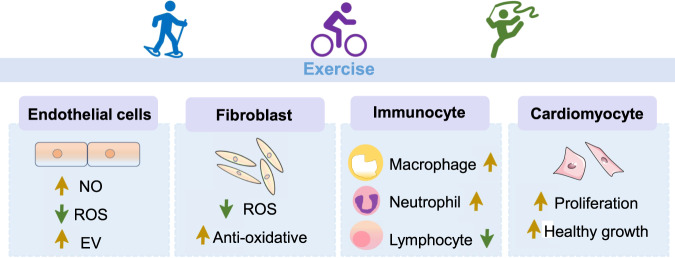
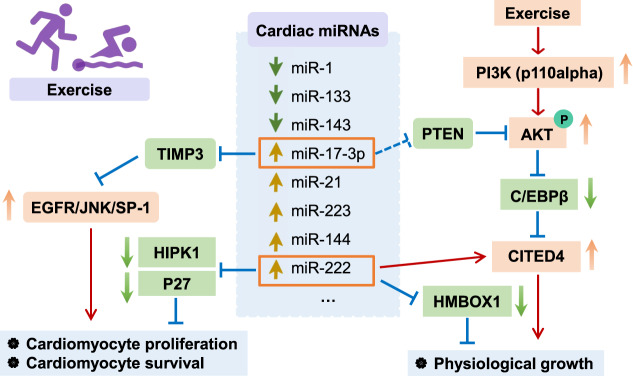
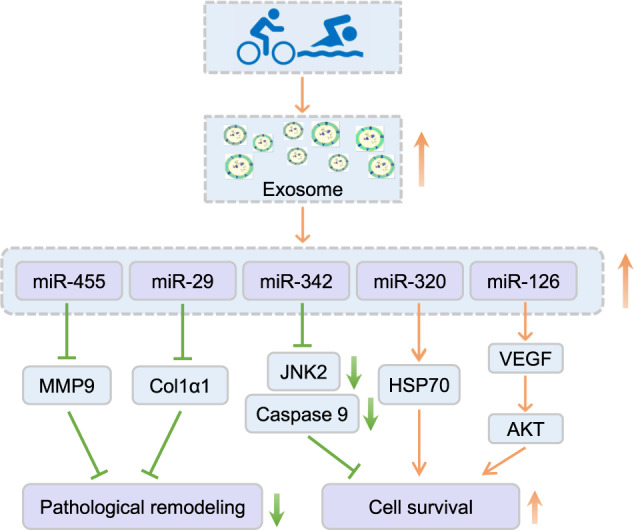
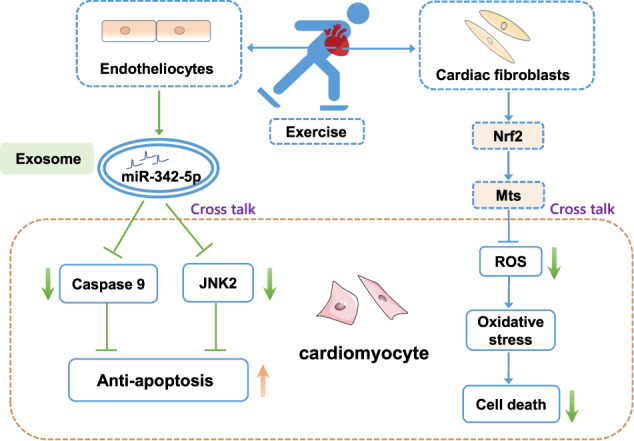
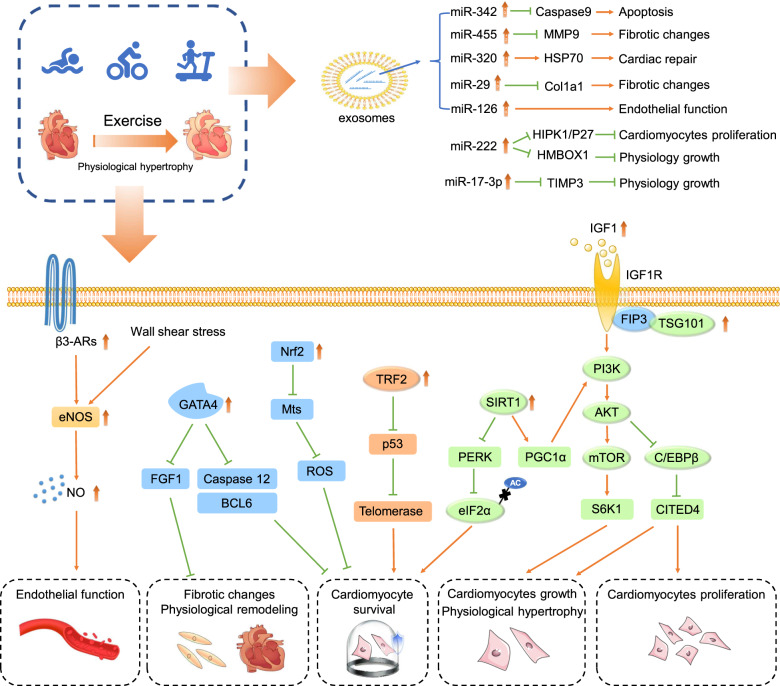
Cardiovascular diseases (CVDs) are a major cause of mortality worldwide, which are mainly driven by factors such as aging, sedentary lifestyle, and excess alcohol use. Exercise targets several molecules and protects hearts against many of these physiological and pathological stimuli. Accordingly, it is widely recognized as an effective therapeutic strategy for CVD. To investigate the molecular mechanism of exercise in cardiac protection, we identify and describe several crucial targets identified from exercised hearts. These targets include insulin-like growth factor 1 (IGF1)-phosphatidylinositol 3 phosphate kinase (PI3K)/protein kinase B (AKT), transcription factor CCAAT/enhancer-binding protein β (C/EBPβ), cardiac microRNAs (miRNAs, miR-222 and miR-17-3p etc.), exosomal-miRNAs (miR-342, miR-29, etc.), Sirtuin 1 (SIRT1), and nuclear factor erythroid 2‑related factor/metallothioneins (Nrf2/Mts). Targets identified from exercised hearts can alleviate injury via multiple avenues, including: (1) promoting cardiomyocyte proliferation; (2) facilitating cardiomyocyte growth and physiologic hypertrophy; (3) elevating the anti-apoptotic capacity of cardiomyocytes; (4) improving vascular endothelial function; (5) inhibiting pathological remodeling and fibrosis; (6) promoting extracellular vesicles (EVs) production and exosomal-molecules transfer. Exercise is one treatment ('stone'), which is cardioprotective via multiple avenues ('birds'), and is considered 'killing multiple birds with one stone' in this review. Further, we discuss the potential application of EV cargos in CVD treatment. We provide an outline of targets identified from the exercised heart and their mechanisms, as well as novel ideas for CVD treatment, which may provide novel direction for preclinical trials in cardiac rehabilitation.
心血管疾病(CVDs)是全球主要的死亡原因,主要由衰老、久坐不动的生活方式和过量饮酒等因素驱动。运动作用于多种分子,保护心脏免受许多这些生理和病理刺激。因此,运动被广泛认为是治疗心血管疾病的有效策略。为了研究运动对心脏保护的分子机制,我们识别并描述了从运动心脏中确定的几个关键靶点。这些靶点包括胰岛素样生长因子1(IGF1)-磷脂酰肌醇3磷酸激酶(PI3K)/蛋白激酶B(AKT)、转录因子CCAAT/增强子结合蛋白β(C/EBPβ)、心脏微小RNA(miRNAs,如miR-222和miR-17-3p等)、外泌体微小RNA(miR-342、miR-29等)、沉默调节蛋白1(SIRT1)以及核因子红细胞2相关因子/金属硫蛋白(Nrf2/Mts)。从运动心脏中确定的靶点可通过多种途径减轻损伤,包括:(1)促进心肌细胞增殖;(2)促进心肌细胞生长和生理性肥大;(3)提高心肌细胞的抗凋亡能力;(4)改善血管内皮功能;(5)抑制病理性重塑和纤维化;(6)促进细胞外囊泡(EVs)产生和外泌体分子转移。运动是一种治疗方法(“一石”),通过多种途径(“多鸟”)起到心脏保护作用,在本综述中被认为是“一石多鸟”。此外,我们讨论了细胞外囊泡货物在心血管疾病治疗中的潜在应用。我们概述了从运动心脏中确定的靶点及其机制,以及心血管疾病治疗新观点,这可能为心脏康复的临床前试验提供新方向。