Bouzid Mohamed Amine, Hammouda Omar, Matran Regis, Robin Sophie, Fabre Claudine
Université Lille Nord de France, EA 4488, Activité Physique Muscle Santé, Faculté des Sciences du Sport et de l'Education Physique, Ronchin, France.
Research Laboratory «Sport Performance Optimisation», National Center of Medecine and Science in Sports, Tunis, Tunisia.
PLoS One. 2014 Mar 11;9(3):e90420. doi: 10.1371/journal.pone.0090420. eCollection 2014.
The aim of this study was to evaluate whether oxidative stress markers and biomarkers of muscle injury would be affected by aging at rest and in response to an incremental exhaustive exercise.
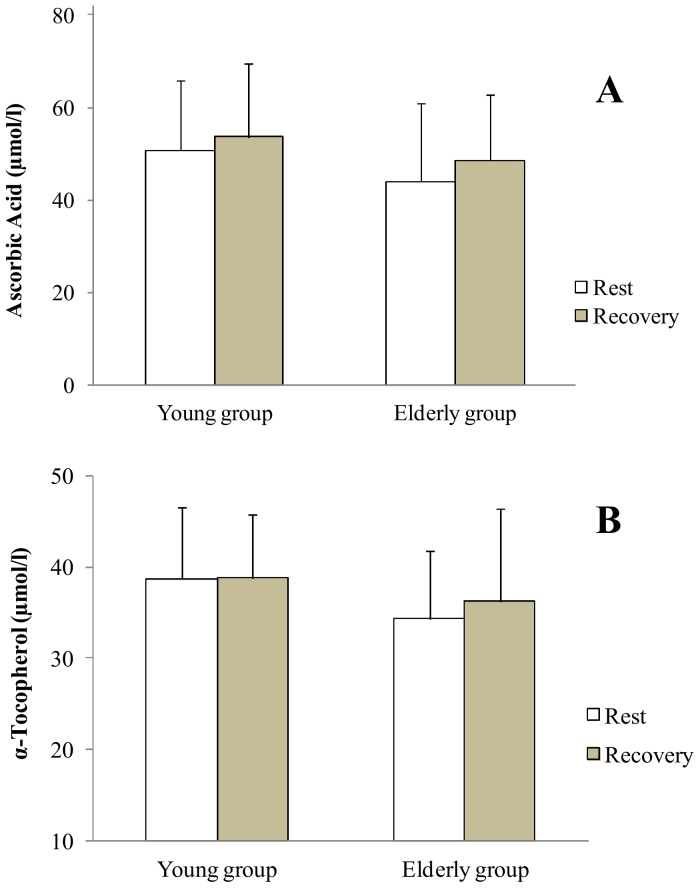
Fifteen young (20.3 ± 2.8 years) and fifteen older adults (65.1 ± 3.5 years) performed an incremental cycle ergometer test to exhaustion. Before and after exercise, oxidative stress [superoxide dismutase (SOD), glutathione peroxidase (GPX), glutathione reductase (GR), ascorbic acid, α-Tocopherol, malondialdehyde (MDA)] and muscle injury [creatine kinase (CK), lactate deshydrogenase (LDH)] biomarkers were assessed.
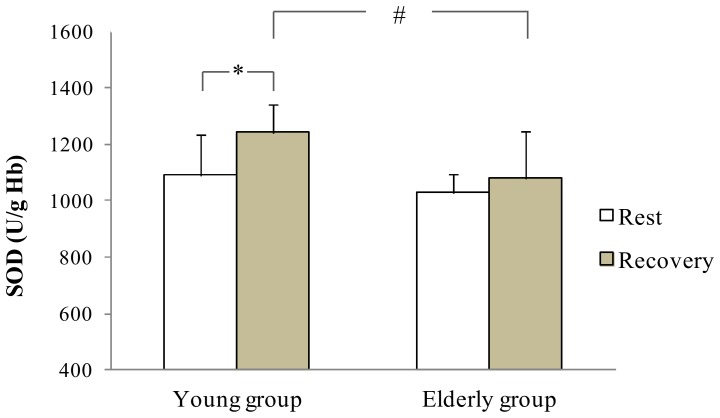
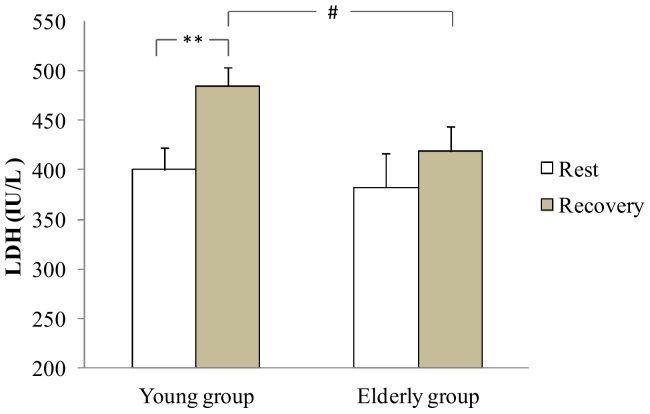
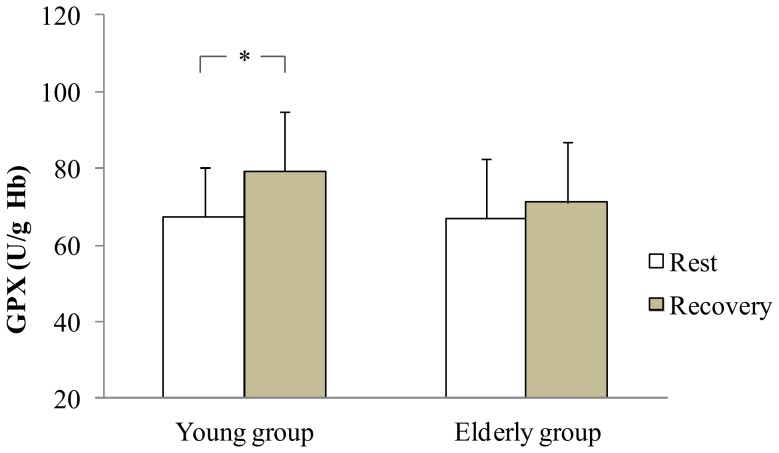
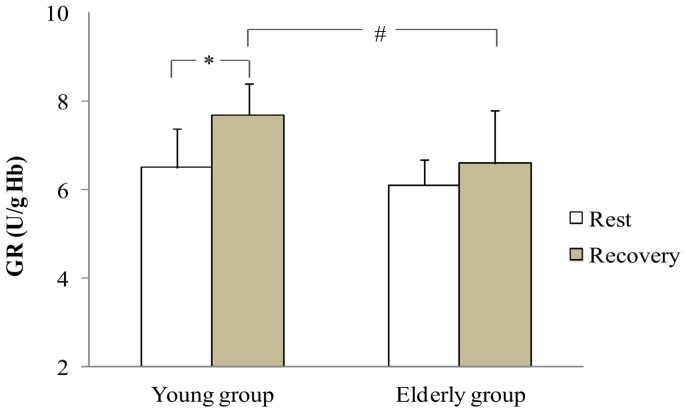
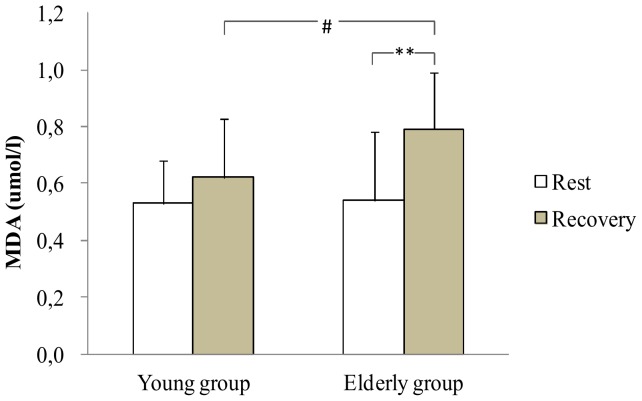
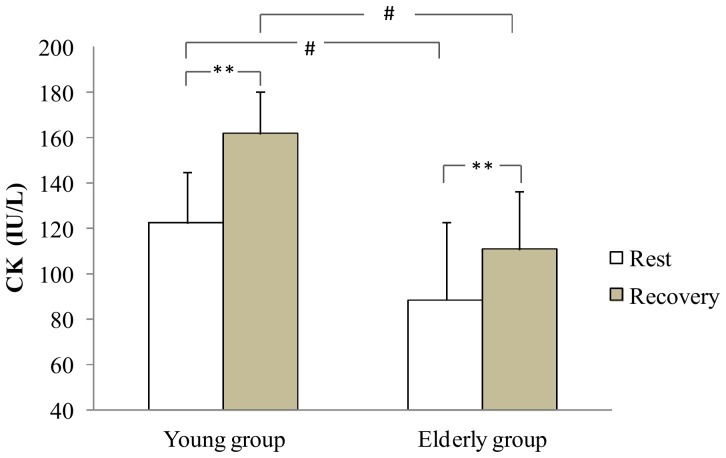
At rest, there was no difference in oxidative stress markers and LDH level between the groups, however CK was significantly higher in the young group than the elderly group (p<0.05). During recovery, in comparison with resting values, a significant increase in SOD (1092 ± 145.9 vs. 1243 ± 98 U/g Hb), GPX (67.4 ± 12.7 vs. 79.2 ± 15.6 U/g Hb) and GR (6.5 ± 0.9 vs. 7.7 ± 0.5 U/g Hb) activities were observed only in the young group (p<0.05). MDA has increased only in the older group (0.54 ± 0.2 vs. 0.79 ± 0.2 µmol/l) (p<0.01). CK increased in both groups (young group: 122.5 ± 22.2 vs. 161.9 ± 18.7 UI/l; older group: 88.8 ± 34.1 vs. 111.1 ± 25.9 UI/l) (p<0.01), however LDH has increased only in the young group (400.5 ± 22.2 vs. 485 ± 18.7 UI/l) (p<0.01) without alteration in the older group (382.8 ± 34.1 vs. 418.5 ± 25.9 UI/l).
These findings indicate that aging is associated with a decrease in antioxidant efficiency and an increase in oxidative stress damage. Furthermore, older adults would not more susceptible to exercise-induced muscle injury than young people.
本研究旨在评估静息状态下以及递增力竭运动后,氧化应激标志物和肌肉损伤生物标志物是否会受到衰老的影响。
15名年轻人(20.3±2.8岁)和15名老年人(65.1±3.5岁)进行递增式蹬车测力计测试直至力竭。在运动前后,评估氧化应激[超氧化物歧化酶(SOD)、谷胱甘肽过氧化物酶(GPX)、谷胱甘肽还原酶(GR)、抗坏血酸、α-生育酚、丙二醛(MDA)]和肌肉损伤[肌酸激酶(CK)、乳酸脱氢酶(LDH)]生物标志物。
静息状态下,两组之间的氧化应激标志物和LDH水平无差异,然而年轻组的CK显著高于老年组(p<0.05)。在恢复过程中,与静息值相比,仅在年轻组中观察到SOD(1092±145.9对1243±98 U/g Hb)、GPX(67.4±12.7对79.2±15.6 U/g Hb)和GR(6.5±0.9对7.7±0.5 U/g Hb)活性显著增加(p<0.05)。MDA仅在老年组中增加(0.54±0.2对0.79±0.2 µmol/l)(p<0.01)。两组的CK均增加(年轻组:122.5±22.2对161.9±18.7 UI/l;老年组:88.8±34.1对111.1±25.9 UI/l)(p<0.01),然而LDH仅在年轻组中增加(400.5±22.2对485±18.7 UI/l)(p<0.01),老年组无变化(382.8±34.1对418.5±25.9 UI/l)。
这些发现表明,衰老与抗氧化效率降低和氧化应激损伤增加有关。此外,老年人并不比年轻人更容易受到运动诱导的肌肉损伤。