Breton Audrey, Jerbi Karim, Henaff Marie-Anne, Cheylus Anne, Baudouin Jean-Yves, Schmitz Christina, Krolak-Salmon Pierre, Van der Henst Jean-Baptiste
CNRS, Laboratoire Langage, Cerveau et Cognition (L2C2), Université Lyon 1, UMR 5304, Bron, France.
CNRS/INSERM, Centre de Recherche en Neuroscience de Lyon (CNRL), U1028, UMR5292, Bron, France.
PLoS One. 2014 Mar 12;9(3):e91451. doi: 10.1371/journal.pone.0091451. eCollection 2014.
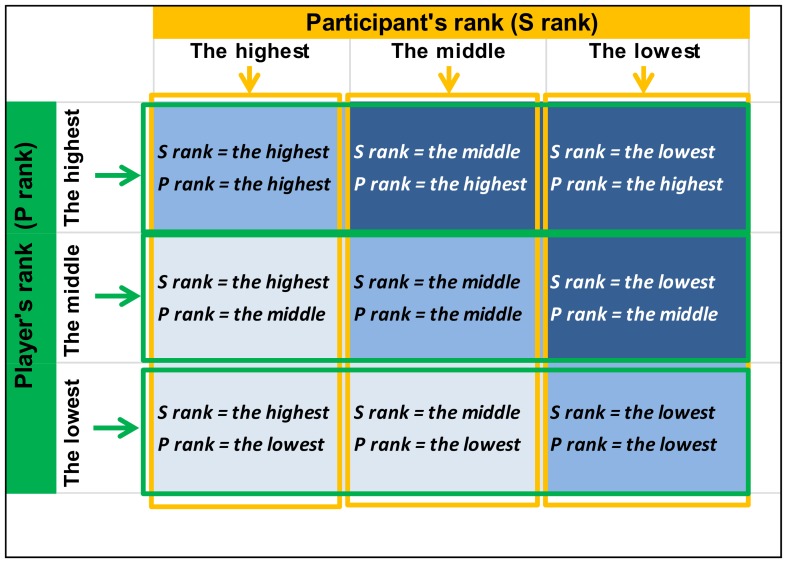
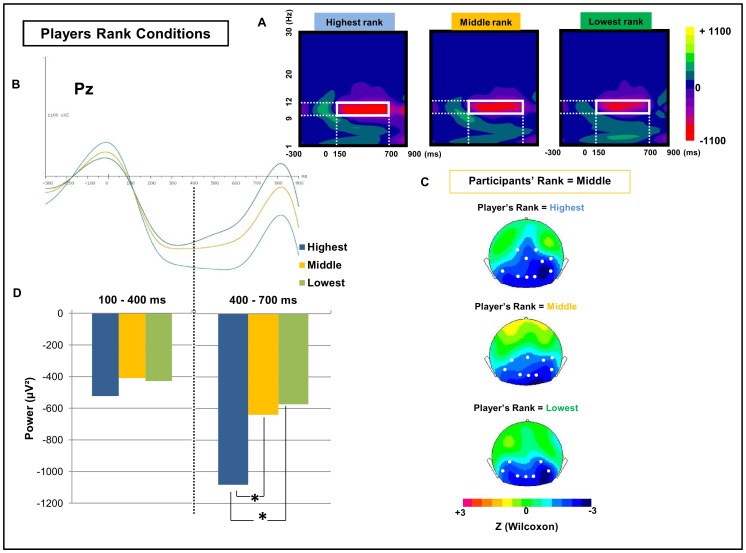
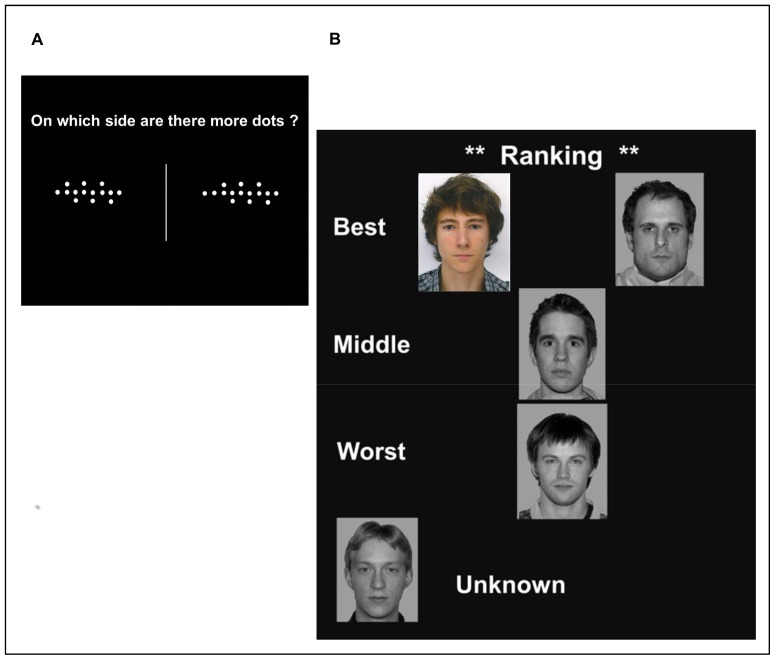
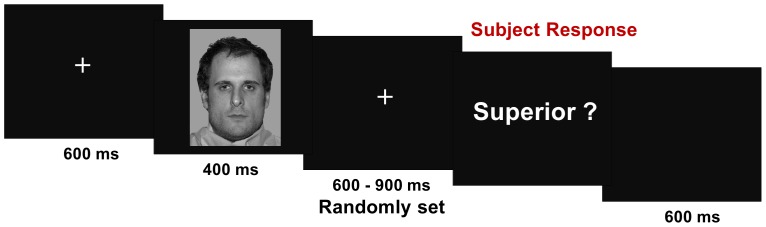
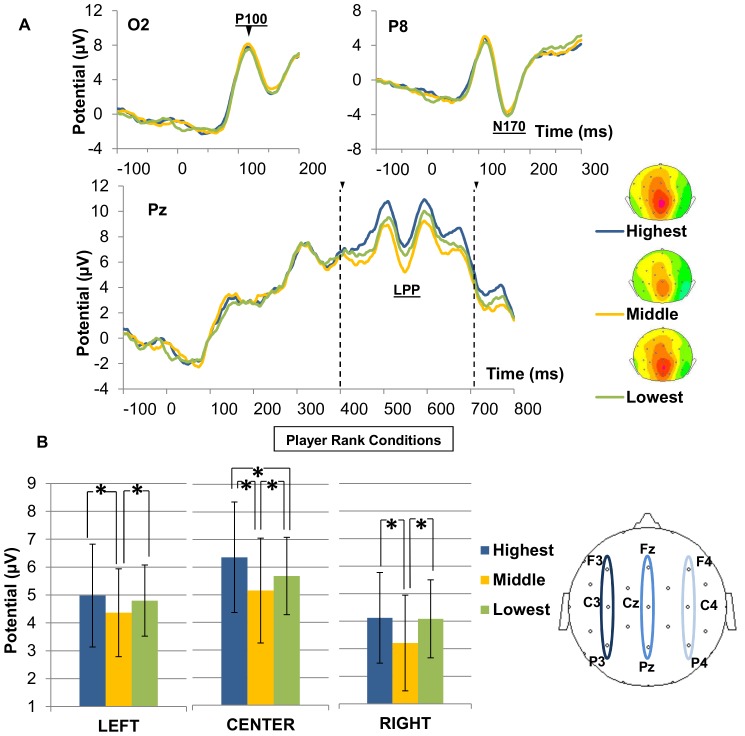
Recognition of social hierarchy is a key feature that helps us navigate through our complex social environment. Neuroimaging studies have identified brain structures involved in the processing of hierarchical stimuli but the precise temporal dynamics of brain activity associated with such processing remains largely unknown. Here, we used electroencephalography to examine the effect of social hierarchy on neural responses elicited by faces. In contrast to previous studies, the key manipulation was that a hierarchical context was constructed, not by varying facial expressions, but by presenting neutral-expression faces in a game setting. Once the performance-based hierarchy was established, participants were presented with high-rank, middle-rank and low-rank player faces and had to evaluate the rank of each face with respect to their own position. Both event-related potentials and task-related oscillatory activity were investigated. Three main findings emerge from the study. First, the experimental manipulation had no effect on the early N170 component, which may suggest that hierarchy did not modulate the structural encoding of neutral-expression faces. Second, hierarchy significantly modulated the amplitude of the late positive potential (LPP) within a 400-700 ms time-window, with more a prominent LPP occurring when the participants processed the face of the highest-rank player. Third, high-rank faces were associated with the highest reduction of alpha power. Taken together these findings provide novel electrophysiological evidence for enhanced allocation of attentional resource in the presence of high-rank faces. At a broader level, this study brings new insights into the neural processing underlying social categorization.
对社会等级制度的认知是一项关键特征,它有助于我们在复杂的社会环境中前行。神经影像学研究已经确定了参与处理等级刺激的脑结构,但与此类处理相关的脑活动的确切时间动态在很大程度上仍不为人知。在此,我们使用脑电图来研究社会等级制度对面部引发的神经反应的影响。与先前的研究不同,关键的操作是构建一个等级背景,不是通过改变面部表情,而是在游戏环境中呈现中性表情的面孔。一旦基于表现的等级制度建立起来,就向参与者展示高等级、中等级和低等级玩家的面孔,并且他们必须根据自己的位置评估每张面孔的等级。我们对事件相关电位和任务相关的振荡活动都进行了研究。该研究得出了三个主要发现。第一,实验操作对早期的N170成分没有影响,这可能表明等级制度并未调节中性表情面孔的结构编码。第二,等级制度在400 - 700毫秒的时间窗口内显著调节了晚期正电位(LPP)的幅度,当参与者处理最高等级玩家的面孔时,会出现更明显的LPP。第三,高等级面孔与α波功率的最大降低相关。综合这些发现为在高等级面孔出现时注意力资源的增强分配提供了新的电生理证据。在更广泛的层面上,这项研究为社会分类背后的神经处理带来了新的见解。