Montiel Eugenia E, Cabrero Josefa, Ruiz-Estévez Mercedes, Burke William D, Eickbush Thomas H, Camacho Juan Pedro M, López-León María Dolores
Departamento de Genética, Facultad de Ciencias, Universidad de Granada, Granada, Spain.
Department of Biology, University of Rochester, Rochester, New York, United States of America.
PLoS One. 2014 Mar 14;9(3):e91820. doi: 10.1371/journal.pone.0091820. eCollection 2014.
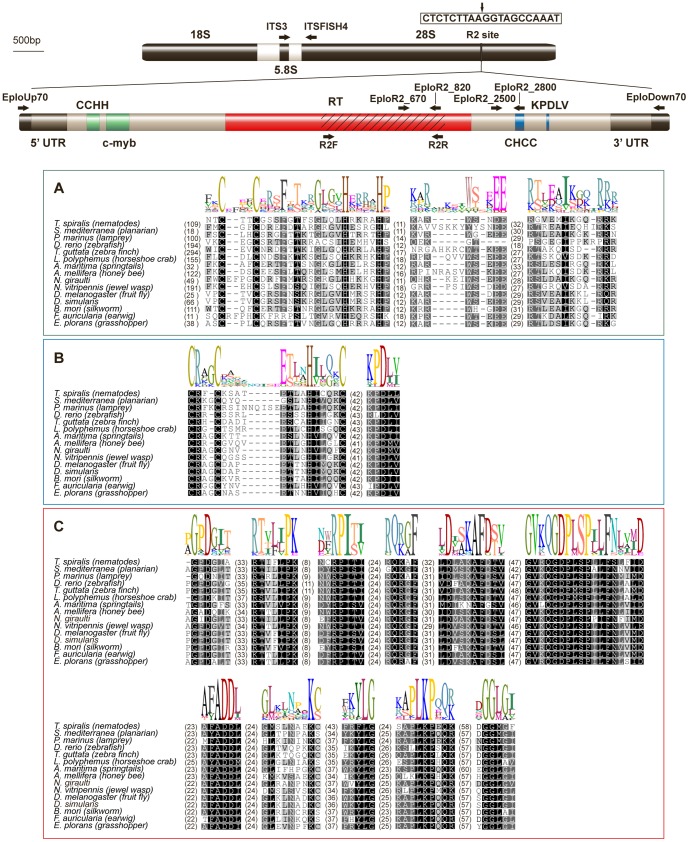
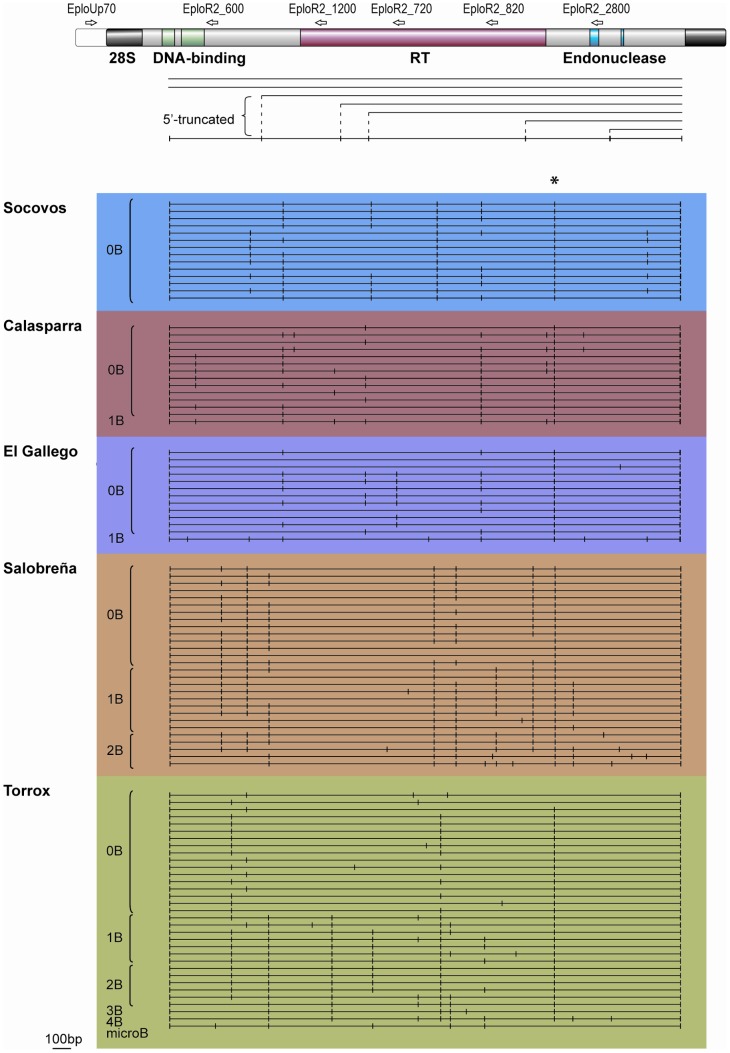
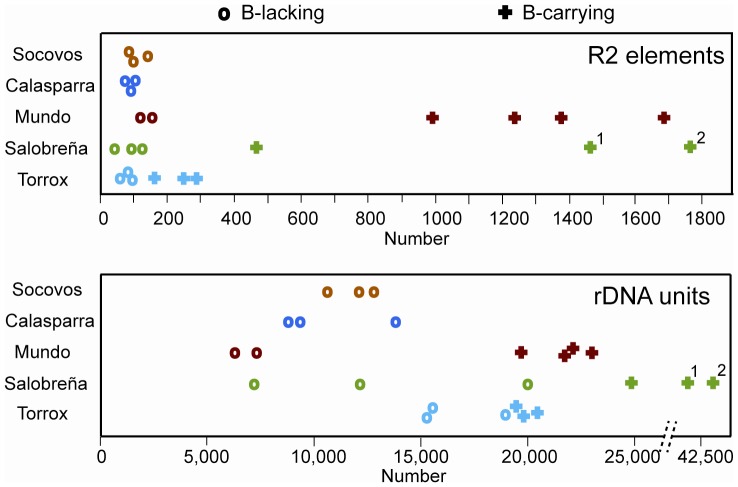
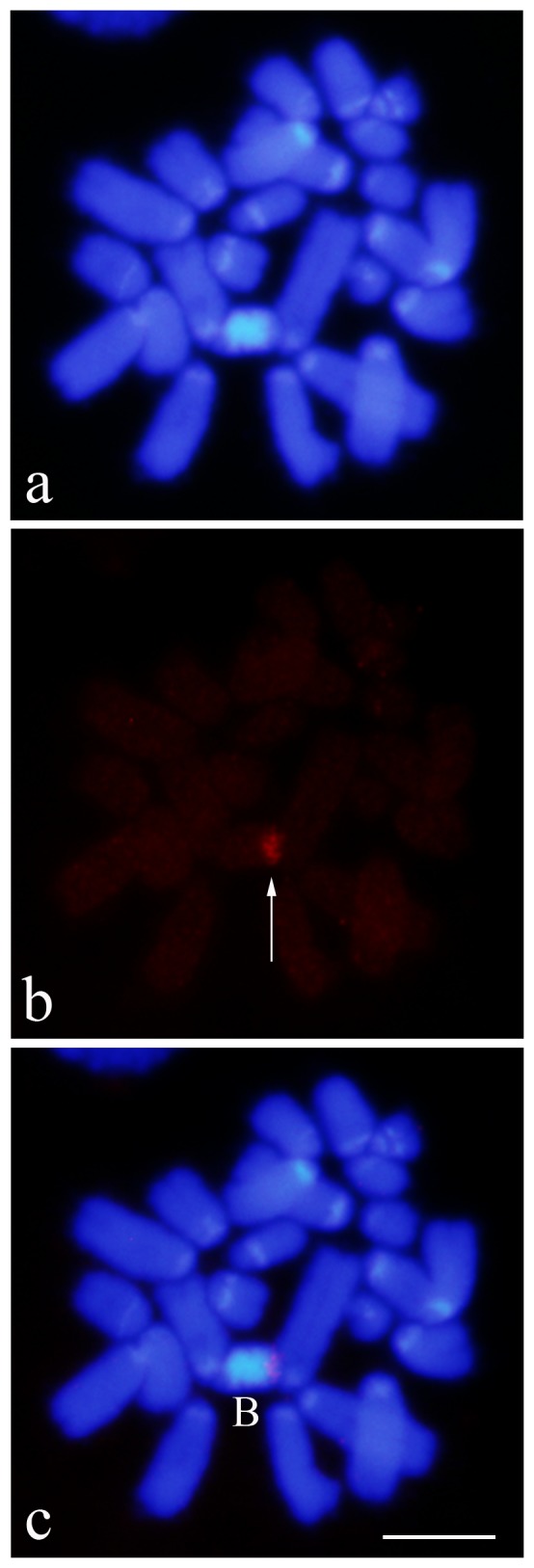
R2 non-LTR retrotransposons exclusively insert into the 28S rRNA genes of their host, and are expressed by co-transcription with the rDNA unit. The grasshopper Eyprepocnemis plorans contains transcribed rDNA clusters on most of its A chromosomes, as well as non-transcribed rDNA clusters on the parasitic B chromosomes found in many populations. Here the structure of the E. plorans R2 element, its abundance relative to the number of rDNA units and its retrotransposition activity were determined. Animals screened from five populations contained on average over 12,000 rDNA units on their A chromosomes, but surprisingly only about 100 R2 elements. Monitoring the patterns of R2 insertions in individuals from these populations revealed only low levels of retrotransposition. The low rates of R2 insertion observed in E. plorans differ from the high levels of R2 insertion previously observed in insect species that have many fewer rDNA units. It is proposed that high levels of R2 are strongly selected against in E. plorans, because the rDNA transcription machinery in this species is unable to differentiate between R2-inserted and uninserted units. The B chromosomes of E. plorans contain an additional 7,000 to 15,000 rDNA units, but in contrast to the A chromosomes, from 150 to over 1,500 R2 elements. The higher concentration of R2 in the inactive B chromosomes rDNA clusters suggests these chromosomes can act as a sink for R2 insertions thus further reducing the level of insertions on the A chromosomes. These studies suggest an interesting evolutionary relationship between the parasitic B chromosomes and R2 elements.
R2非长末端重复逆转座子专门插入其宿主的28S rRNA基因中,并通过与rDNA单元共转录来表达。蝗虫Eyprepocnemis plorans的大多数A染色体上都有转录的rDNA簇,以及许多种群中寄生B染色体上的非转录rDNA簇。在此,研究确定了E. plorans R2元件的结构、其相对于rDNA单元数量的丰度及其逆转座活性。从五个种群中筛选出的动物,其A染色体上平均含有超过12,000个rDNA单元,但令人惊讶的是,只有大约100个R2元件。监测这些种群个体中R2插入的模式,发现逆转座水平很低。在E. plorans中观察到的低R2插入率,与之前在rDNA单元少得多的昆虫物种中观察到的高R2插入水平不同。有人提出,在E. plorans中,高水平的R2受到强烈的选择抑制,因为该物种的rDNA转录机制无法区分插入R2的单元和未插入的单元。E. plorans的B染色体含有另外7,000至15,000个rDNA单元,但与A染色体不同的是,含有150至1,500多个R2元件。在无活性的B染色体rDNA簇中较高浓度的R2表明,这些染色体可以作为R2插入的汇聚点,从而进一步降低A染色体上的插入水平。这些研究表明寄生B染色体和R2元件之间存在有趣的进化关系。