Ohlsson Claes, Engdahl Cecilia, Fåk Frida, Andersson Annica, Windahl Sara H, Farman Helen H, Movérare-Skrtic Sofia, Islander Ulrika, Sjögren Klara
Centre for Bone and Arthritis Research, Institute of Medicine, Sahlgrenska Academy at University of Gothenburg, Gothenburg, Sweden.
Centre for Bone and Arthritis Research, Institute of Medicine, Sahlgrenska Academy at University of Gothenburg, Gothenburg, Sweden; Department of Rheumatology and Inflammation Research, Institute of Medicine, Sahlgrenska Academy at University of Gothenburg, Gothenburg, Sweden.
PLoS One. 2014 Mar 17;9(3):e92368. doi: 10.1371/journal.pone.0092368. eCollection 2014.
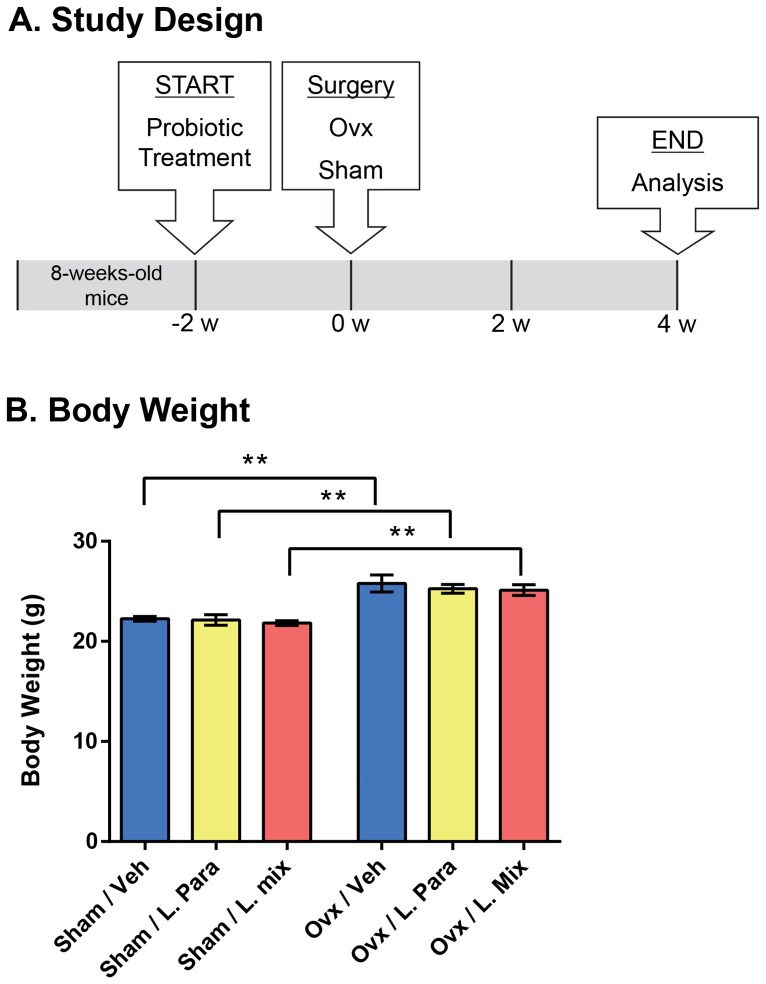
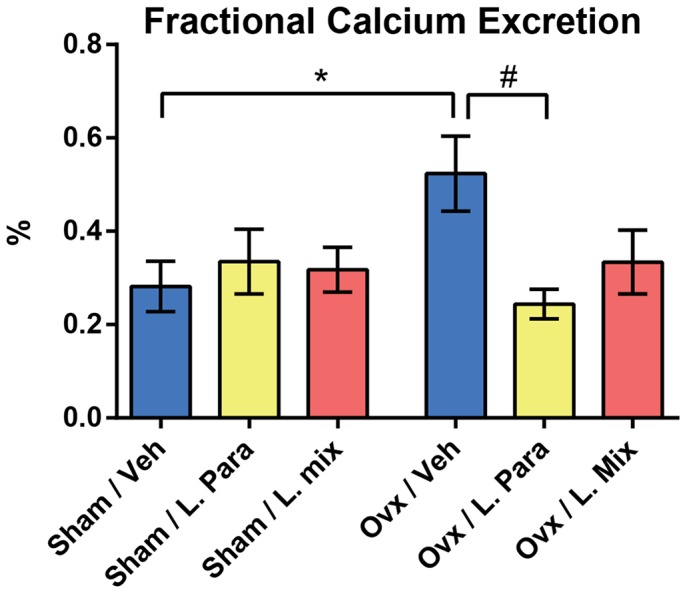
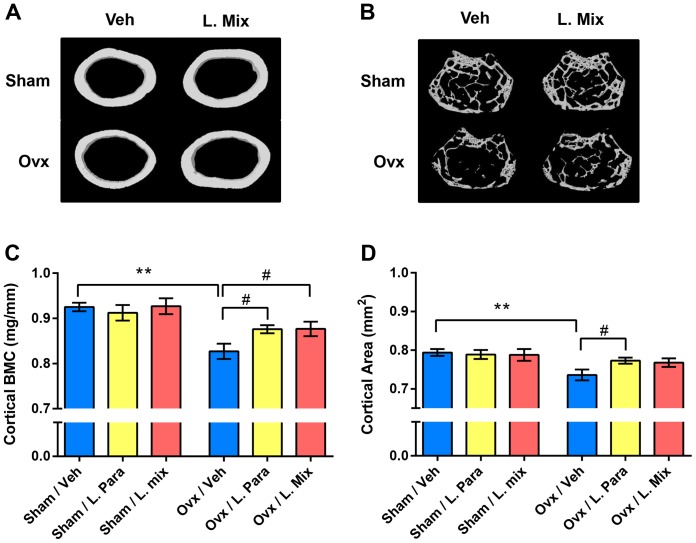
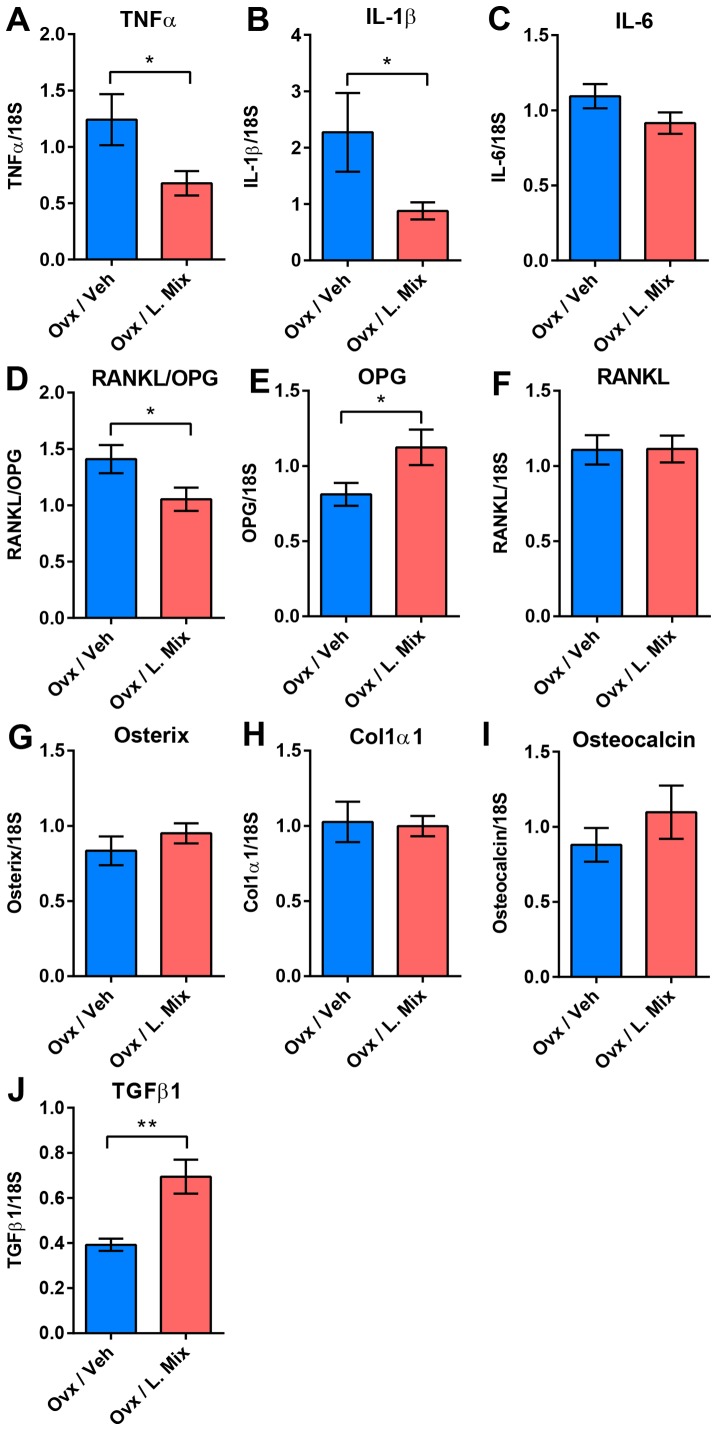
The gut microbiota (GM) modulates the hosts metabolism and immune system. Probiotic bacteria are defined as live microorganisms which when administered in adequate amounts confer a health benefit on the host and can alter the composition of the GM. Germ-free mice have increased bone mass associated with reduced bone resorption indicating that the GM also regulates bone mass. Ovariectomy (ovx) results in bone loss associated with altered immune status. The purpose of this study was to determine if probiotic treatment protects mice from ovx-induced bone loss. Mice were treated with either a single Lactobacillus (L) strain, L. paracasei DSM13434 (L. para) or a mixture of three strains, L. paracasei DSM13434, L. plantarum DSM 15312 and DSM 15313 (L. mix) given in the drinking water during 6 weeks, starting two weeks before ovx. Both the L. para and the L. mix treatment protected mice from ovx-induced cortical bone loss and bone resorption. Cortical bone mineral content was higher in both L. para and L. mix treated ovx mice compared to vehicle (veh) treated ovx mice. Serum levels of the resorption marker C-terminal telopeptides and the urinary fractional excretion of calcium were increased by ovx in the veh treated but not in the L. para or the L. mix treated mice. Probiotic treatment reduced the expression of the two inflammatory cytokines, TNFα and IL-1β, and increased the expression of OPG, a potent inhibitor of osteoclastogenesis, in cortical bone of ovx mice. In addition, ovx decreased the frequency of regulatory T cells in bone marrow of veh treated but not probiotic treated mice. In conclusion, treatment with L. para or the L. mix prevents ovx-induced cortical bone loss. Our findings indicate that these probiotic treatments alter the immune status in bone resulting in attenuated bone resorption in ovx mice.
肠道微生物群(GM)调节宿主的新陈代谢和免疫系统。益生菌被定义为活的微生物,当给予足够数量时,能给宿主带来健康益处,并可改变GM的组成。无菌小鼠的骨量增加,同时骨吸收减少,这表明GM也调节骨量。卵巢切除术(ovx)会导致骨量流失,并伴有免疫状态改变。本研究的目的是确定益生菌治疗是否能保护小鼠免受ovx诱导的骨量流失影响。在ovx前两周开始,小鼠在6周内饮用含有单一乳酸杆菌(L)菌株副干酪乳杆菌DSM13434(L. para)或三种菌株混合物(副干酪乳杆菌DSM13434、植物乳杆菌DSM 15312和DSM 15313,即L. mix)的饮用水。L. para和L. mix治疗均能保护小鼠免受ovx诱导的皮质骨丢失和骨吸收。与载体(veh)处理的ovx小鼠相比,L. para和L. mix处理的ovx小鼠的皮质骨矿物质含量更高。载体处理的ovx小鼠中,ovx会增加骨吸收标志物C端肽的血清水平和尿钙分数排泄,但在L. para或L. mix处理的小鼠中则不会。益生菌治疗降低了ovx小鼠皮质骨中两种炎性细胞因子TNFα和IL-1β的表达,并增加了破骨细胞生成的有效抑制剂OPG的表达。此外,ovx降低了载体处理小鼠骨髓中调节性T细胞的频率,但在益生菌处理的小鼠中则没有。总之,L. para或L. mix治疗可预防ovx诱导的皮质骨丢失。我们的研究结果表明,这些益生菌治疗改变了骨中的免疫状态,从而导致ovx小鼠的骨吸收减弱。