Department of Psychology, University of Essex, United Kingdom.
PLoS One. 2014 Mar 18;9(3):e91336. doi: 10.1371/journal.pone.0091336. eCollection 2014.
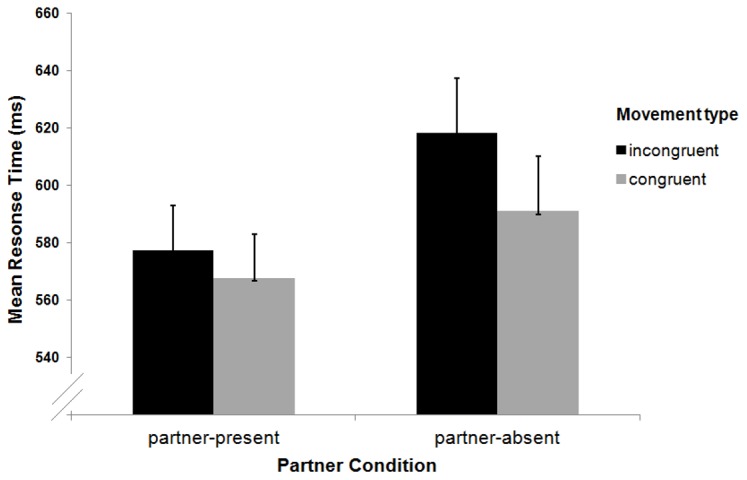
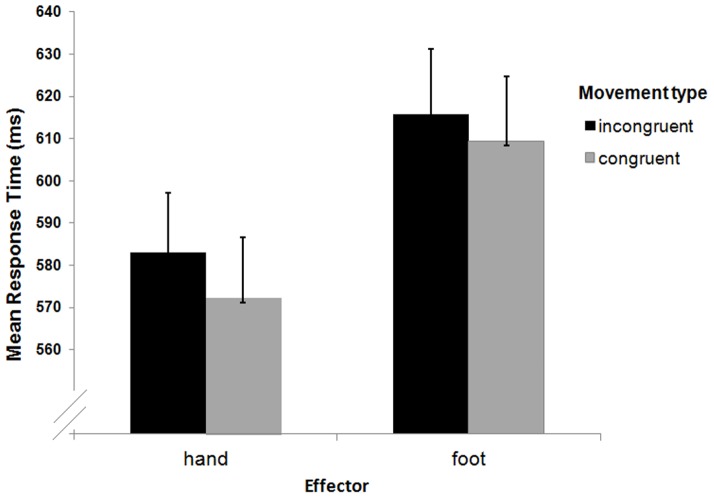
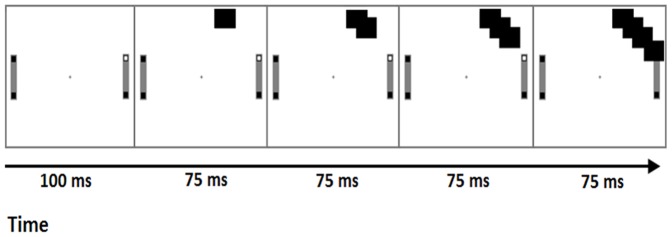
The most common explanation for joint-action effects has been the action co-representation account in which observation of another's action is represented within one's own action system. However, recent evidence has shown that the most prominent of these joint-action effects (i.e., the Social Simon effect), can occur when no co-actor is present. In the current work we examined whether another joint-action phenomenon (a movement congruency effect) can be induced when a participant performs their part of the task with a different effector to that of their co-actor and when a co-actor's action is replaced by an attention-capturing luminance signal. Contrary to what is predicted by the action co-representation account, results show that the basic movement congruency effect occurred in both situations. These findings challenge the action co-representation account of this particular effect and suggest instead that it is driven by bottom-up mechanisms.
对于联合动作效应,最常见的解释是动作共同表示理论,即观察到另一个人的动作会在自己的动作系统中得到表示。然而,最近的证据表明,这些联合动作效应中最显著的效应(即社会西蒙效应),即使在没有共同作用者的情况下也会发生。在当前的工作中,我们研究了当参与者使用不同于共同作用者的效应器执行任务的一部分,并且当共同作用者的动作被注意力捕捉的亮度信号代替时,另一种联合动作现象(运动一致性效应)是否可以被诱导。与动作共同表示理论所预测的相反,结果表明,在这两种情况下,基本的运动一致性效应都发生了。这些发现对该特定效应的动作共同表示理论提出了挑战,表明它是由自下而上的机制驱动的。