Klyachkin Yuri M, Karapetyan Anush V, Ratajczak Mariusz Z, Abdel-Latif Ahmed
Gill Heart Institute and Division of Cardiovascular Medicine, University of Kentucky and Lexington VA Medical Center, Lexington, KY 40536-020, USA.
Stem Cell Biology Institute, James Graham Brown Cancer Center, University of Louisville, Louisville, KY 40202, USA ; Department of Physiology, Pomeranian Medical University, Szczecin, Poland.
Biomed Res Int. 2014;2014:653543. doi: 10.1155/2014/653543. Epub 2014 Jan 6.
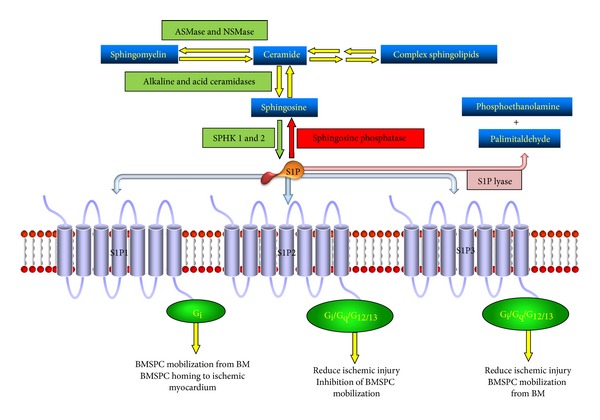
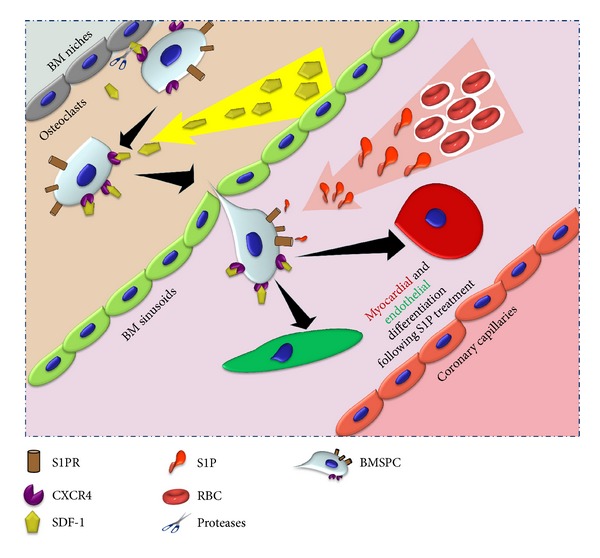
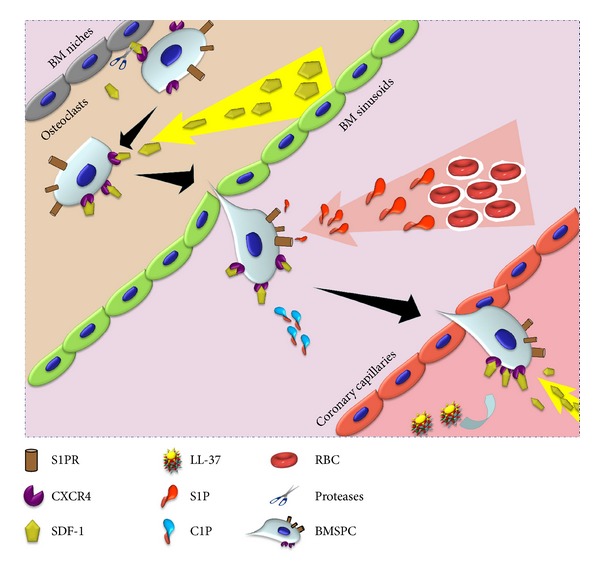
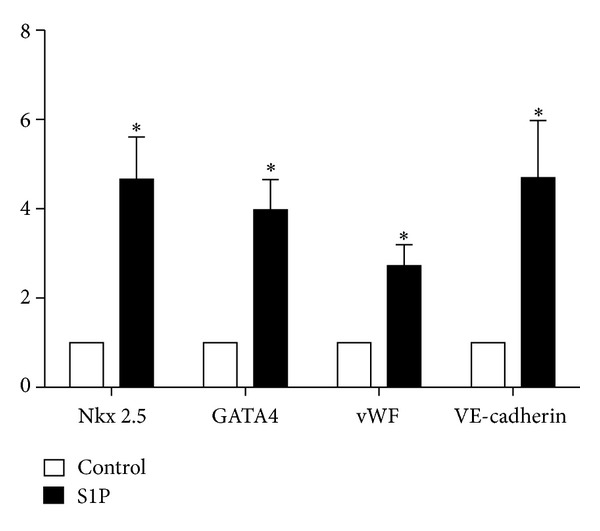
Despite significant advances in medical therapy and interventional strategies, the prognosis of millions of patients with acute myocardial infarction (AMI) and ischemic heart disease (IHD) remains poor. Currently, short of heart transplantation with all of its inherit limitations, there are no available treatment strategies that replace the infarcted myocardium. It is now well established that cardiomyocytes undergo continuous renewal, with contribution from bone marrow (BM)-derived stem/progenitor cells (SPCs). This phenomenon is upregulated during AMI by initiating multiple innate reparatory mechanisms through which BMSPCs are mobilized towards the ischemic myocardium and contribute to myocardial regeneration. While a role for the SDF-1/CXCR4 axis in retention of BMSPCs in bone marrow is undisputed, its exclusive role in their mobilization and homing to a highly proteolytic microenvironment, such as the ischemic/infarcted myocardium, is currently being challenged. Recent evidence suggests a pivotal role for bioactive lipids in the mobilization of BMSPCs at the early stages following AMI and their homing towards ischemic myocardium. This review highlights the recent advances in our understanding of the mechanisms of stem cell mobilization, provides newer evidence implicating bioactive lipids in BMSPC mobilization and differentiation, and discusses their potential as therapeutic agents in the treatment of IHD.
尽管在医学治疗和介入策略方面取得了重大进展,但数百万急性心肌梗死(AMI)和缺血性心脏病(IHD)患者的预后仍然很差。目前,除了存在所有固有局限性的心脏移植外,没有可用的治疗策略来替代梗死心肌。现在已经明确,心肌细胞会持续更新,骨髓(BM)来源的干/祖细胞(SPC)对此有贡献。在AMI期间,通过启动多种先天性修复机制,这种现象会被上调,通过这些机制,骨髓间充质干细胞被动员到缺血心肌,并促进心肌再生。虽然SDF-1/CXCR4轴在骨髓间充质干细胞保留在骨髓中的作用是无可争议的,但其在将它们动员并归巢到高度蛋白水解的微环境(如缺血/梗死心肌)中的唯一作用目前正受到挑战。最近的证据表明,生物活性脂质在AMI后早期骨髓间充质干细胞的动员及其向缺血心肌归巢中起关键作用。这篇综述强调了我们对干细胞动员机制理解的最新进展,提供了生物活性脂质参与骨髓间充质干细胞动员和分化的新证据,并讨论了它们作为治疗缺血性心脏病治疗药物的潜力。