Parent Kristin N, Erb Marcella L, Cardone Giovanni, Nguyen Katrina, Gilcrease Eddie B, Porcek Natalia B, Pogliano Joe, Baker Timothy S, Casjens Sherwood R
Department of Biochemistry and Molecular Biology, Michigan State University, East Lansing, MI, 48824, USA; Department of Chemistry & Biochemistry, University of California, San Diego, La Jolla, CA, 92093, USA.
Mol Microbiol. 2014 Apr;92(1):47-60. doi: 10.1111/mmi.12536. Epub 2014 Mar 6.
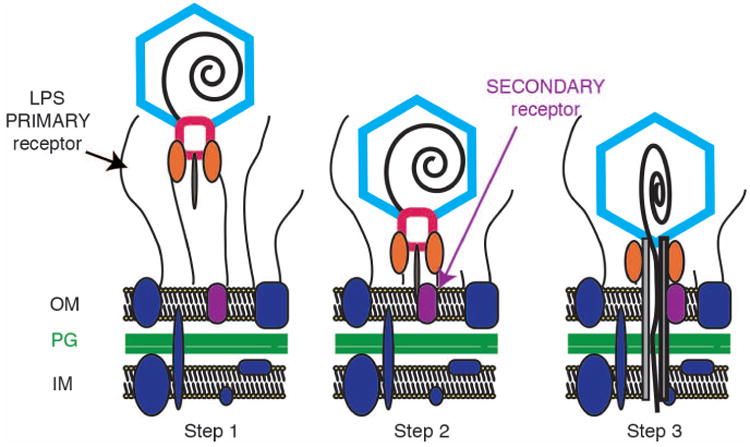
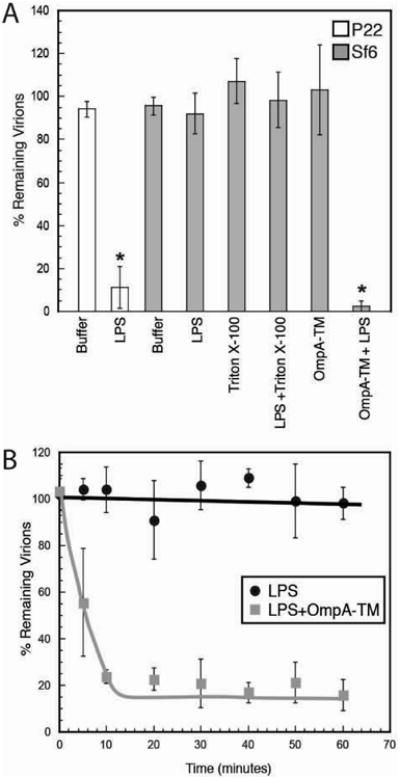
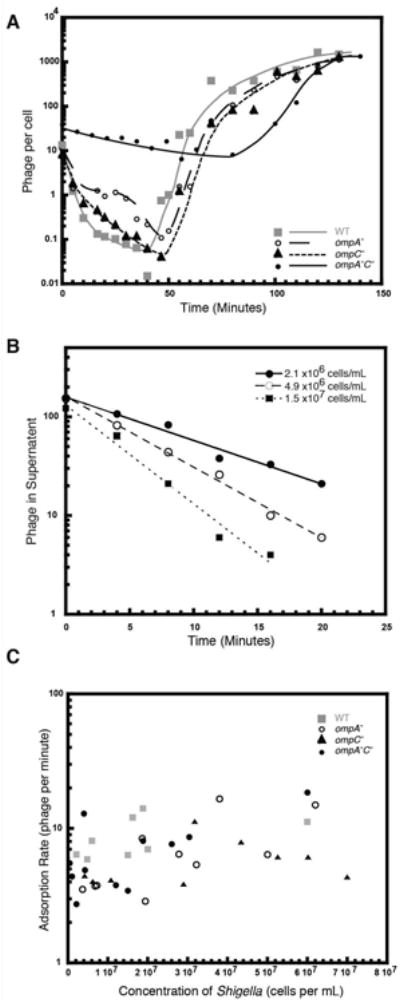
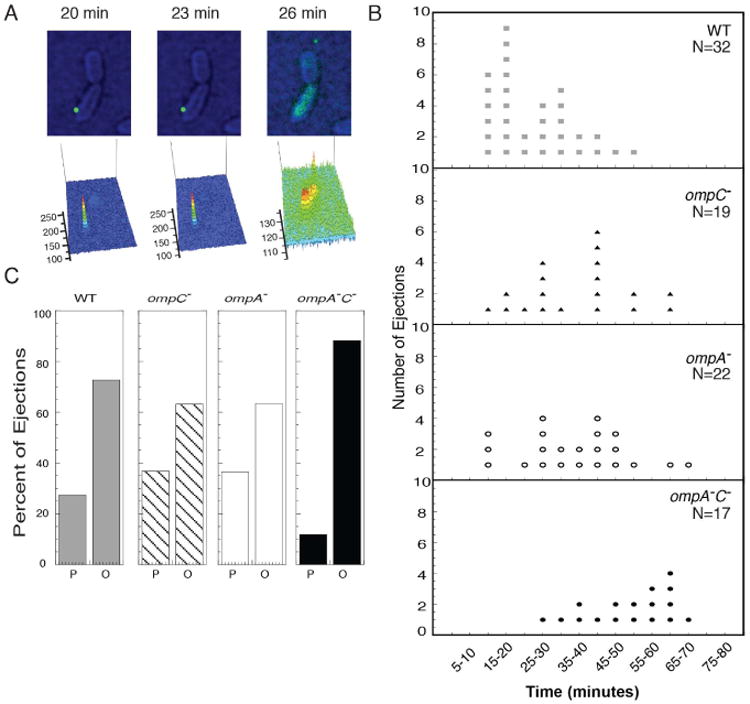
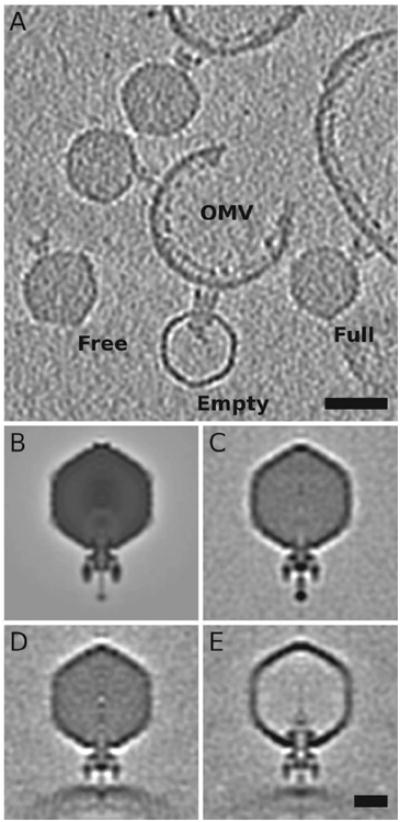
Despite being essential for successful infection, the molecular cues involved in host recognition and genome transfer of viruses are not completely understood. Bacterial outer membrane proteins A and C co-purify in lipid vesicles with bacteriophage Sf6, implicating both outer membrane proteins as potential host receptors. We determined that outer membrane proteins A and C mediate Sf6 infection by dramatically increasing its rate and efficiency. We performed a combination of in vivo studies with three omp null mutants of Shigella flexneri, including classic phage plaque assays and time-lapse fluorescence microscopy to monitor genome ejection at the single virion level. Cryo-electron tomography of phage 'infecting' outer membrane vesicles shows the tail needle contacting and indenting the outer membrane. Lastly, in vitro ejection studies reveal that lipopolysaccharide and outer membrane proteins are both required for Sf6 genome release. We conclude that Sf6 phage entry utilizes either outer membrane proteins A or C, with outer membrane protein A being the preferred receptor.
尽管对于成功感染至关重要,但病毒在宿主识别和基因组转移过程中涉及的分子线索尚未完全明确。细菌外膜蛋白A和C与噬菌体Sf6在脂质囊泡中共纯化,这表明这两种外膜蛋白均为潜在的宿主受体。我们确定外膜蛋白A和C通过显著提高其感染速率和效率来介导Sf6感染。我们对弗氏志贺氏菌的三个omp基因缺失突变体进行了体内研究,包括经典的噬菌斑测定和延时荧光显微镜观察,以在单个病毒粒子水平监测基因组注入。对“感染”外膜囊泡的噬菌体进行冷冻电子断层扫描显示尾针接触并压痕外膜。最后,体外注入研究表明脂多糖和外膜蛋白都是Sf6基因组释放所必需的。我们得出结论,Sf6噬菌体进入利用外膜蛋白A或C,其中外膜蛋白A是首选受体。