Wellhauser Leigh, Belsham Denise D
Department of Physiology, Faculty of Medicine, University of Toronto, 1 King's College Circle, Medical Sciences Building 3344, Toronto, Ontario M5S 1A8, Canada.
J Neuroinflammation. 2014 Mar 27;11:60. doi: 10.1186/1742-2094-11-60.
Overnutrition and the ensuing hypothalamic inflammation is a major perpetuating factor in the development of metabolic diseases, such as obesity and diabetes. Inflamed neurons of the CNS fail to properly regulate energy homeostasis leading to pathogenic changes in glucose handling, feeding, and body weight. Hypothalamic neurons are particularly sensitive to pro-inflammatory signals derived locally and peripherally, and it is these neurons that become inflamed first upon high fat feeding. Given the prevalence of metabolic disease, efforts are underway to identify therapeutic targets for this inflammatory state. At least in the periphery, omega-3 fatty acids and their receptor, G-protein coupled receptor 120 (GPR120), have emerged as putative targets. The role for GPR120 in the hypothalamus or CNS in general is poorly understood.
Here we introduce a novel, immortalized cell model derived from the rat hypothalamus, rHypoE-7, to study GPR120 activation at the level of the individual neuron. Gene expression levels of pro-inflammatory cytokines were studied by quantitative reverse transcriptase-PCR (qRT-PCR) upon exposure to tumor necrosis factor α (TNFα) treatment in the presence or absence of the polyunsaturated omega-3 fatty acid docosahexaenoic acid (DHA). Signal transduction pathway involvement was also studied using phospho-specific antibodies to key proteins by western blot analysis.
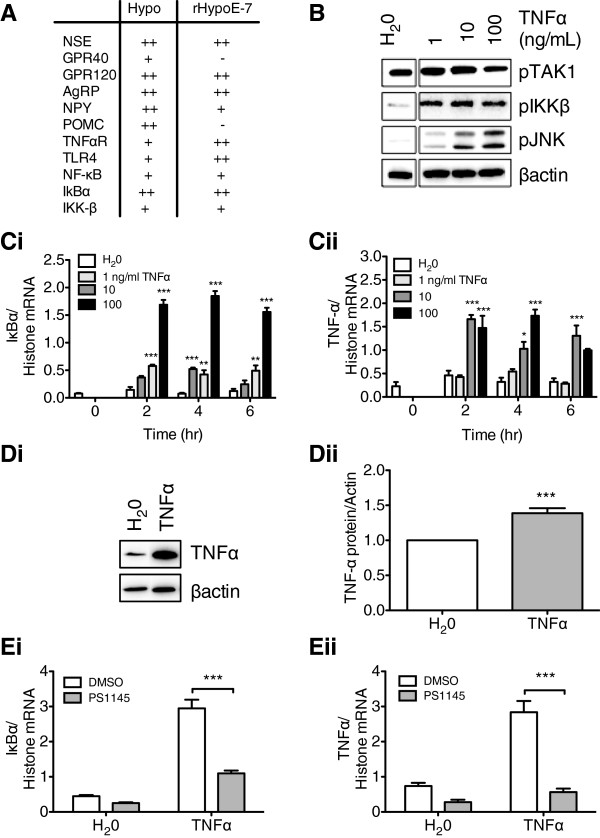
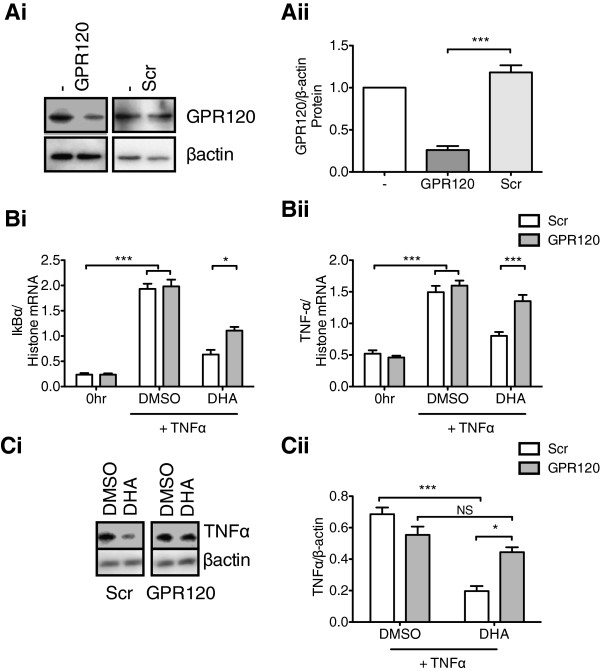
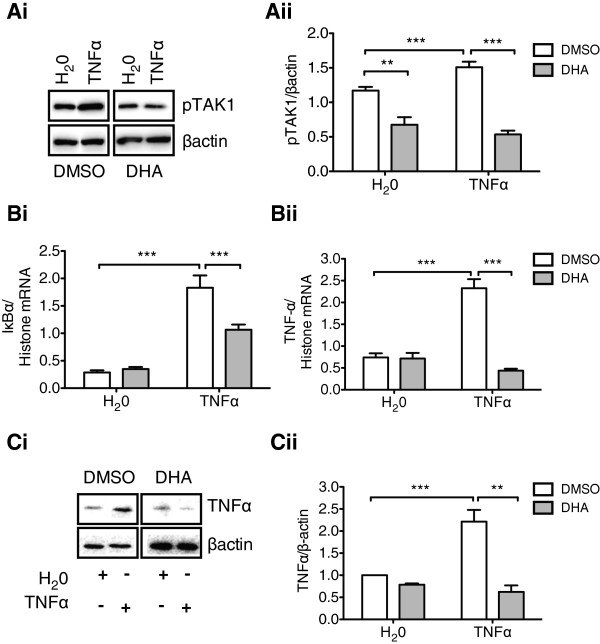
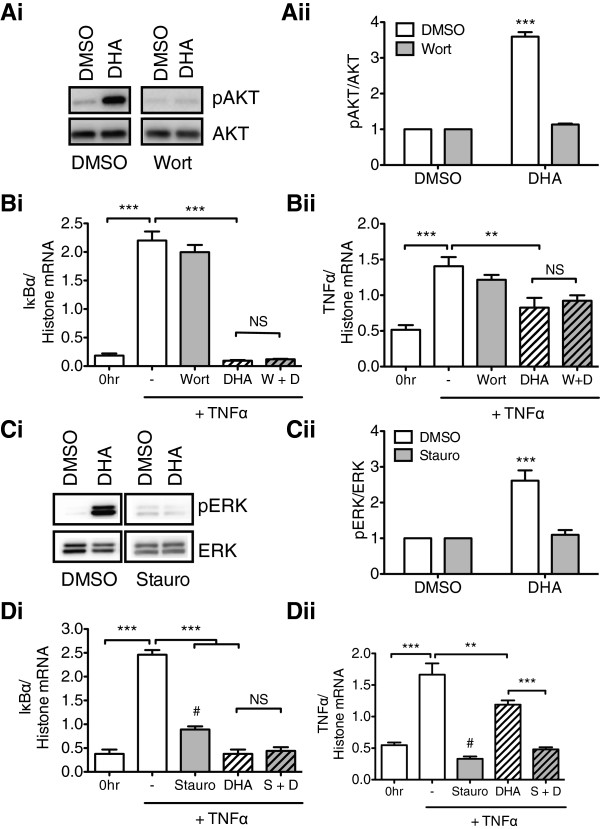
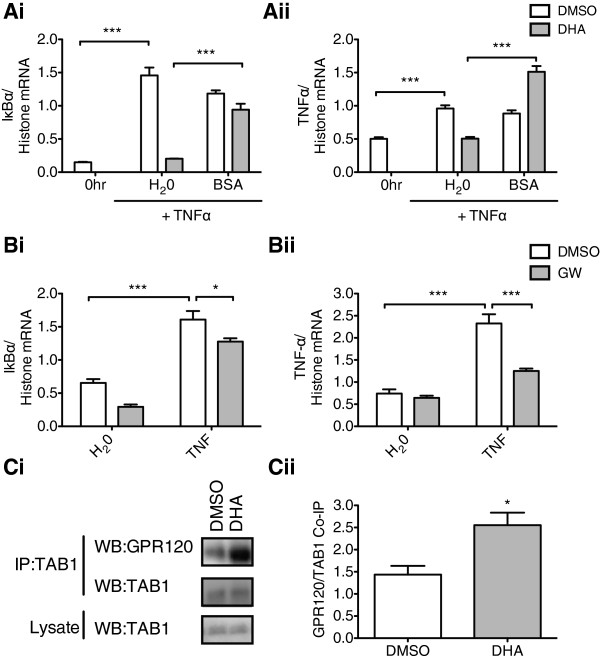
Importantly, rHypoE-7 cells exhibit a transcriptional and translational inflammatory response upon exposure to TNFα and express abundant levels of GPR120, which is functionally responsive to DHA. DHA pretreatment prevents the inflammatory state and this effect was inhibited by the reduction of endogenous GPR120 levels. GPR120 activates both AKT (protein kinase b) and ERK (extracellular signal-regulated kinase); however, the anti-inflammatory action of this omega-3 fatty acid (FA) receptor is AKT- and ERK-independent and likely involves the GPR120-transforming growth factor-β-activated kinase 1 binding protein (TAB1) interaction as identified in the periphery.
Taken together, GPR120 is functionally active in the hypothalamic neuronal line, rHypoE-7, wherein it mediates the anti-inflammatory actions of DHA to reduce the inflammatory response to TNFα.
营养过剩及随之而来的下丘脑炎症是肥胖和糖尿病等代谢性疾病发展过程中的一个主要持续因素。中枢神经系统(CNS)中发生炎症的神经元无法正常调节能量稳态,从而导致葡萄糖代谢、进食和体重方面的致病性变化。下丘脑神经元对源自局部和外周的促炎信号特别敏感,而正是这些神经元在高脂喂养后首先发生炎症。鉴于代谢性疾病的普遍性,人们正在努力寻找针对这种炎症状态的治疗靶点。至少在外周,ω-3脂肪酸及其受体G蛋白偶联受体120(GPR120)已成为假定的靶点。一般来说,GPR120在下丘脑或中枢神经系统中的作用尚不清楚。
在此,我们引入一种源自大鼠下丘脑的新型永生化细胞模型rHypoE-7,以研究单个神经元水平上的GPR120激活情况。在存在或不存在多不饱和ω-3脂肪酸二十二碳六烯酸(DHA)的情况下,通过定量逆转录聚合酶链反应(qRT-PCR)研究暴露于肿瘤坏死因子α(TNFα)处理后的促炎细胞因子基因表达水平。还通过蛋白质印迹分析使用针对关键蛋白的磷酸化特异性抗体研究信号转导途径的参与情况。
重要的是,rHypoE-7细胞在暴露于TNFα后表现出转录和翻译水平的炎症反应,并表达大量的GPR120,其对DHA具有功能反应性。DHA预处理可预防炎症状态,而这种作用会因内源性GPR120水平的降低而受到抑制。GPR120可激活AKT(蛋白激酶b)和ERK(细胞外信号调节激酶);然而,这种ω-3脂肪酸(FA)受体的抗炎作用不依赖于AKT和ERK,并且可能涉及在外周已确定的GPR120与转化生长因子-β激活激酶1结合蛋白(TAB1)的相互作用。
综上所述,GPR120在下丘脑神经元系rHypoE-7中具有功能活性,在其中它介导DHA的抗炎作用,以减少对TNFα的炎症反应。