Darzynkiewicz Zbigniew, Zhao Hong, Halicka H Dorota, Li Jiangwei, Lee Yong-Syu, Hsieh Tze-Chen, Wu Joseph M
Brander Cancer Research Institute and Department of Pathology, New York Medical College, Valhalla, New York, 10595.
Cytometry A. 2014 May;85(5):386-99. doi: 10.1002/cyto.a.22452. Epub 2014 Feb 22.
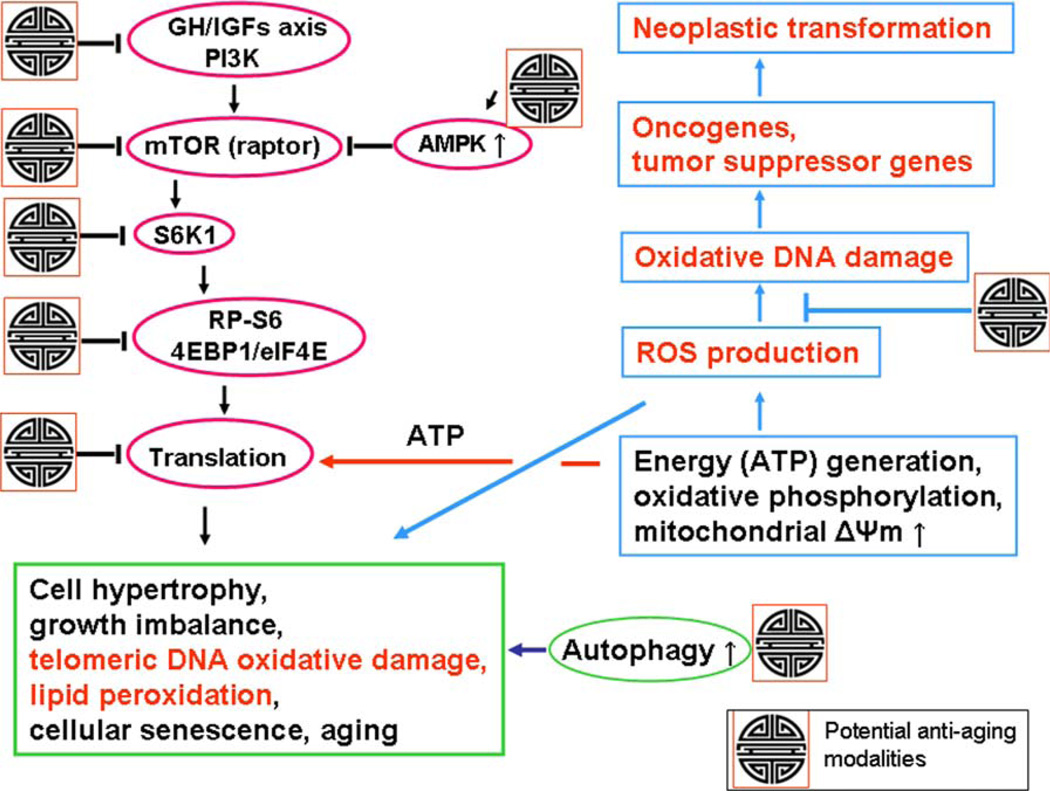
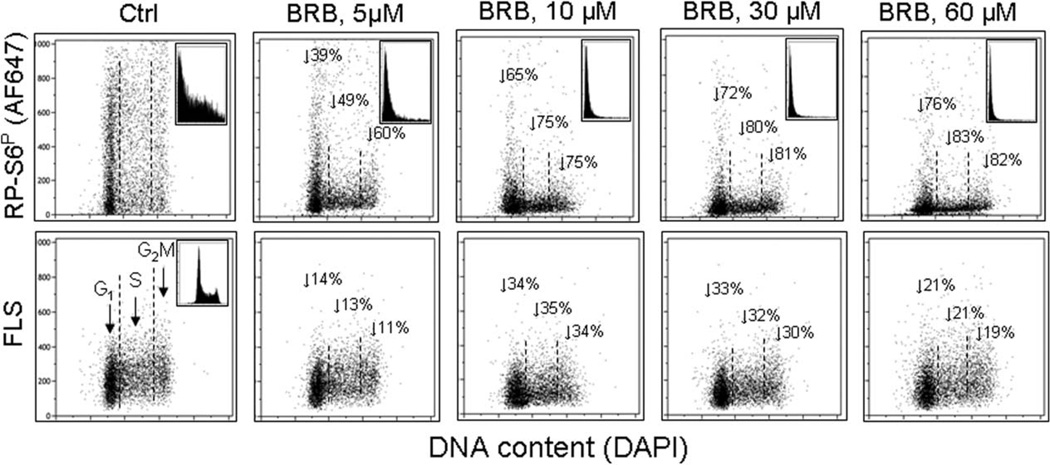
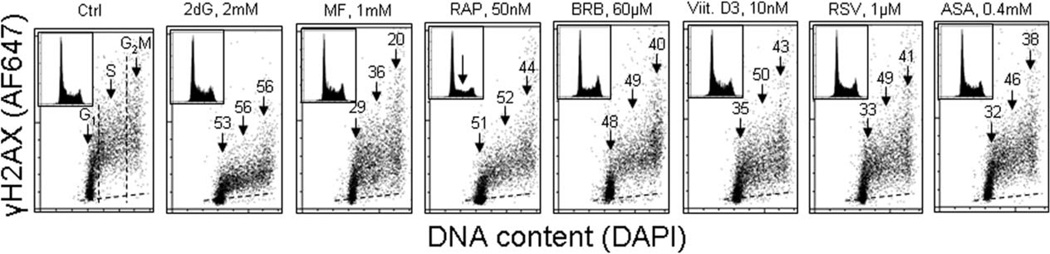
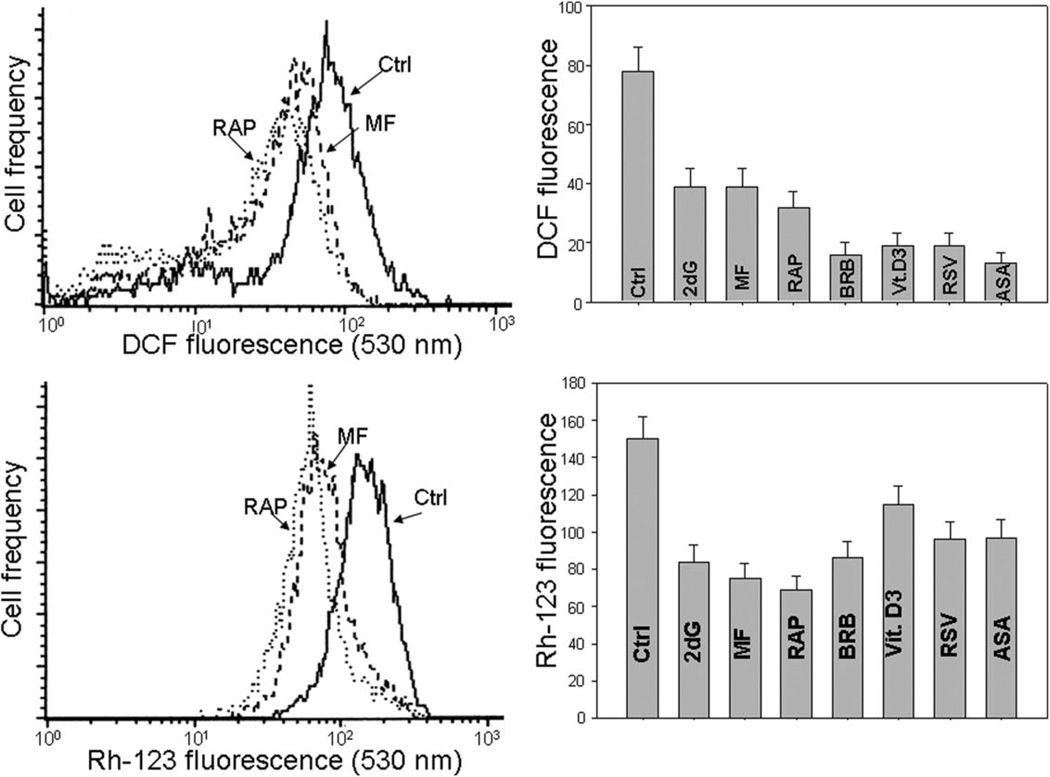
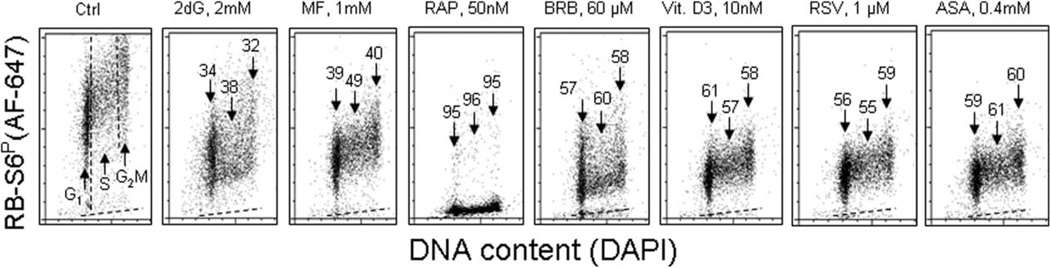
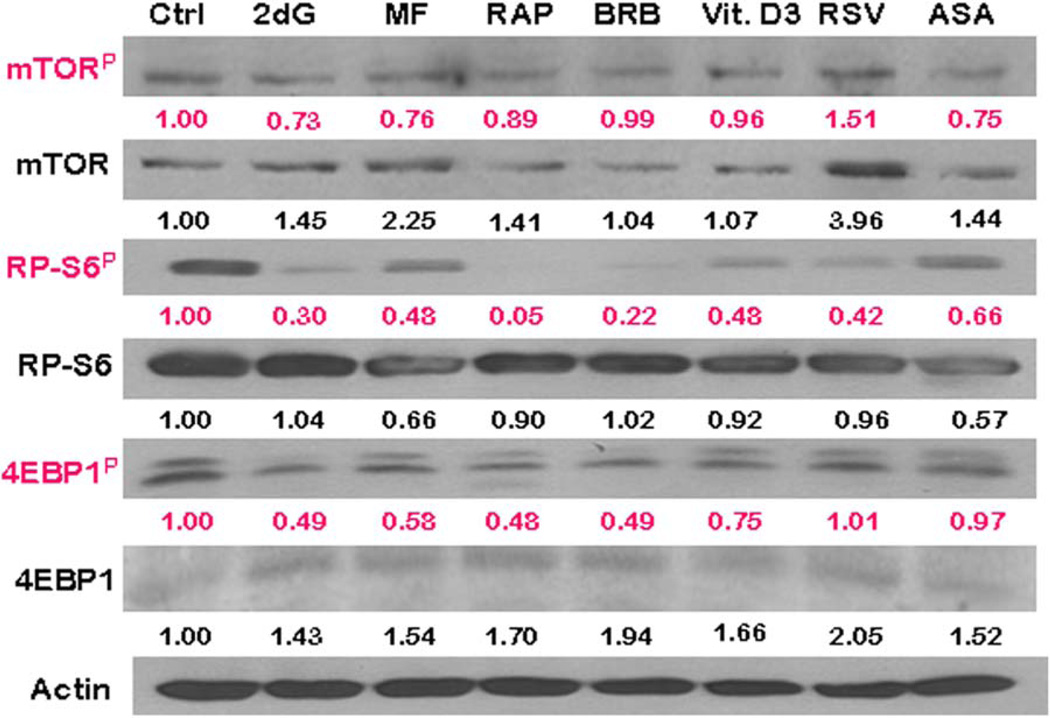
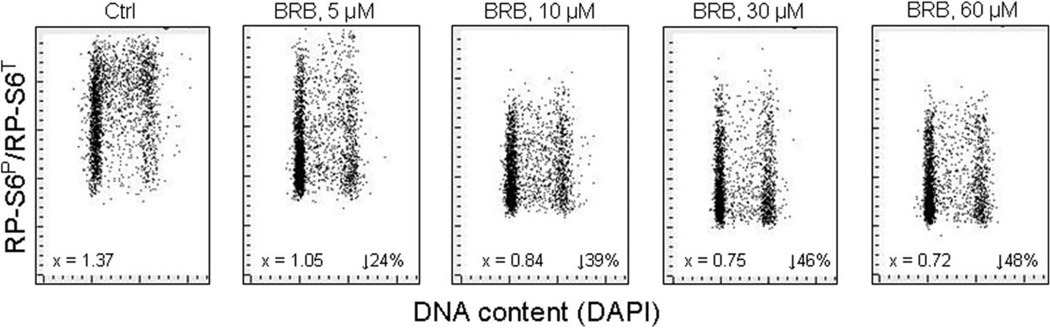
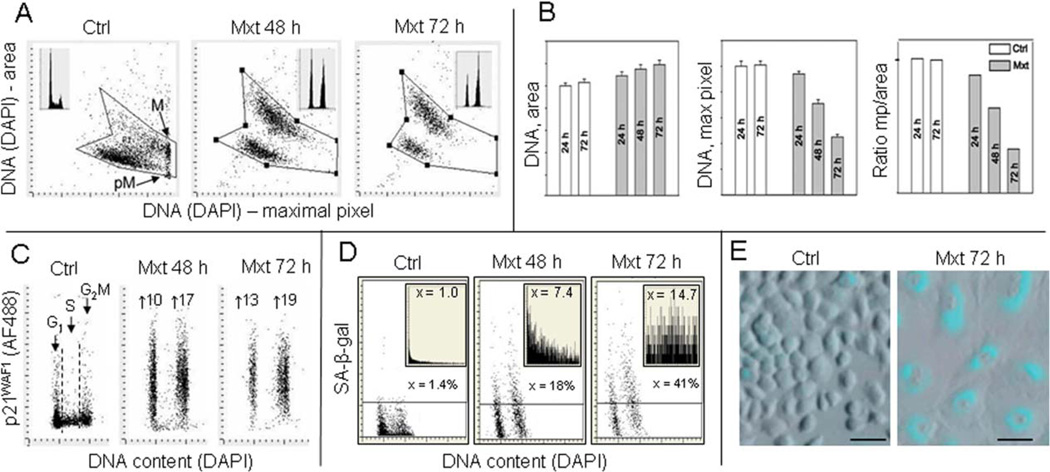
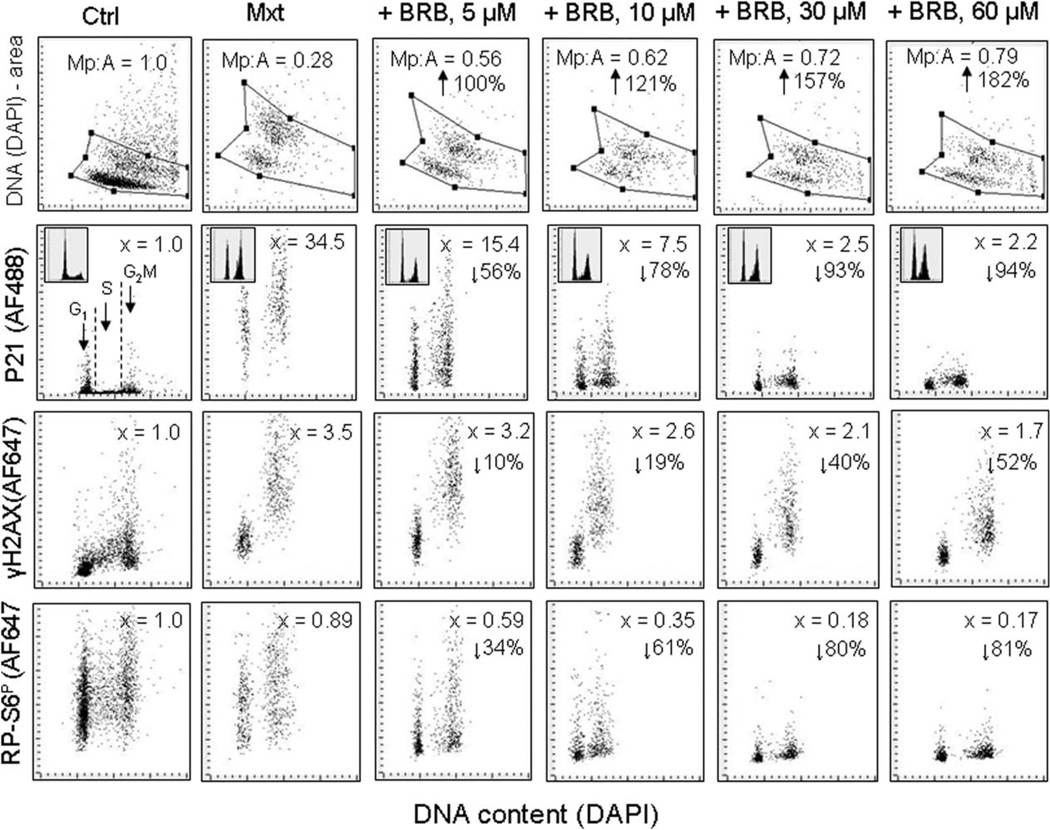
This review presents the evidence in support of the IGF-1/mTOR/S6K1 signaling as the primary factor contributing to aging and cellular senescence. Reviewed are also specific interactions between mTOR/S6K1 and ROS-DNA damage signaling pathways. Outlined are critical sites along these pathways, including autophagy, as targets for potential antiaging (gero-suppressive) and/or chemopreventive agents. Presented are applications of flow- and laser scanning- cytometry utilizing phospho-specific Abs, to monitor activation along these pathways in response to the reported antiaging drugs rapamycin, metformin, berberine, resveratrol, vitamin D3, 2-deoxyglucose, and acetylsalicylic acid. Specifically, effectiveness of these agents to attenuate the level of constitutive mTOR signaling was tested by cytometry and confirmed by Western blotting through measuring phosphorylation of the mTOR-downstream targets including ribosomal protein S6. The ratiometric analysis of phosphorylated to total protein along the mTOR pathway offers a useful parameter reporting the effects of gero-suppressive agents. In parallel, their ability to suppress the level of constitutive DNA damage signaling induced by endogenous ROS was measured. While the primary target of each of these agents may be different the data obtained on several human cancer cell lines, WI-38 fibroblasts and normal lymphocytes suggest common downstream mechanism in which the decline in mTOR/S6K1 signaling and translation rate is coupled with a reduction of oxidative phosphorylation and ROS that leads to decreased oxidative DNA damage. The combined assessment of constitutive γH2AX expression, mitochondrial activity (ROS, ΔΨm), and mTOR signaling provides an adequate gamut of cell responses to test effectiveness of gero-suppressive agents. Described is also an in vitro model of induction of cellular senescence by persistent replication stress, its quantitative analysis by laser scanning cytometry, and application to detect the property of the studied agents to attenuate the induction of senescence. Discussed is cytometric analysis of cell size and heterogeneity of size as a potential biomarker used to asses gero-suppressive agents and longevity.
本综述展示了支持胰岛素样生长因子-1/雷帕霉素靶蛋白/核糖体蛋白S6激酶1(IGF-1/mTOR/S6K1)信号传导作为导致衰老和细胞衰老的主要因素的证据。还综述了mTOR/S6K1与活性氧- DNA损伤信号通路之间的特定相互作用。概述了这些信号通路中的关键位点,包括自噬,作为潜在抗衰老(老年抑制)和/或化学预防药物的作用靶点。介绍了利用磷酸化特异性抗体的流式细胞术和激光扫描细胞术的应用,以监测这些信号通路在响应已报道的抗衰老药物雷帕霉素、二甲双胍、黄连素、白藜芦醇、维生素D3、2-脱氧葡萄糖和乙酰水杨酸时的激活情况。具体而言,通过细胞术测试了这些药物减弱组成型mTOR信号传导水平的有效性,并通过蛋白质免疫印迹法测量包括核糖体蛋白S6在内的mTOR下游靶点的磷酸化来进行确认。沿着mTOR信号通路对磷酸化蛋白与总蛋白的比例分析提供了一个有用的参数,可用于报告老年抑制药物的作用效果。同时,还测量了它们抑制内源性活性氧诱导的组成型DNA损伤信号传导水平的能力。虽然这些药物各自的主要靶点可能不同,但在几种人类癌细胞系、WI-38成纤维细胞和正常淋巴细胞上获得的数据表明存在共同的下游机制,即mTOR/S6K1信号传导和翻译速率的下降与氧化磷酸化和活性氧的减少相关联,从而导致氧化性DNA损伤减少。对组成型γH2AX表达、线粒体活性(活性氧、线粒体膜电位)和mTOR信号传导的综合评估提供了一系列足够的细胞反应,以测试老年抑制药物的有效性。还描述了一种通过持续复制应激诱导细胞衰老的体外模型,通过激光扫描细胞术对其进行定量分析,并应用于检测所研究药物减弱衰老诱导的特性。讨论了细胞大小和大小异质性的细胞术分析作为评估老年抑制药物和寿命的潜在生物标志物。