Department of Restorative Dental Sciences, College of Dentistry, King Saud University, Post Box 60169, Riyadh 11545, Saudi Arabia.
BMC Oral Health. 2014 Mar 29;14:27. doi: 10.1186/1472-6831-14-27.
Debridement and disinfection of the root canal system is a crucial step in endodontic procedures. The effectiveness of irrigation relies on both the mechanical flushing action and the ability of irrigants to dissolve tissue and kill bacteria. The objective of the present study is to evaluate and compare the cytotoxicity of QMix™ root canal irrigating solution on immortalized human bone marrow mesenchymal stem cells (hTERT-MSC-C1) and to compare it with that of sodium hypochlorite (NaOCl).
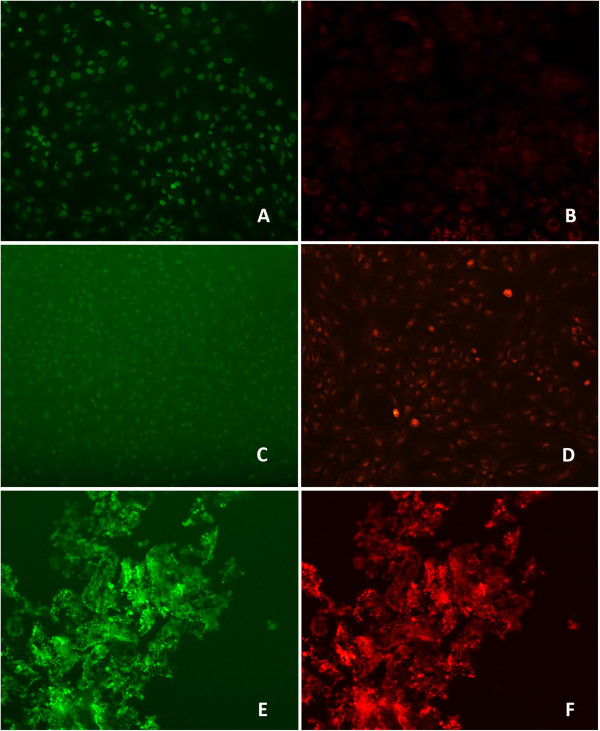
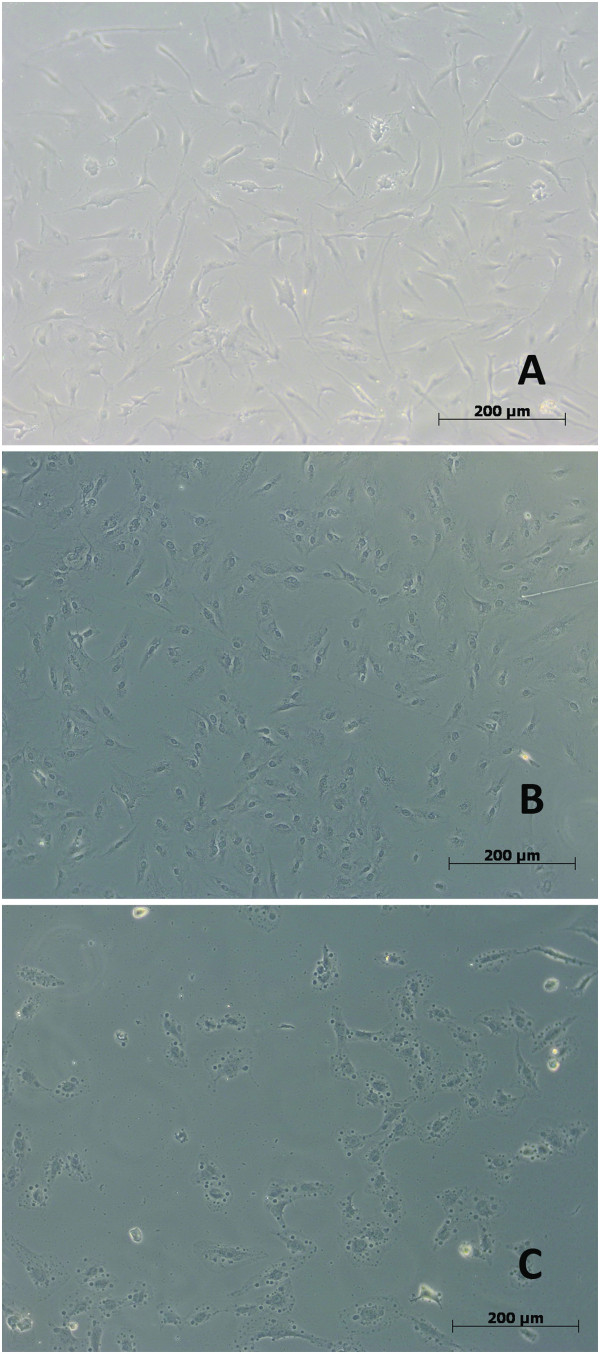
Immortalized human bone marrow mesenchymal stem cells (hTERT-MSCs) were exposed to QMix™ and NaOCl. Cell viability was assessed by 3-(4, 5-dimethylthiazol-2-yl)-2,5-diphenyltetrazolium bromide (MTT) and alamarBlue assays. The cell morphology was studied after two hours of exposure to QMix™ and NaOCl. Scanning electron microscopy (SEM) analyses were performed after 2- and 4-hour incubation periods. Finally, ethidium bromide/acridine orange (EB/AO) fluorescent stain was applied to the cells in the 8-chamber slides after they were incubated with the testing agents for 2 hours to detect live and dead cells. The observations were tabulated and analyzed statistically.
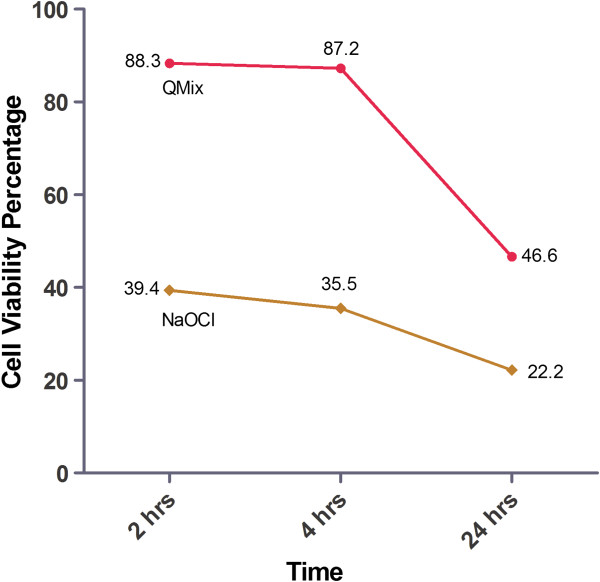
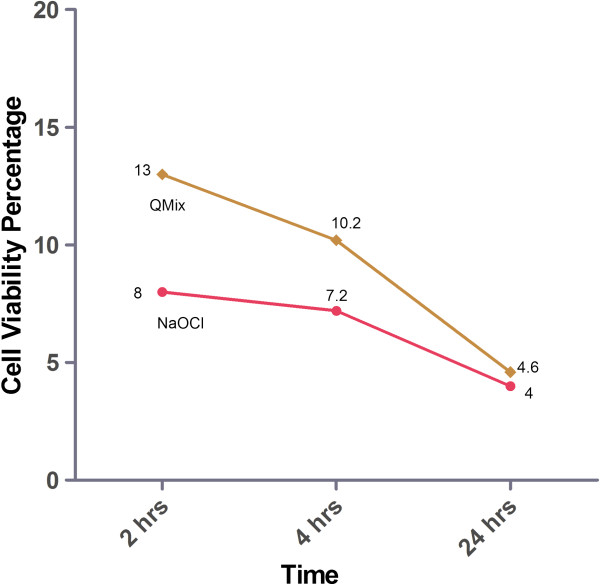
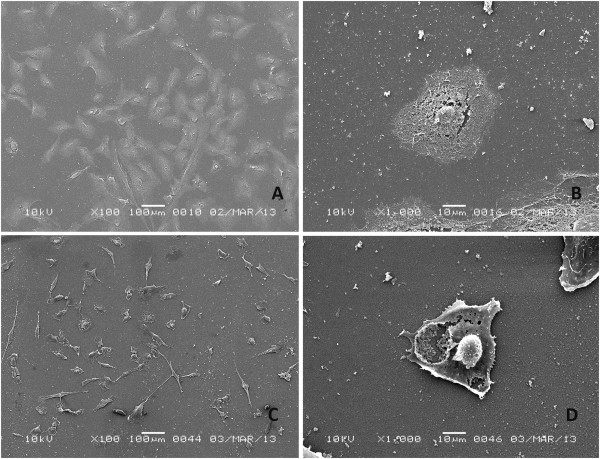
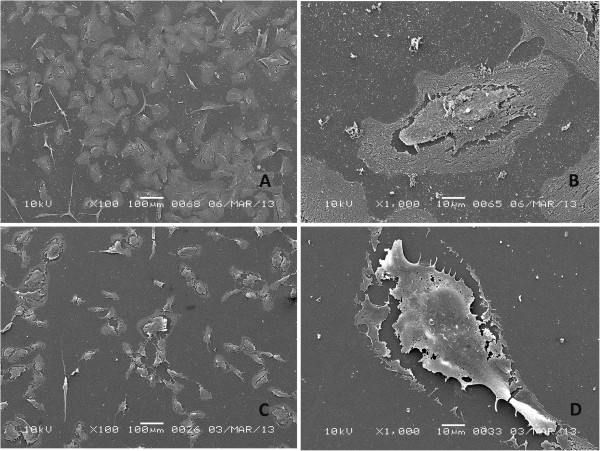
QMix™ exposure resulted in a significantly higher percentage of cell viability than NaOCl in the MTT and alamarBlue assays at three time points compared to the control. The SEM analysis demonstrated minimal morphological changes associated with cells that were exposed to the QMix™ solution, with little shrinkage and fragmentation of the cell wall. The live/dead analysis showed that the number of live cells after exposure to QMix™ was similar to that of the untreated control. No cell structure could be observed with the NaOCl group, indicating cell lysis.
Both the QMix™ and NaOCl solutions were toxic to human bone marrow MSCs. Each solution might have induced cell death in a different way as evidenced in the cell viability, SEM and fluorescent studies. The slower cell death induced by QMix™ might therefore be less aggressive and more acceptable to living tissues.
根管系统的清创和消毒是牙髓治疗过程中的关键步骤。冲洗的效果依赖于冲洗液的机械冲洗作用和溶解组织和杀菌的能力。本研究旨在评估和比较 QMix™根管冲洗液对永生化人骨髓间充质干细胞(hTERT-MSC-C1)的细胞毒性,并与次氯酸钠(NaOCl)进行比较。
将永生化人骨髓间充质干细胞(hTERT-MSCs)暴露于 QMix™和 NaOCl 中。通过 3-(4,5-二甲基噻唑-2-基)-2,5-二苯基四氮唑溴盐(MTT)和 alamarBlue 测定法评估细胞活力。在暴露于 QMix™和 NaOCl 两小时后研究细胞形态。在孵育 2 小时和 4 小时后进行扫描电子显微镜(SEM)分析。最后,将 EB/AO 荧光染色剂应用于在孵育测试剂 2 小时后的 8 孔板中的细胞,以检测活细胞和死细胞。将观察结果制表并进行统计分析。
与对照组相比,在三个时间点,MTT 和 alamarBlue 测定中,QMix™暴露导致细胞活力的百分比明显高于 NaOCl。SEM 分析表明,与 QMix™溶液接触的细胞形态变化最小,细胞壁几乎没有收缩和碎裂。活/死分析表明,暴露于 QMix™后的活细胞数量与未经处理的对照组相似。在 NaOCl 组中观察不到细胞结构,表明细胞裂解。
QMix™和 NaOCl 溶液对人骨髓间充质干细胞均有毒性。每个溶液可能以不同的方式诱导细胞死亡,如细胞活力、SEM 和荧光研究所示。因此,QMix™诱导的较慢的细胞死亡可能不那么激进,对活组织更可接受。