Hyatt Alex J T, Wang Difei, van Oterendorp Christian, Fawcett James W, Martin Keith R
John van Geest Centre for Brain Repair, University of Cambridge, Robinson Way, Cambridge CB2 0PY, United Kingdom.
John van Geest Centre for Brain Repair, University of Cambridge, Robinson Way, Cambridge CB2 0PY, United Kingdom; University Eye Hospital, Freiburg, Germany.
Neurosci Lett. 2014 May 21;569(100):12-7. doi: 10.1016/j.neulet.2014.03.023. Epub 2014 Mar 26.
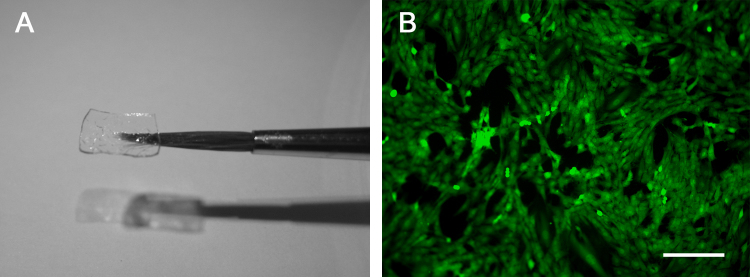
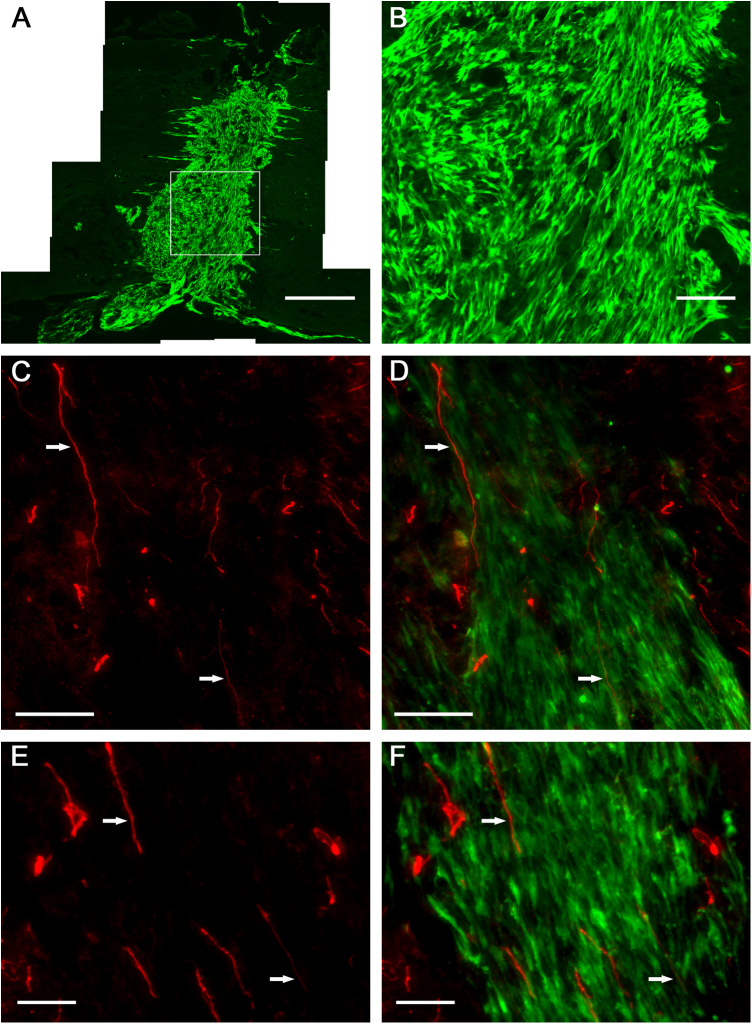
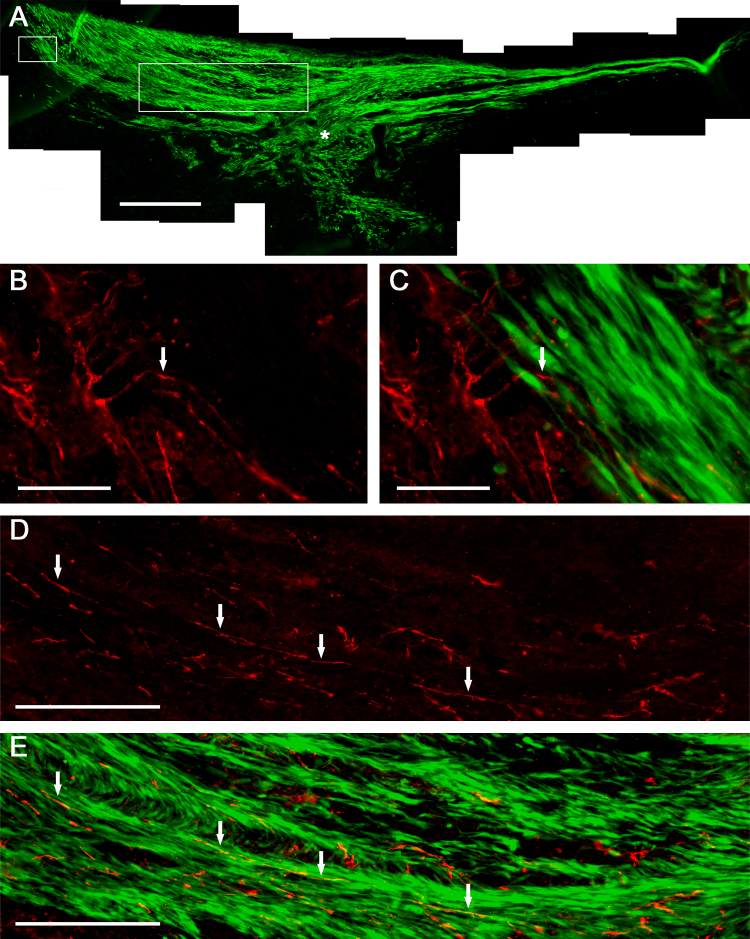
Mesenchymal stromal cells (MSCs) have been shown to promote healing and regeneration in a number of CNS injury models and therefore there is much interest in the clinical use of these cells. For spinal cord injuries, a standard delivery method for MSCs is intraspinal injection, but this can result in additional injury and provides little control over how the cells integrate into the tissue. The present study examines the use of a novel fibrin scaffold as a new method of delivering MSCs to injured spinal cord. Use of the fibrin scaffold resulted in the formation of longitudinally-aligned layers of MSCs growing over the spinal cord lesion site. Host neurites were able to migrate into this MSC architecture and grow longitudinally. The length of the MSC bridge corresponded to the length of the fibrin scaffold. MSCs that were delivered via intraspinal injection were mainly oriented perpendicular to the plane of the spinal cord and remained largely restricted to the lesion site. Host neurites within the injected MSC graft were also oriented perpendicular to the plane of the spinal cord.
间充质基质细胞(MSCs)已被证明在多种中枢神经系统损伤模型中可促进愈合和再生,因此人们对这些细胞的临床应用非常感兴趣。对于脊髓损伤,MSCs的标准递送方法是脊髓内注射,但这可能会导致额外的损伤,并且对细胞如何整合到组织中几乎没有控制能力。本研究考察了使用一种新型纤维蛋白支架作为将MSCs递送至损伤脊髓的新方法。使用纤维蛋白支架导致在脊髓损伤部位形成纵向排列的MSCs层。宿主神经突能够迁移到这种MSCs结构中并纵向生长。MSCs桥的长度与纤维蛋白支架的长度相对应。通过脊髓内注射递送的MSCs主要垂直于脊髓平面排列,并且在很大程度上局限于损伤部位。注射的MSCs移植物内的宿主神经突也垂直于脊髓平面排列。