Reis Vanda Renata, Bassi Ana Paula Guarnieri, da Silva Jessica Carolina Gomes, Ceccato-Antonini Sandra Regina
Departamento de Tecnologia Agroindustrial e Socio-Economia Rural, Centro de Ciências Agrárias, Universidade Federal de São Carlos, Via Anhanguera, Araras, SP, Brazil.
Braz J Microbiol. 2014 Mar 10;44(4):1121-31. doi: 10.1590/S1517-83822014005000020. eCollection 2013 Dec.
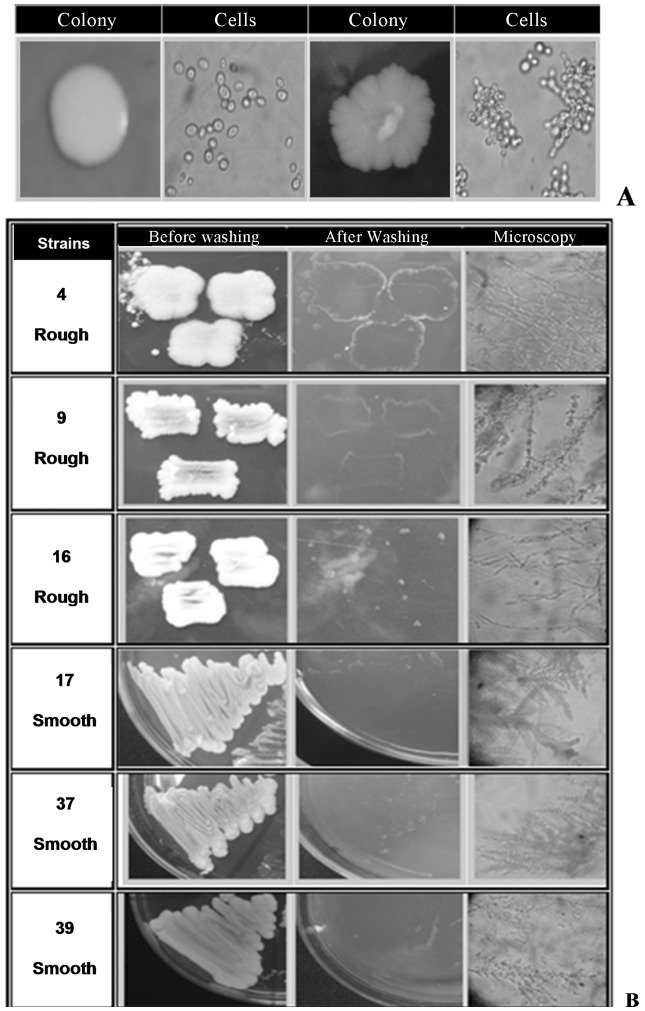
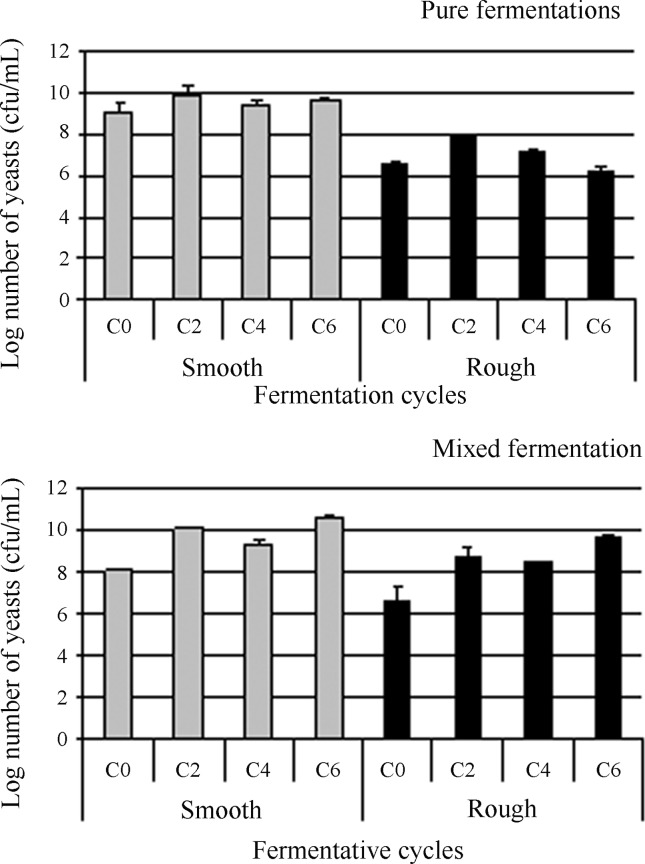
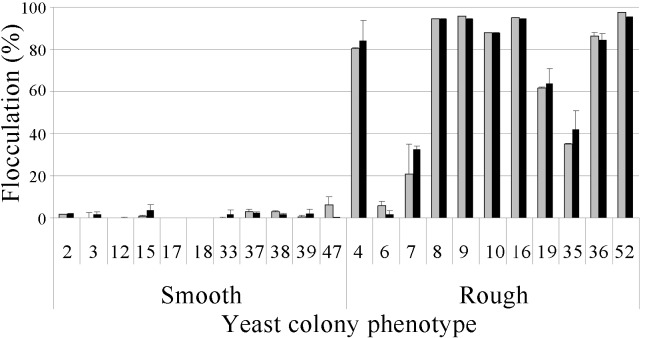
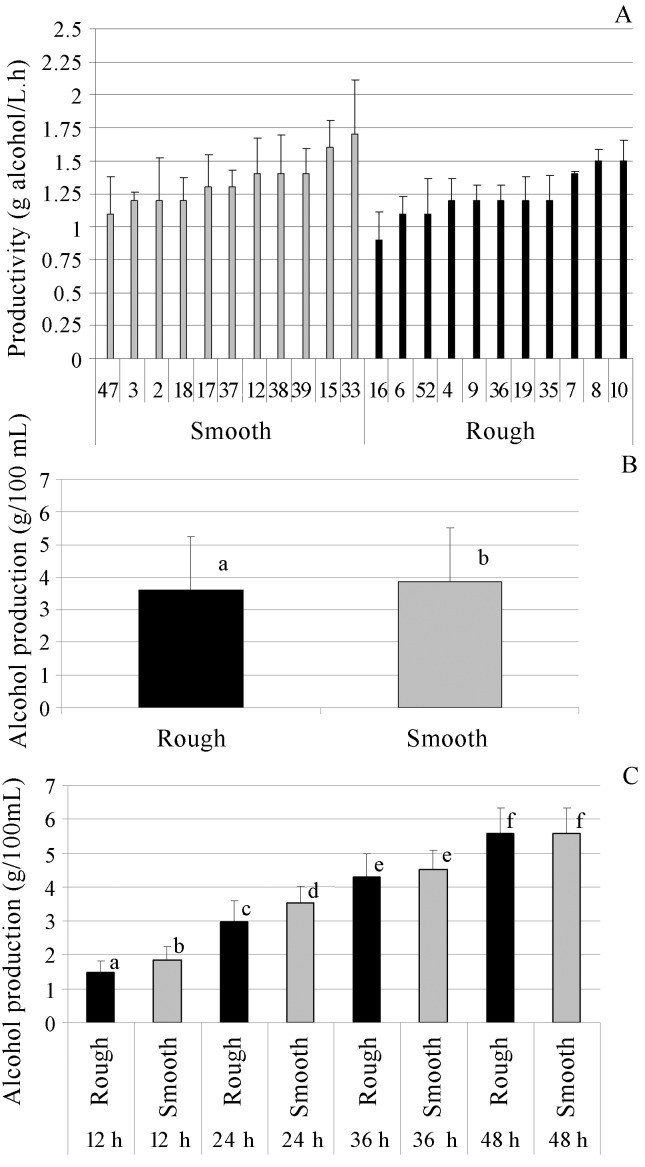
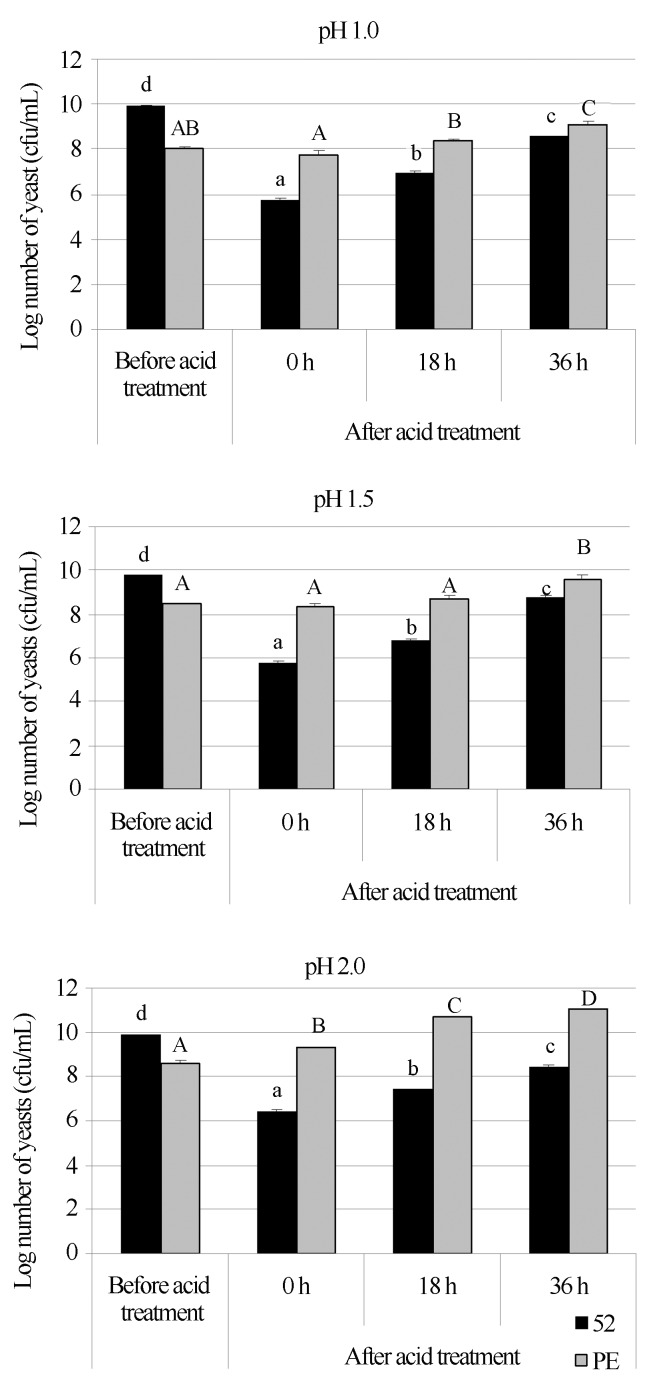
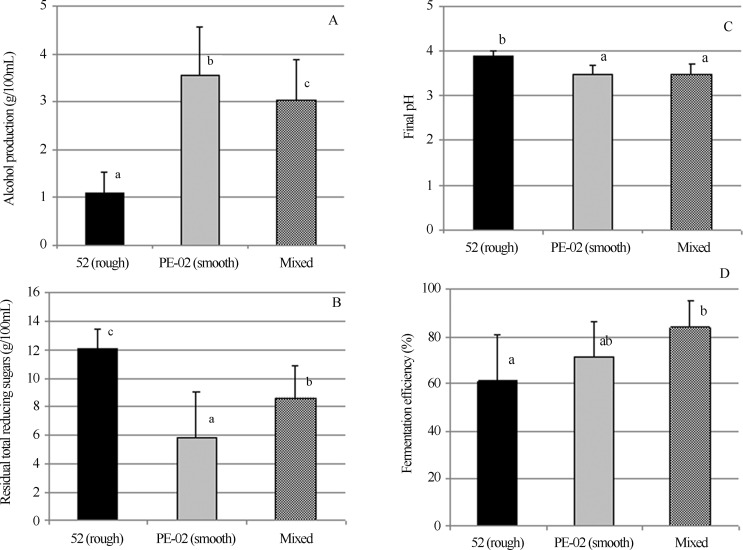
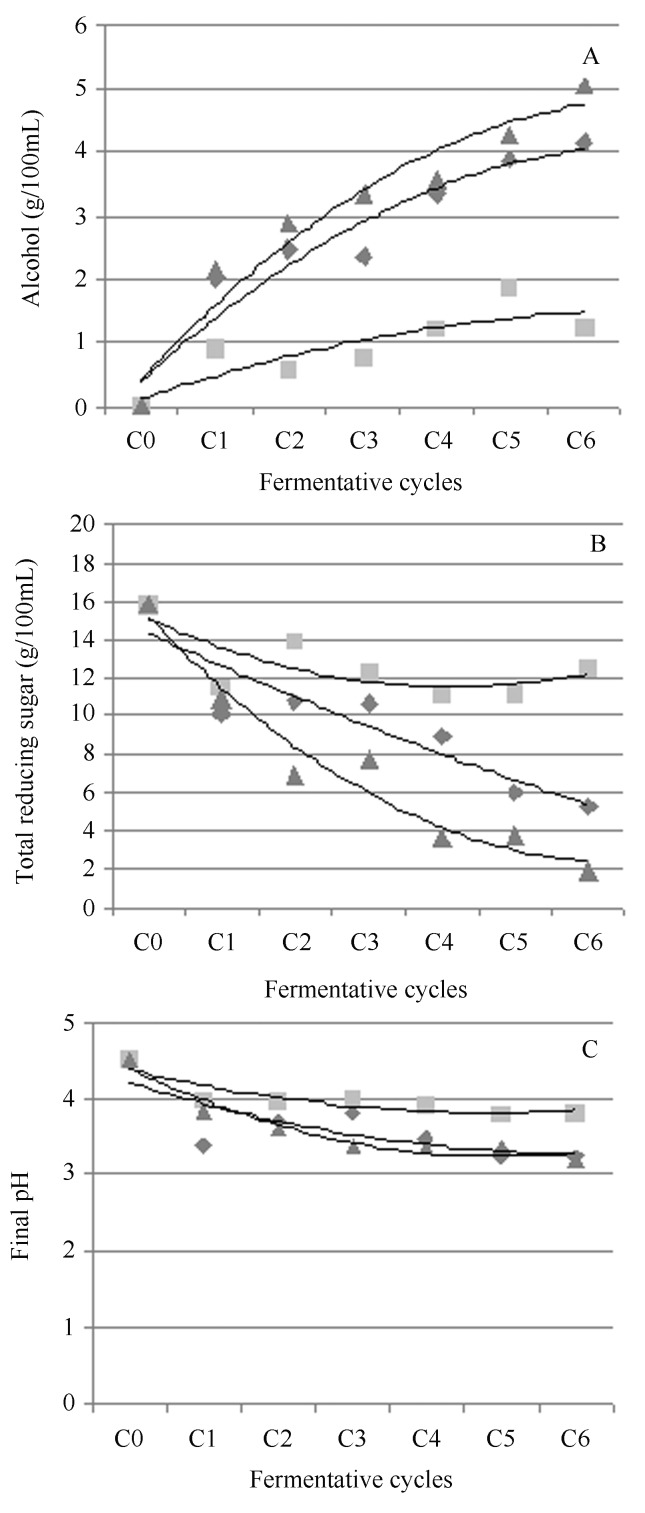
Among the native yeasts found in alcoholic fermentation, rough colonies associated with pseudohyphal morphology belonging to the species Saccharomyces cerevisiae are very common and undesirable during the process. The aim of this work was to perform morphological and physiological characterisations of S. cerevisiae strains that exhibited rough and smooth colonies in an attempt to identify alternatives that could contribute to the management of rough colony yeasts in alcoholic fermentation. Characterisation tests for invasiveness in Agar medium, killer activity, flocculation and fermentative capacity were performed on 22 strains (11 rough and 11 smooth colonies). The effects of acid treatment at different pH values on the growth of two strains ("52"--rough and "PE-02"--smooth) as well as batch fermentation tests with cell recycling and acid treatment of the cells were also evaluated. Invasiveness in YPD Agar medium occurred at low frequency; ten of eleven rough yeasts exhibited flocculation; none of the strains showed killer activity; and the rough strains presented lower and slower fermentative capacities compared to the smooth strains in a 48-h cycle in a batch system with sugar cane juice. The growth of the rough strain was severely affected by the acid treatment at pH values of 1.0 and 1.5; however, the growth of the smooth strain was not affected. The fermentative efficiency in mixed fermentation (smooth and rough strains in the same cell mass proportion) did not differ from the efficiency obtained with the smooth strain alone, most likely because the acid treatment was conducted at pH 1.5 in a batch cell-recycle test. A fermentative efficiency as low as 60% was observed with the rough colony alone.
在酒精发酵过程中发现的天然酵母中,与酿酒酵母属假菌丝形态相关的粗糙菌落非常常见且不受欢迎。这项工作的目的是对表现出粗糙菌落和平滑菌落的酿酒酵母菌株进行形态和生理特征分析,试图找出有助于管理酒精发酵中粗糙菌落酵母的替代方法。对22株菌株(11株粗糙菌落和11株平滑菌落)进行了琼脂培养基侵袭性、杀酵母活性、絮凝和发酵能力的特征测试。还评估了不同pH值的酸处理对两株菌株(“52”——粗糙菌落和“PE - 02”——平滑菌落)生长的影响,以及细胞循环和细胞酸处理的分批发酵试验。在YPD琼脂培养基中的侵袭性发生频率较低;11株粗糙酵母中有10株表现出絮凝;所有菌株均未显示杀酵母活性;在以甘蔗汁为原料的分批系统中,48小时循环内,粗糙菌株的发酵能力低于且慢于平滑菌株。pH值为1.0和1.5的酸处理严重影响粗糙菌株的生长;然而,平滑菌株的生长未受影响。混合发酵(平滑菌株和粗糙菌株以相同细胞质量比例)的发酵效率与单独使用平滑菌株获得的效率没有差异,很可能是因为在分批细胞循环试验中酸处理是在pH 1.5下进行的。单独使用粗糙菌落时观察到的发酵效率低至60%。