Gupta Archana, Pulliam Lynn
Departments of Laboratory Medicine and Medicine, San Francisco and Veterans Affairs Medical Center, University of California, 4150 Clement St (113A), San Francisco, CA 94121, USA.
J Neuroinflammation. 2014 Apr 3;11:68. doi: 10.1186/1742-2094-11-68.
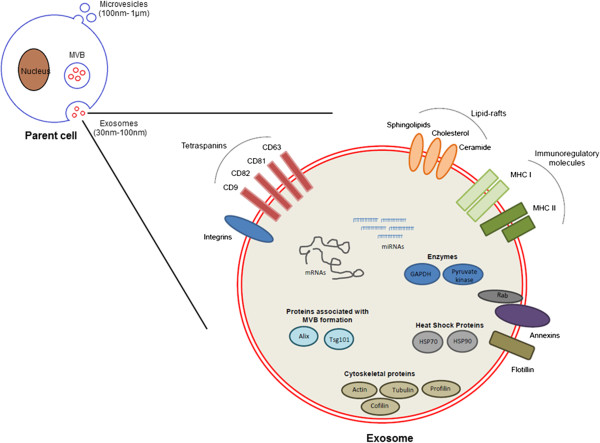
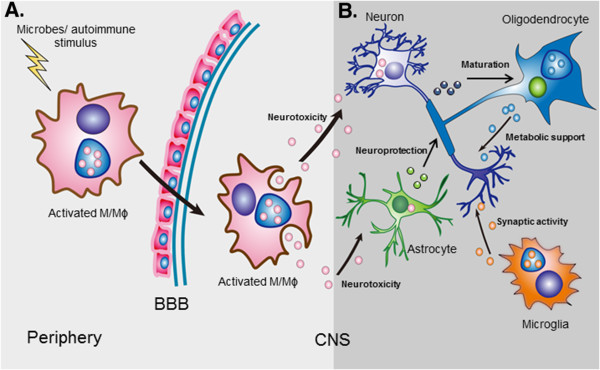
Exosomes are membrane-bound nanovesicles that are shed by cells of various lineages under normal as well as pathological conditions. Previously thought to be 'extracellular debris', exosomes have recently generated immense interest following their discovery as mediators of intercellular communication by delivering functional proteins, mRNA transcripts as well as miRNAs to recipient cells. Although suggested to primarily serve as signaling organelles which also remove unwanted cellular components in the brain, accumulating evidence suggests that exosomes can also significantly contribute to the development of several neuropathologies. Toxic forms of aggregated proteins such as α-synuclein, amyloid β and prions, that are responsible for the development of Parkinson's disease, Alzheimer's disease and Creutzfeldt-Jacob disease (CJD) respectively, have been shown to get effectively packaged into exosomes and spread from one cell to another, initiating an inflammatory cascade. In addition, exosomes secreted by resident brain cells in response to pathogenic stimuli such as viral proteins can also influence bystander cells by the transfer of dysregulated miRNAs that suppress the expression of essential genes in the recipient cells. Given the relevance of exosomes in brain communication and neuropathogenesis, novel therapeutic strategies are now being developed that exploit the biology of these vesicles to deliver anti-inflammatory molecules to the CNS. Exosomes may alter the way we think about brain disorders and their treatments.
外泌体是膜结合的纳米囊泡,在正常和病理条件下由各种细胞谱系的细胞释放。外泌体以前被认为是“细胞外碎片”,但最近随着它们被发现作为细胞间通讯的介质,通过向受体细胞传递功能性蛋白质、mRNA转录本以及miRNA,而引起了极大的兴趣。尽管有人认为外泌体主要作为信号细胞器,也能清除大脑中不需要的细胞成分,但越来越多的证据表明,外泌体也能显著促进几种神经病理学的发展。分别导致帕金森病、阿尔茨海默病和克雅氏病(CJD)的聚集蛋白的毒性形式,如α-突触核蛋白、淀粉样β蛋白和朊病毒,已被证明能有效地包装到外泌体中,并从一个细胞传播到另一个细胞,引发炎症级联反应。此外,驻留在脑细胞中响应病毒蛋白等致病刺激而分泌的外泌体,也可以通过转移失调的miRNA来影响旁观者细胞,这些miRNA会抑制受体细胞中关键基因的表达。鉴于外泌体在脑通讯和神经病理发生中的相关性,目前正在开发新的治疗策略,利用这些囊泡的生物学特性将抗炎分子输送到中枢神经系统。外泌体可能会改变我们对脑部疾病及其治疗的看法。