Purahong Witoon, Kapturska Danuta, Pecyna Marek J, Schulz Elke, Schloter Michael, Buscot François, Hofrichter Martin, Krüger Dirk
UFZ-Helmholtz Centre for Environmental Research, Department of Soil Ecology, Halle (Saale), Germany; Chair for Soil Science, Technical University of Munich, Oberschleissheim, Germany.
UFZ-Helmholtz Centre for Environmental Research, Department of Soil Ecology, Halle (Saale), Germany; Department of Bio- and Environmental Sciences, International Institute Zittau, Technische Universität Dresden, Zittau, Germany.
PLoS One. 2014 Apr 3;9(4):e93700. doi: 10.1371/journal.pone.0093700. eCollection 2014.
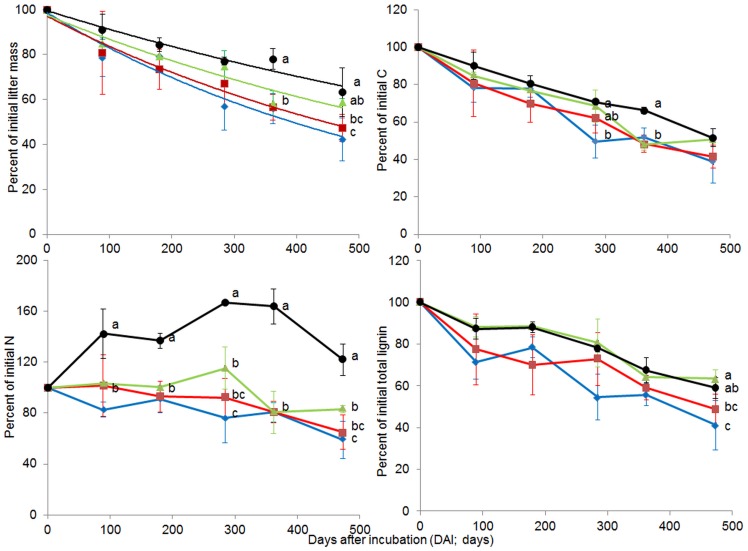
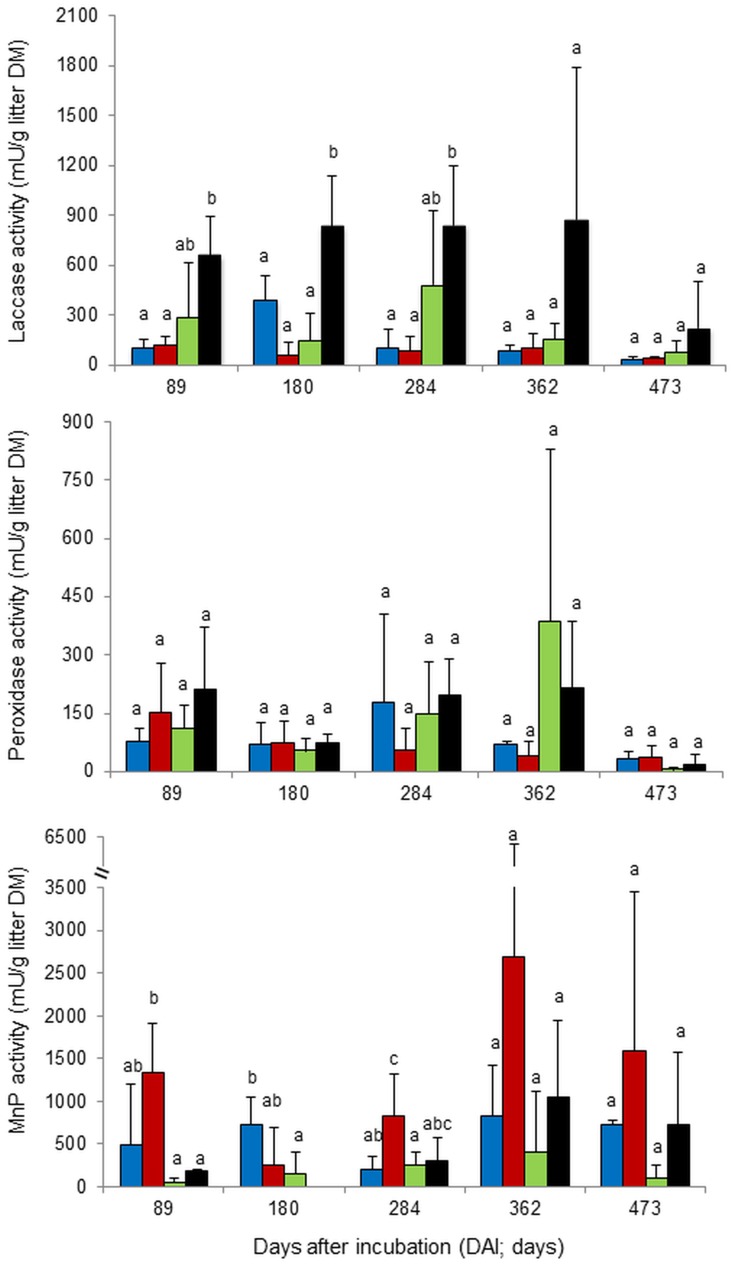
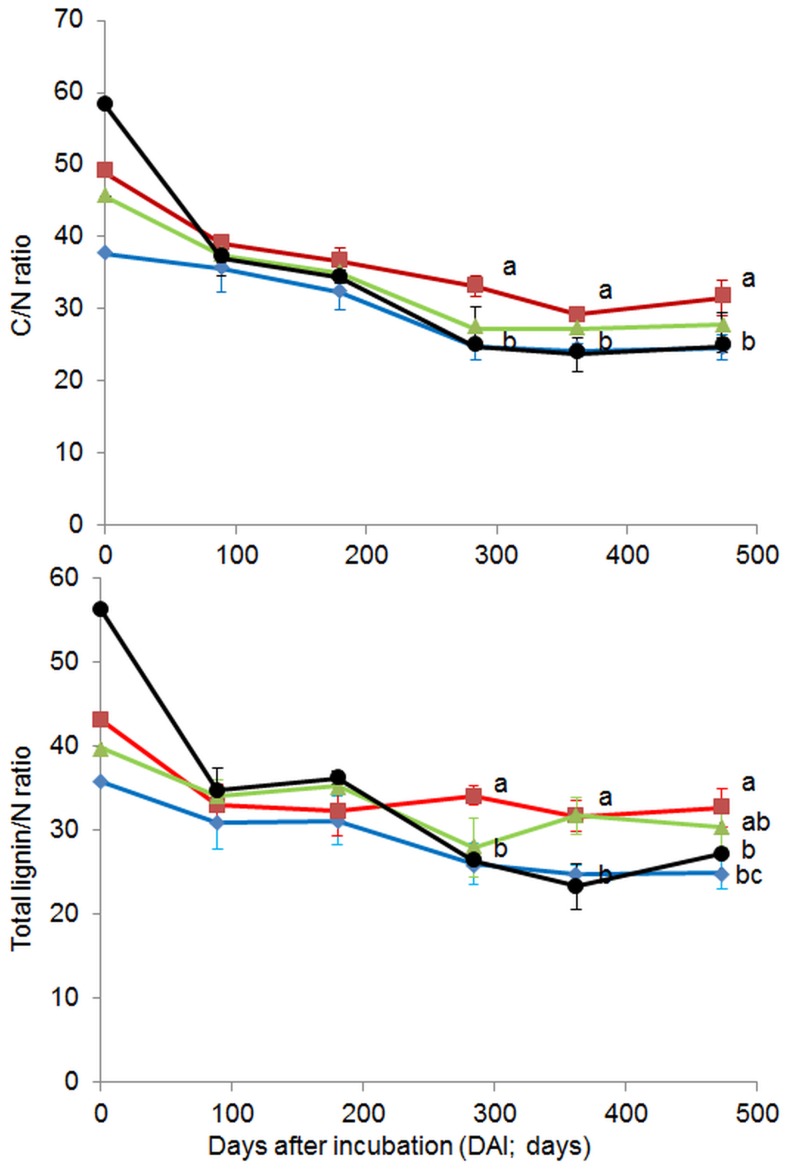
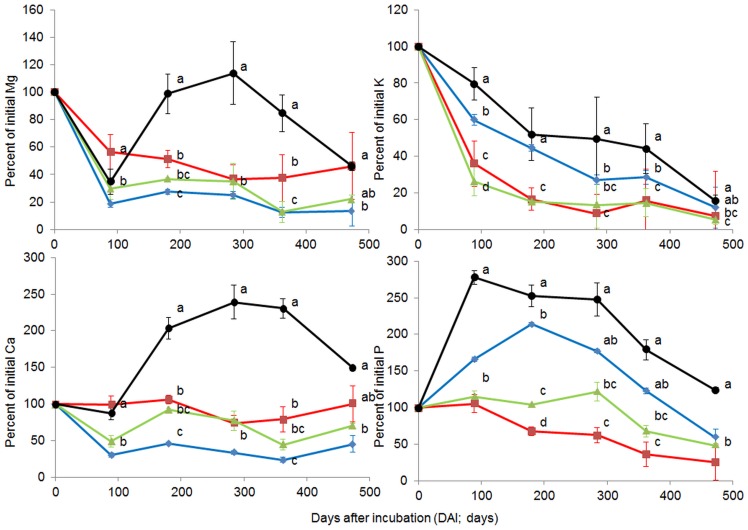
Leaf litter decomposition is the key ecological process that determines the sustainability of managed forest ecosystems, however very few studies hitherto have investigated this process with respect to silvicultural management practices. The aims of the present study were to investigate the effects of forest management practices on leaf litter decomposition rates, nutrient dynamics (C, N, Mg, K, Ca, P) and the activity of ligninolytic enzymes. We approached these questions using a 473 day long litterbag experiment. We found that age-class beech and spruce forests (high forest management intensity) had significantly higher decomposition rates and nutrient release (most nutrients) than unmanaged deciduous forest reserves (P<0.05). The site with near-to-nature forest management (low forest management intensity) exhibited no significant differences in litter decomposition rate, C release, lignin decomposition, and C/N, lignin/N and ligninolytic enzyme patterns compared to the unmanaged deciduous forest reserves, but most nutrient dynamics examined in this study were significantly faster under such near-to-nature forest management practices. Analyzing the activities of ligninolytic enzymes provided evidence that different forest system management practices affect litter decomposition by changing microbial enzyme activities, at least over the investigated time frame of 473 days (laccase, P<0.0001; manganese peroxidase (MnP), P = 0.0260). Our results also indicate that lignin decomposition is the rate limiting step in leaf litter decomposition and that MnP is one of the key oxidative enzymes of litter degradation. We demonstrate here that forest system management practices can significantly affect important ecological processes and services such as decomposition and nutrient cycling.
凋落物分解是决定人工林生态系统可持续性的关键生态过程,然而迄今为止,很少有研究针对造林管理措施对这一过程进行调查。本研究的目的是调查森林管理措施对凋落物分解速率、养分动态(碳、氮、镁、钾、钙、磷)以及木质素分解酶活性的影响。我们通过一项为期473天的凋落物袋实验来探讨这些问题。我们发现,同龄山毛榉和云杉林(森林管理强度高)的分解速率和养分释放(大多数养分)显著高于未管理的落叶林保护区(P<0.05)。与未管理的落叶林保护区相比,近自然森林管理(森林管理强度低)的地点在凋落物分解速率、碳释放、木质素分解以及碳/氮、木质素/氮和木质素分解酶模式方面没有显著差异,但本研究中检测的大多数养分动态在这种近自然森林管理措施下明显更快。对木质素分解酶活性的分析表明,不同的森林系统管理措施通过改变微生物酶活性影响凋落物分解,至少在473天的研究时间范围内是这样(漆酶,P<0.0001;锰过氧化物酶(MnP),P = 0.0260)。我们的结果还表明,木质素分解是凋落物分解的限速步骤,并且MnP是凋落物降解的关键氧化酶之一。我们在此证明,森林系统管理措施可以显著影响诸如分解和养分循环等重要的生态过程和服务。