Ren Yu, Wu Haiqing, Ma Yuzhen, Yuan Jianlong, Liang Hao, Liu Dongjun
Key Laboratory of Mammalian Reproductive Biology and Biotechnology Ministry of Education, Inner Mongolia University, Hohhot, Inner Mongolia, China.
Inner Mongolia People's Hospital, Hohhot, Inner Mongolia, China.
PLoS One. 2014 Apr 3;9(4):e93583. doi: 10.1371/journal.pone.0093583. eCollection 2014.
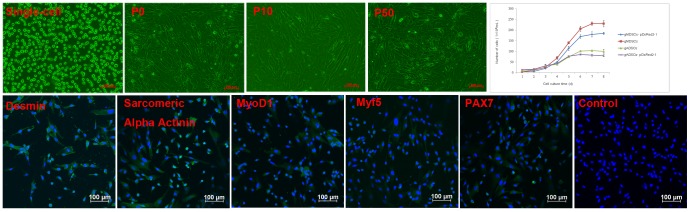
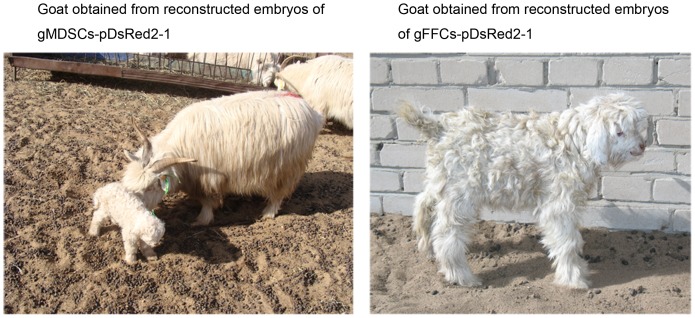
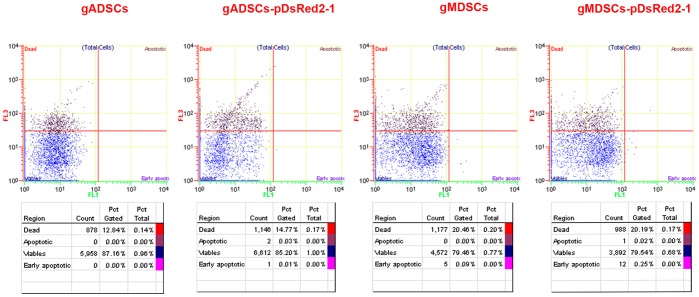
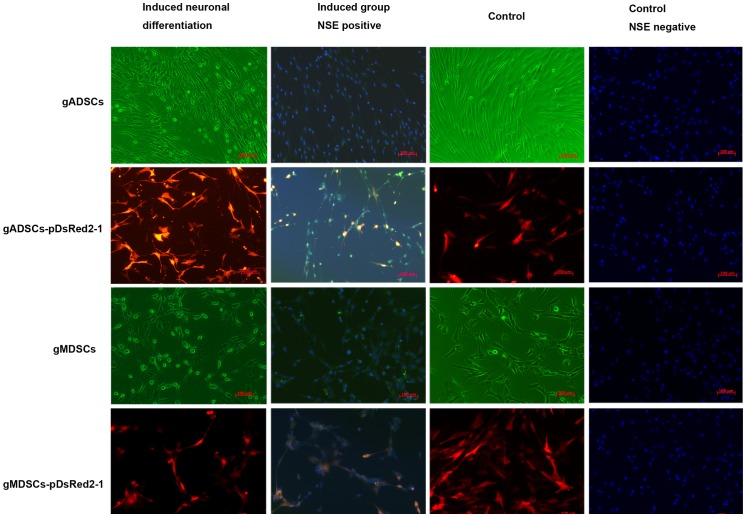
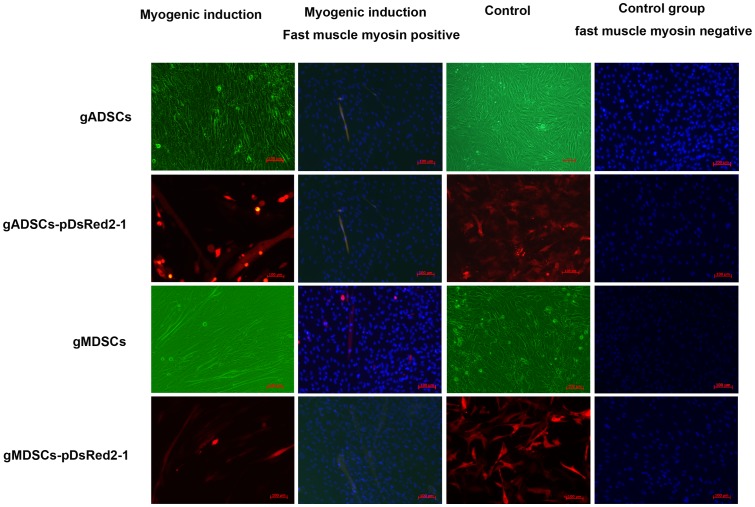
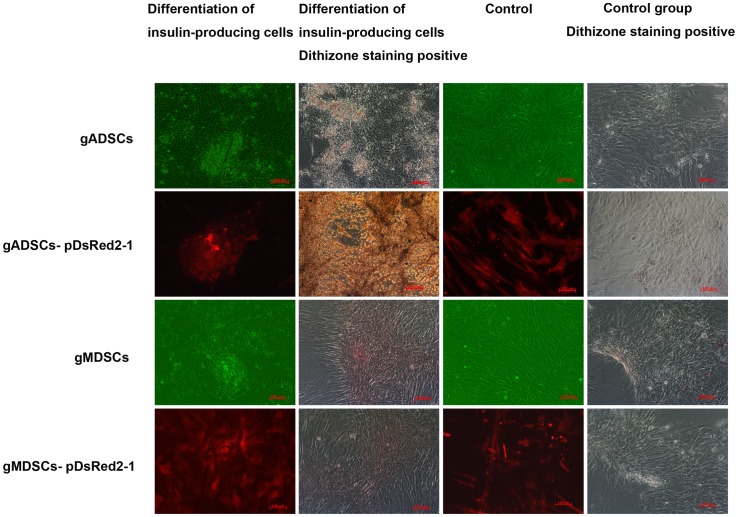
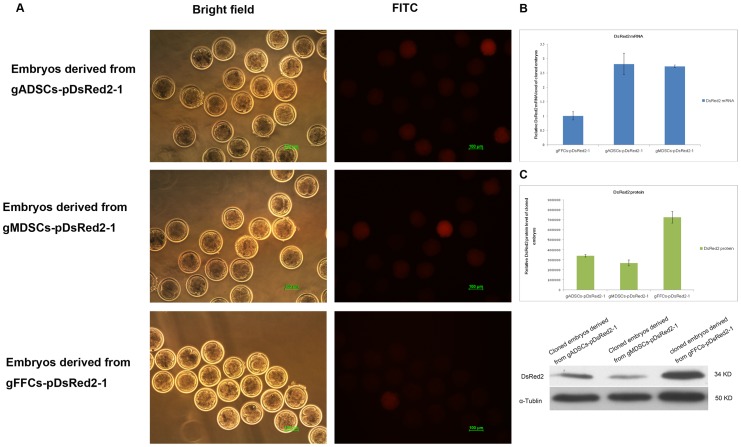
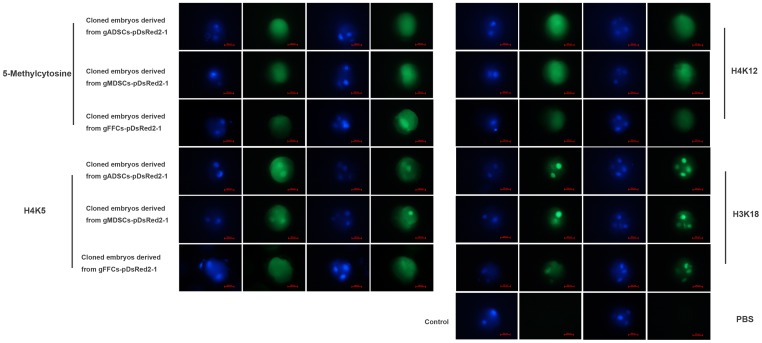
Somatic cell nuclear transfer is used to generate genetic models for research and new, genetically modified livestock varieties. Goat fetal fibroblast cells (gFFCs) are the predominant nuclear donors in Cashmere goat transgenic cloning, but have disadvantages. We evaluated the potential of goat adipose-derived mesenchymal stem cells (gADSCs) and goat skeletal muscle-derived satellite cells (gMDSCs) for somatic cell nuclear transfer, evaluating their proliferation, pluripotency, transfection efficiency and capacity to support full term development of embryos after additive gene transfer or homologous recombination. gADSCs and gMDSCs were isolated by enzyme digestion and differentiated into neurocytes, myotube cells and insulin-producing cells. Neuron-specific enolase, fast muscle myosin and insulin expression were determined by immunohistochemistry. Following somatic cell nuclear transfer with donor cells derived from gADSCs, gMDSCs and gFFCs, transfection and cloning efficiencies were compared. Red fluorescent protein levels were determined by quantitative PCR and western blotting. 5-Methylcytosine, H4K5, H4K12 and H3K18 were determined immunohistochemically. gADSCs and gMDSCs were maintained in culture for up to 65 passages, whereas gFFCs could be passaged barely more than 15 times. gADSCs and gMDSCs had higher fluorescent colony forming efficiency and greater convergence (20%) and cleavage (10%) rates than gFFCs, and exhibited differing H4K5 histone modification patterns after somatic cell nuclear transfer and in vitro cultivation. After transfection with a pDsRed2-1 expression plasmid, the integrated exogenous genes did not influence the pluripotency of gADSCs-pDsRed2-1 or gMDSCs-pDsRed2-1. DsRed2 mRNA expression by cloned embryos derived from gADSCs-pDsRed2-1 or gMDSCs-pDsRed2-1 was more than twice that of gFFCs-pDsRed2-1 embryos (P<0.01). Pregnancy rates of gADSCs-pDsRed2-1 and gMDSCs-pDsRed2-1 recipients were higher than those of gFFCs-pDsRed2-1 recipients (P<0.01). With their high proliferative capacity and transfection efficiency, gADSCs and gMDSCs are a valuable cell source for breeding new, genetically modified varieties of livestock by somatic cell nuclear transfer.
体细胞核移植用于生成用于研究的遗传模型以及新的转基因家畜品种。山羊胎儿成纤维细胞(gFFCs)是绒山羊转基因克隆中主要的核供体,但存在缺点。我们评估了山羊脂肪来源的间充质干细胞(gADSCs)和山羊骨骼肌来源的卫星细胞(gMDSCs)用于体细胞核移植的潜力,评估了它们在添加基因转移或同源重组后的增殖、多能性、转染效率以及支持胚胎足月发育的能力。通过酶消化分离gADSCs和gMDSCs,并将其分化为神经细胞、肌管细胞和胰岛素分泌细胞。通过免疫组织化学测定神经元特异性烯醇化酶、快肌肌球蛋白和胰岛素的表达。在用源自gADSCs、gMDSCs和gFFCs的供体细胞进行体细胞核移植后,比较转染和克隆效率。通过定量PCR和蛋白质印迹法测定红色荧光蛋白水平。通过免疫组织化学测定5-甲基胞嘧啶、H4K5、H4K12和H3K18。gADSCs和gMDSCs在培养中可传代多达65次,而gFFCs几乎传代不超过15次。gADSCs和gMDSCs比gFFCs具有更高的荧光集落形成效率以及更高的融合率(20%)和裂解率(10%),并且在体细胞核移植和体外培养后表现出不同的H4K5组蛋白修饰模式。在用pDsRed2-1表达质粒转染后,整合的外源基因不影响gADSCs-pDsRed2-1或gMDSCs-pDsRed2-1的多能性。源自gADSCs-pDsRed2-1或gMDSCs-pDsRed2-1的克隆胚胎的DsRed2 mRNA表达是源自gFFCs-pDsRed2-1胚胎的两倍多(P<0.01)。gADSCs-pDsRed2-1和gMDSCs-pDsRed2-1受体的妊娠率高于gFFCs-pDsRed2-1受体(P<0.01)。由于其高增殖能力和转染效率,gADSCs和gMDSCs是通过体细胞核移植培育新的转基因家畜品种的宝贵细胞来源。