Flex Elisabetta, Jaiswal Mamta, Pantaleoni Francesca, Martinelli Simone, Strullu Marion, Fansa Eyad K, Caye Aurélie, De Luca Alessandro, Lepri Francesca, Dvorsky Radovan, Pannone Luca, Paolacci Stefano, Zhang Si-Cai, Fodale Valentina, Bocchinfuso Gianfranco, Rossi Cesare, Burkitt-Wright Emma M M, Farrotti Andrea, Stellacci Emilia, Cecchetti Serena, Ferese Rosangela, Bottero Lisabianca, Castro Silvana, Fenneteau Odile, Brethon Benoît, Sanchez Massimo, Roberts Amy E, Yntema Helger G, Van Der Burgt Ineke, Cianci Paola, Bondeson Marie-Louise, Cristina Digilio Maria, Zampino Giuseppe, Kerr Bronwyn, Aoki Yoko, Loh Mignon L, Palleschi Antonio, Di Schiavi Elia, Carè Alessandra, Selicorni Angelo, Dallapiccola Bruno, Cirstea Ion C, Stella Lorenzo, Zenker Martin, Gelb Bruce D, Cavé Hélène, Ahmadian Mohammad R, Tartaglia Marco
Dipartimento di Ematologia, Oncologia e Medicina Molecolare and.
Institut für Biochemie und Molekularbiologie II, Medizinische Fakultät der Heinrich-Heine Universitat, Düsseldorf 40225, Germany.
Hum Mol Genet. 2014 Aug 15;23(16):4315-27. doi: 10.1093/hmg/ddu148. Epub 2014 Apr 4.
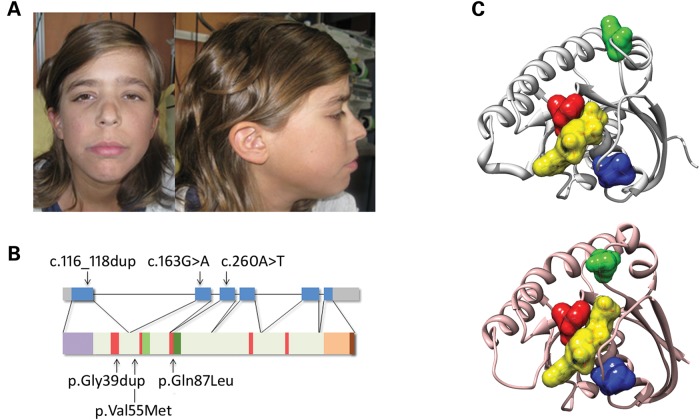
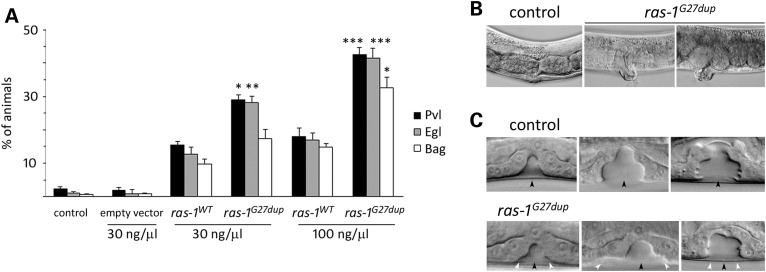
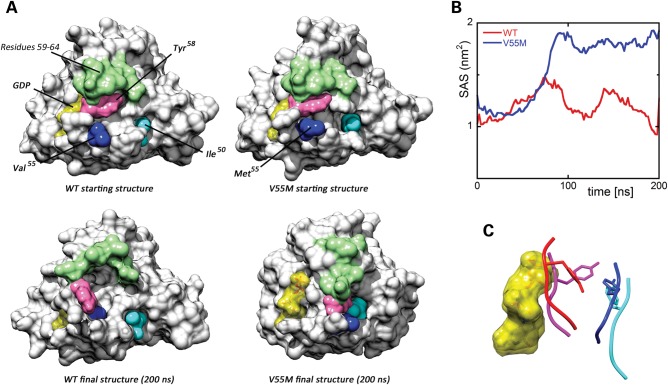
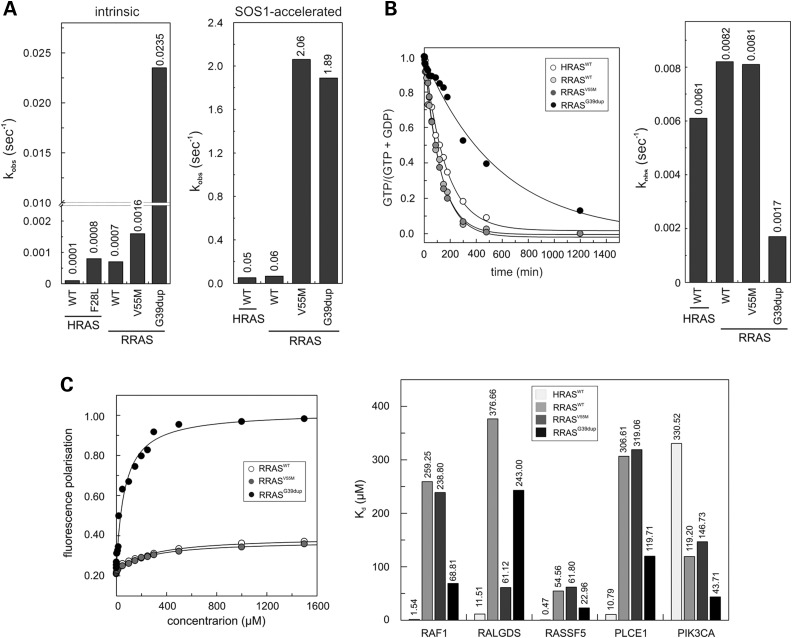
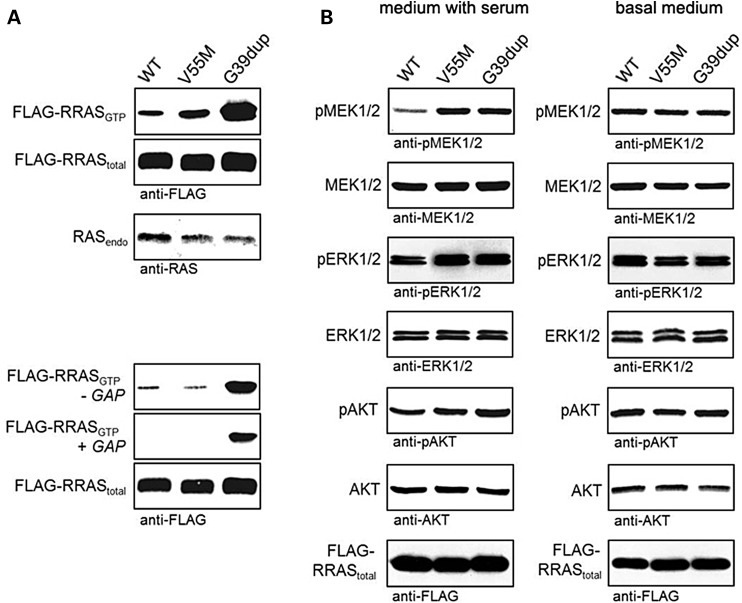
RASopathies, a family of disorders characterized by cardiac defects, defective growth, facial dysmorphism, variable cognitive deficits and predisposition to certain malignancies, are caused by constitutional dysregulation of RAS signalling predominantly through the RAF/MEK/ERK (MAPK) cascade. We report on two germline mutations (p.Gly39dup and p.Val55Met) in RRAS, a gene encoding a small monomeric GTPase controlling cell adhesion, spreading and migration, underlying a rare (2 subjects among 504 individuals analysed) and variable phenotype with features partially overlapping Noonan syndrome, the most common RASopathy. We also identified somatic RRAS mutations (p.Gly39dup and p.Gln87Leu) in 2 of 110 cases of non-syndromic juvenile myelomonocytic leukaemia, a childhood myeloproliferative/myelodysplastic disease caused by upregulated RAS signalling, defining an atypical form of this haematological disorder rapidly progressing to acute myeloid leukaemia. Two of the three identified mutations affected known oncogenic hotspots of RAS genes and conferred variably enhanced RRAS function and stimulus-dependent MAPK activation. Expression of an RRAS mutant homolog in Caenorhabditis elegans enhanced RAS signalling and engendered protruding vulva, a phenotype previously linked to the RASopathy-causing SHOC2(S2G) mutant. Overall, these findings provide evidence of a functional link between RRAS and MAPK signalling and reveal an unpredicted role of enhanced RRAS function in human disease.
RAS病是一类以心脏缺陷、生长缺陷、面部畸形、认知缺陷以及易患某些恶性肿瘤为特征的疾病,主要是由RAS信号通路通过RAF/MEK/ERK(MAPK)级联的先天性失调引起的。我们报告了RRAS基因中的两个种系突变(p.Gly39dup和p.Val55Met),RRAS基因编码一种控制细胞黏附、铺展和迁移的小单体GTP酶,这两个突变是一种罕见(在504名分析个体中有2例)且具有可变表型的疾病的基础,其特征部分与努南综合征重叠,努南综合征是最常见的RAS病。我们还在110例非综合征性青少年骨髓单核细胞白血病患者中的2例中鉴定出体细胞RRAS突变(p.Gly39dup和p.Gln87Leu),非综合征性青少年骨髓单核细胞白血病是一种由RAS信号上调引起的儿童骨髓增殖性/骨髓发育异常性疾病,这一定义了这种血液系统疾病的一种非典型形式,可迅速进展为急性髓系白血病。所鉴定的三个突变中有两个影响了RAS基因已知的致癌热点,并赋予RRAS功能不同程度的增强以及刺激依赖性MAPK激活。在秀丽隐杆线虫中表达RRAS突变同源物可增强RAS信号,并导致外阴突出,这是一种先前与导致RAS病的SHOC2(S2G)突变相关的表型。总体而言,这些发现提供了RRAS与MAPK信号之间功能联系的证据,并揭示了RRAS功能增强在人类疾病中一个未曾预料到的作用。