Department of Chemical and Environmental Engineering, Bourns College of Engineering, University of California, 900 University Ave, Riverside, CA 92507, USA ; Center for Environmental Research and Technology, University of California, 1084 Columbia Ave, Riverside, CA 92507, USA ; BioEnergy Science Center, Oak Ridge National Laboratory, 1 Bethel Valley Rd, Oak Ridge, TN 37831, USA ; Current address: DuPont Industrial Biosciences, 925 Page Mill Rd, Palo Alto, CA 94304, USA.
Complex Carbohydrate Research Center, University of Georgia, 315 Riverbend Rd., Athens, GA 30602, USA ; BioEnergy Science Center, Oak Ridge National Laboratory, 1 Bethel Valley Rd, Oak Ridge, TN 37831, USA.
Biotechnol Biofuels. 2014 Apr 4;7:50. doi: 10.1186/1754-6834-7-50. eCollection 2014.
Agave, which is well known for tequila and other liquor production in Mexico, has recently gained attention because of its attractive potential to launch sustainable bioenergy feedstock solutions for semi-arid and arid lands. It was previously found that agave cell walls contain low lignin and relatively diverse non-cellulosic polysaccharides, suggesting unique recalcitrant features when compared to conventional C4 and C3 plants.
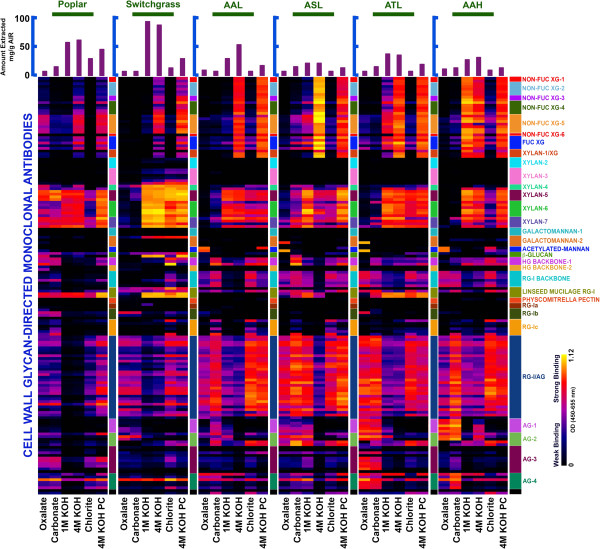
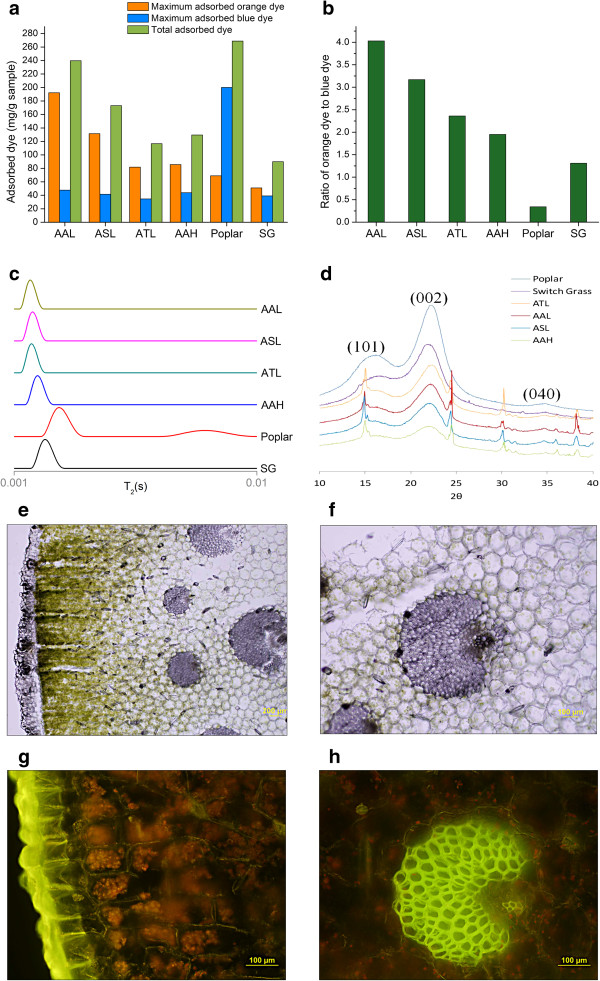
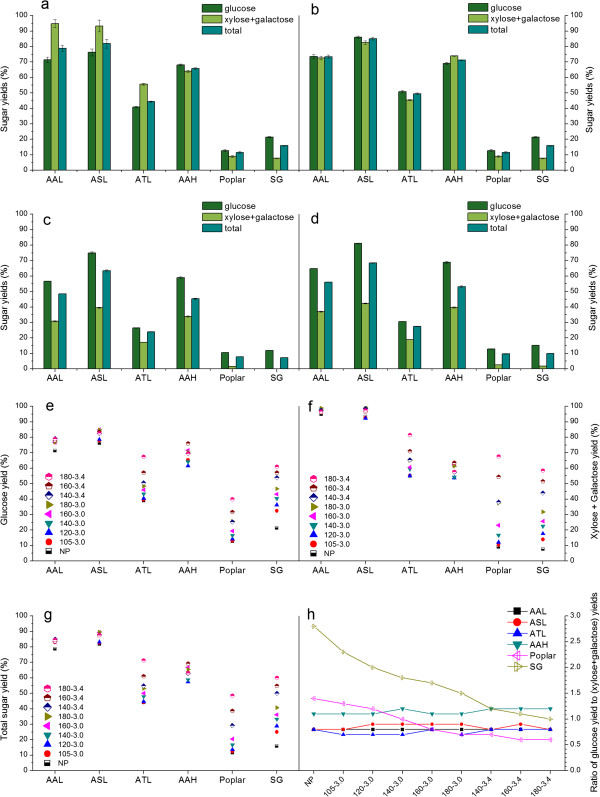
Here, we report sugar release data from fungal enzymatic hydrolysis of non-pretreated and hydrothermally pretreated biomass that shows agave to be much less recalcitrant to deconstruction than poplar or switchgrass. In fact, non-pretreated agave has a sugar release five to eight times greater than that of poplar wood and switchgrass . Meanwhile, state of the art techniques including glycome profiling, nuclear magnetic resonance (NMR), Simon's Stain, confocal laser scanning microscopy and so forth, were applied to measure interactions of non-cellulosic wall components, cell wall hydrophilicity, and enzyme accessibility to identify key structural features that make agave cell walls less resistant to biological deconstruction when compared to poplar and switchgrass.
This study systematically evaluated the recalcitrant features of agave plants towards biofuels applications. The results show that not only does agave present great promise for feeding biorefineries on semi-arid and arid lands, but also show the value of studying agave's low recalcitrance for developments in improving cellulosic energy crops.
龙舌兰因其在墨西哥生产龙舌兰酒和其他酒类而广为人知,最近因其具有为半干旱和干旱地区推出可持续生物能源原料解决方案的诱人潜力而受到关注。此前发现,龙舌兰细胞壁含有低木质素和相对多样化的非纤维素多糖,与传统的 C4 和 C3 植物相比,这表明其具有独特的抗降解特性。
在这里,我们报告了真菌酶水解未经预处理和水热预处理的生物质的糖释放数据,结果表明龙舌兰比杨树或柳枝稷更不易被解构。事实上,未经预处理的龙舌兰的糖释放量比杨木和柳枝稷高五到八倍。同时,采用了包括糖组分析、核磁共振(NMR)、西蒙染色、共聚焦激光扫描显微镜等在内的最先进技术,以测量非纤维素细胞壁成分的相互作用、细胞壁亲水性和酶可及性,以确定使龙舌兰细胞壁在生物解构方面比杨树和柳枝稷更不易抵抗的关键结构特征。
本研究系统地评估了龙舌兰植物在生物燃料应用方面的抗降解特性。结果表明,龙舌兰不仅为在半干旱和干旱地区为生物炼制厂提供原料提供了巨大的前景,而且还表明研究龙舌兰低抗降解性对于提高纤维素能源作物的发展具有重要价值。