Department of Nutritional Science, Fu Jen Catholic University, Xinzhuang District, New Taipei City, Taiwan.
Department of Biotechnology, National Kaohsiung Normal University, Yanchao Township, Kao-Hsiung County, Taiwan.
J Tradit Complement Med. 2013 Jan;3(1):16-32. doi: 10.4103/2225-4110.106538.
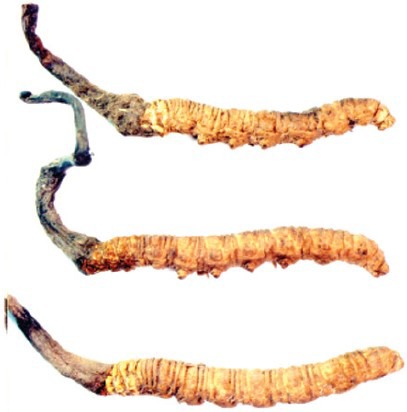
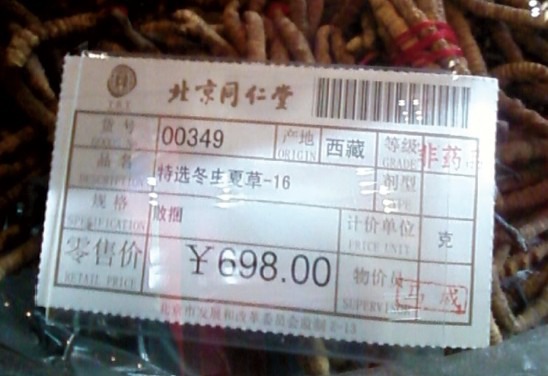
The caterpillar fungus Ophiocordyceps sinensis (syn.Cordyceps sinensis), which was originally used in traditional Tibetan and Chinese medicine, is called either "yartsa gunbu" or "DongChongXiaCao ( Dōng Chóng Xià Cǎo)" ("winter worm-summer grass"), respectively. The extremely high price of DongChongXiaCao, approximately USD $20,000 to 40,000 per kg, has led to it being regarded as "soft gold" in China. The multi-fungi hypothesis has been proposed for DongChongXiaCao; however, Hirsutella sinensis is the anamorph of O. sinensis. In Chinese, the meaning of "DongChongXiaCao" is different for O. sinensis, Cordyceps spp., and Cordyceps sp. Over 30 bioactivities, such as immunomodulatory, antitumor, anti-inflammatory, and antioxidant activities, have been reported for wild DongChongXiaCao and for the mycelia and culture supernatants of O. sinensis. These bioactivities derive from over 20 bioactive ingredients, mainly extracellular polysaccharides, intracellular polysaccharides, cordycepin, adenosine, mannitol, and sterols. Other bioactive components have been found as well, including two peptides (cordymin and myriocin), melanin, lovastatin, γ-aminobutyric acid, and cordysinins. Recently, the bioactivities of O. sinensis were described, and they include antiarteriosclerosis, antidepression, and antiosteoporosis activities, photoprotection, prevention and treatment of bowel injury, promotion of endurance capacity, and learning-memory improvement. H. sinensis has the ability to accelerate leukocyte recovery, stimulate lymphocyte proliferation, antidiabetes, and improve kidney injury. Starting January 1(st), 2013, regulation will dictate that one fungus can only have one name, which will end the system of using separate names for anamorphs. The anamorph name "H. sinensis" has changed by the International Code of Nomenclature for algae, fungi, and plants to O. sinensis.
冬虫夏草(又称中华虫草)最初用于传统的藏医和中医,分别被称为“雅塔菇布”或“冬虫草(冬重夏草)”。冬虫草的价格极高,每公斤约 20000 至 40000 美元,因此在中国被视为“软黄金”。对于冬虫草,提出了多真菌假说;然而,中国被毛孢是中华虫草的无性型。在中国,“冬虫草”的含义对于中华虫草、虫草属和虫草属的其他种是不同的。已报道野生冬虫草和中华虫草的菌丝体和培养上清液具有 30 多种生物活性,如免疫调节、抗肿瘤、抗炎和抗氧化活性。这些生物活性来自 20 多种生物活性成分,主要是胞外多糖、胞内多糖、虫草素、腺苷、甘露醇和甾醇。还发现了其他生物活性成分,包括两种肽(虫草素和麦角甾醇)、黑色素、洛伐他汀、γ-氨基丁酸和虫草素。最近,描述了中华虫草的生物活性,包括抗动脉粥样硬化、抗抑郁和抗骨质疏松活性、光保护、预防和治疗肠损伤、促进耐力和改善学习记忆。中国被毛孢具有加速白细胞恢复、刺激淋巴细胞增殖、抗糖尿病和改善肾脏损伤的能力。从 2013 年 1 月 1 日起,规定将规定一种真菌只能有一个名称,从而结束使用无性型的不同名称的系统。无性型名称“中国被毛孢”已根据藻类、真菌和植物国际命名法规更改为中华虫草。