BioArCh, Department of Archaeology, University of York, York, United Kingdom.
Department of Physics, University of York, York, United Kingdom; York Centre for Complex Systems Analysis (YCCSA), University of York, York, United Kingdom.
PLoS One. 2014 Apr 9;9(4):e93854. doi: 10.1371/journal.pone.0093854. eCollection 2014.
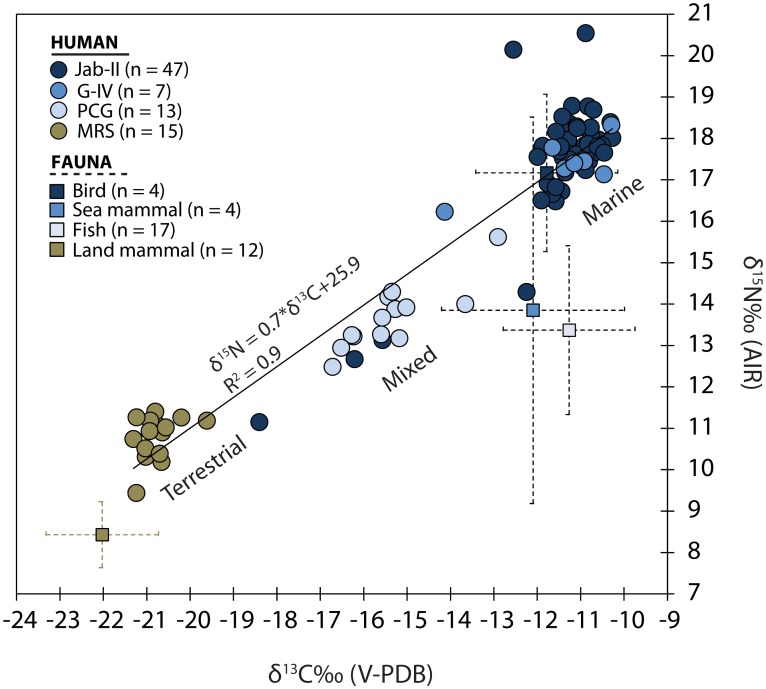
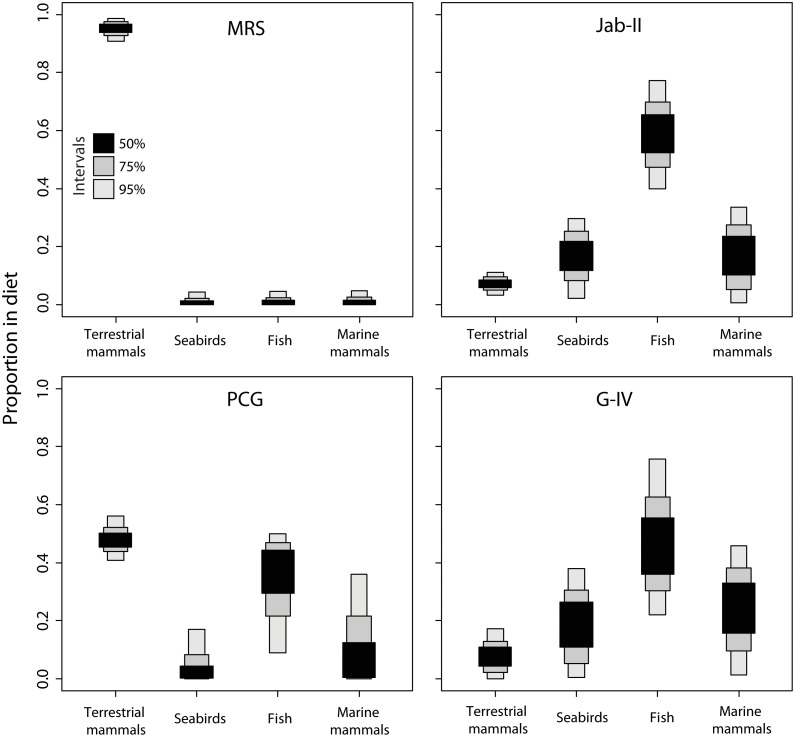
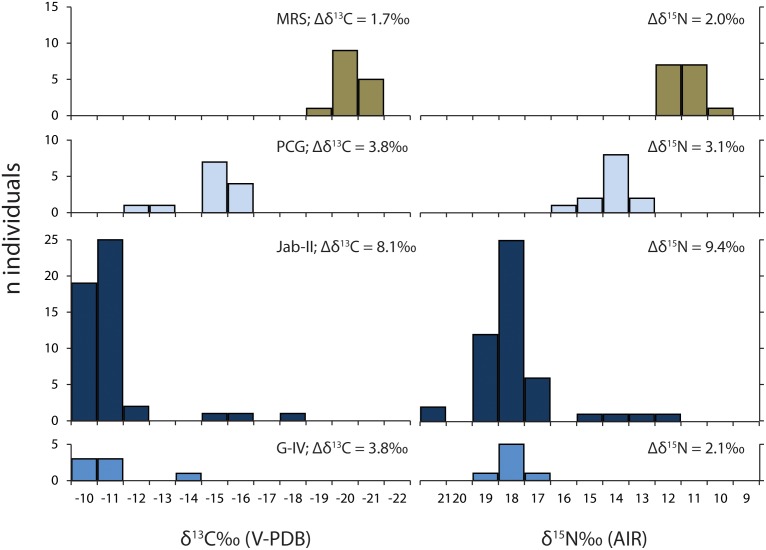
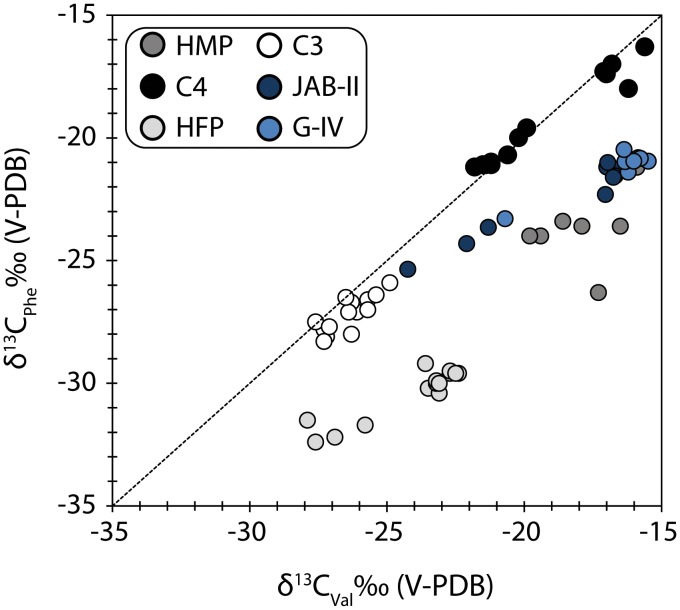
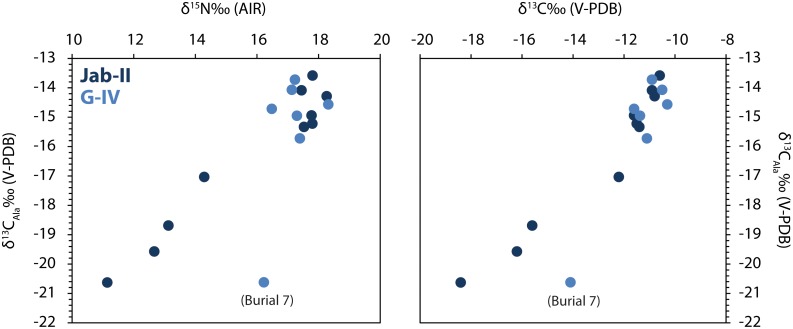
Isotopic and molecular analysis on human, fauna and pottery remains can provide valuable new insights into the diets and subsistence practices of prehistoric populations. These are crucial to elucidate the resilience of social-ecological systems to cultural and environmental change. Bulk collagen carbon and nitrogen isotopic analysis of 82 human individuals from mid to late Holocene Brazilian archaeological sites (∼6,700 to ∼1,000 cal BP) reveal an adequate protein incorporation and, on the coast, the continuation in subsistence strategies based on the exploitation of aquatic resources despite the introduction of pottery and domesticated plant foods. These results are supported by carbon isotope analysis of single amino acid extracted from bone collagen. Chemical and isotopic analysis also shows that pottery technology was used to process marine foods and therefore assimilated into the existing subsistence strategy. Our multidisciplinary results demonstrate the resilient character of the coastal economy to cultural change during the late Holocene in southern Brazil.
对人类、动物群和陶器遗骸的同位素和分子分析,可以为史前人群的饮食和生计实践提供有价值的新见解。这些对于阐明社会-生态系统对文化和环境变化的恢复力至关重要。从中新世到全新世晚期巴西考古遗址(约 6700 到 1000 年前)的 82 个人类个体的胶原碳和氮同位素的批量分析表明,蛋白质的摄入量是充足的,在沿海地区,尽管引入了陶器和驯化的植物性食物,基于对水生资源的开发的生计策略仍在继续。这些结果得到了从骨胶原中提取的单个氨基酸的碳同位素分析的支持。化学和同位素分析还表明,陶器技术被用于加工海洋食品,因此被纳入了现有的生计策略。我们的多学科研究结果表明,在巴西南部全新世晚期,沿海经济对文化变化具有很强的适应能力。