Brazaitis Marius, Eimantas Nerijus, Daniuseviciute Laura, Baranauskiene Neringa, Skrodeniene Erika, Skurvydas Albertas
Sports Science and Innovation Institute, Lithuanian Sports University, Kaunas, Lithuania.
Department of Educational Studies, Kaunas University of Technology, Kaunas, Lithuania.
PLoS One. 2014 Apr 10;9(4):e94698. doi: 10.1371/journal.pone.0094698. eCollection 2014.
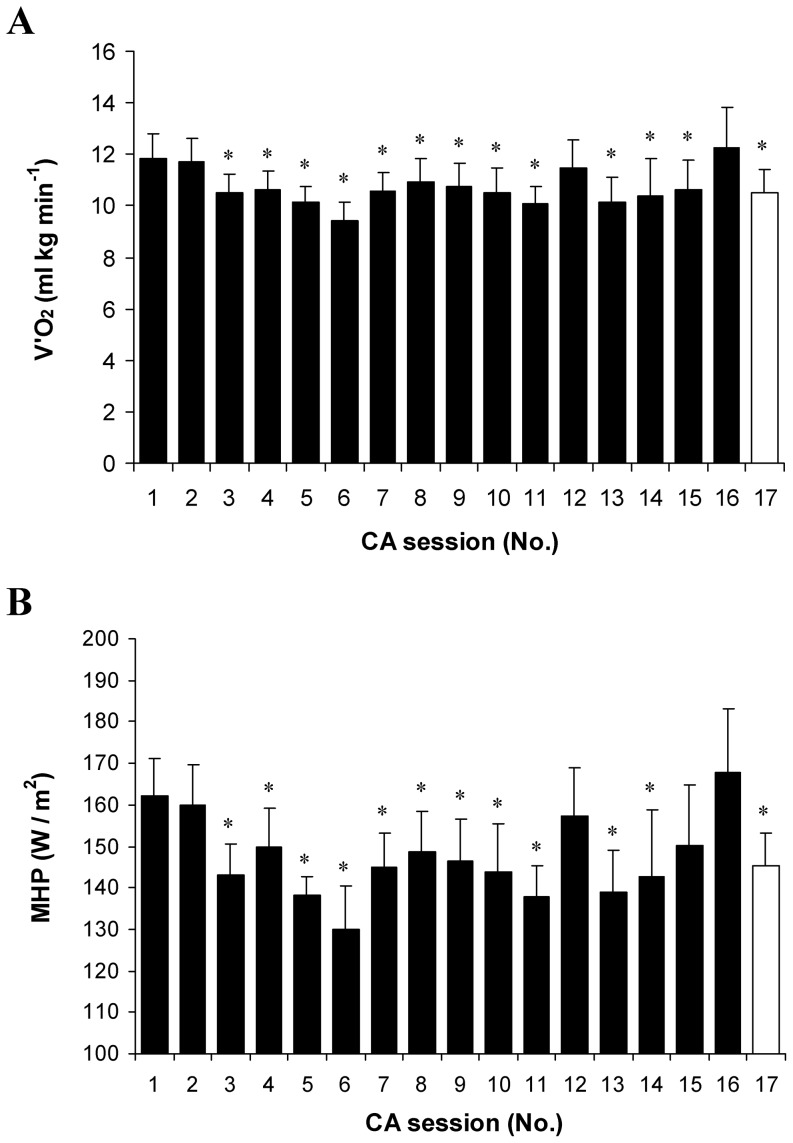
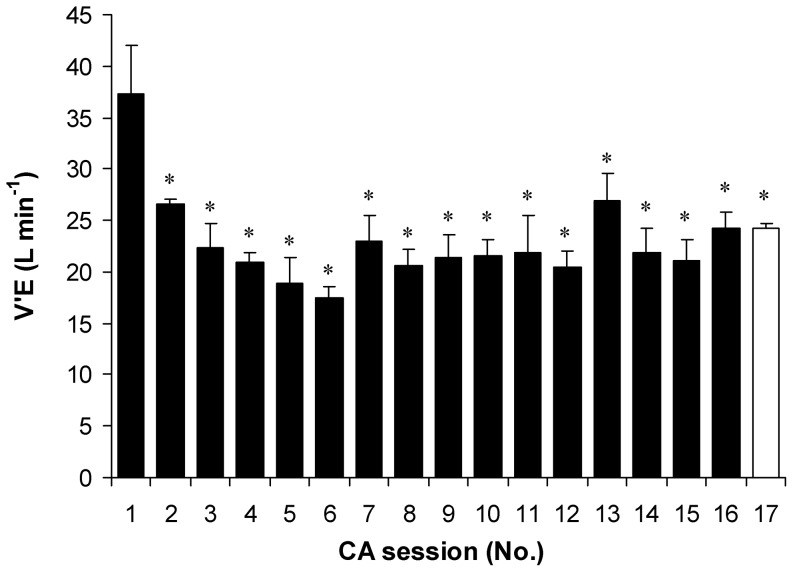
The time course of physiological and psychological markers during cold acclimation (CA) was explored. The experiment included 17 controlled (i.e., until the rectal temperature reached 35.5°C or 170 min had elapsed; for the CA-17 session, the subjects (n = 14) were immersed in water for the same amount of time as that used in the CA-1 session) head-out water immersions at a temperature of 14°C over 20 days. The data obtained in this study suggest that the subjects exhibited a thermoregulatory shift from peripheral-to-central to solely central input thermoregulation, as well as from shivering to non-shivering thermogenesis throughout the CA. In the first six CA sessions, a hypothermic type of acclimation was found; further CA (CA-7 to CA-16) led to a transitional shift to a hypothermic-insulative type of acclimation. Interestingly, when the subjects were immersed in water for the same time as that used in the CA-1 session (CA-17), the CA led to a hypothermic type of acclimation. The presence of a metabolic type of thermogenesis was evident only under thermoneutral conditions. Cold-water immersion decreased the concentration of cold-stress markers, reduced the activity of the innate immune system, suppressed specific immunity to a lesser degree and yielded less discomfort and cold sensation. We found a negative correlation between body mass index and Δ metabolic heat production before and after CA.
探讨了冷适应(CA)过程中生理和心理指标的时间进程。实验包括在20天内进行17次受控的(即直到直肠温度达到35.5°C或经过170分钟;对于CA - 17阶段,14名受试者浸泡在水中的时间与CA - 1阶段相同)头部露出的14°C水温的水浸实验。本研究获得的数据表明,在整个冷适应过程中,受试者表现出从外周到中枢再到仅中枢输入的体温调节转变,以及从颤抖产热到非颤抖产热的转变。在前六个冷适应阶段,发现了一种低温适应类型;进一步的冷适应(CA - 7至CA - 16)导致向低温绝缘适应类型的过渡转变。有趣的是,当受试者浸泡在水中的时间与CA - 1阶段相同(CA - 17)时,冷适应导致了一种低温适应类型。仅在热中性条件下,代谢产热类型才明显。冷水浸泡降低了冷应激标志物的浓度,降低了先天免疫系统的活性,在较小程度上抑制了特异性免疫,并且产生的不适和寒冷感较少。我们发现体重指数与冷适应前后的代谢热产生变化之间存在负相关。