Gutiérrez Jorge, González-Pérez Sergio, García-García Francisco, Daly Cara T, Lorenzo Oscar, Revuelta José L, McCabe Paul F, Arellano Juan B
Instituto de Recursos Naturales y Agrobiología de Salamanca (IRNASA-CSIC), Cordel de merinas 52, 37008 Salamanca, Spain Department of Nutritional Sciences, School of Biosciences and Medicine, Faculty of Health and Medical Sciences, University of Surrey, Guildford, Surrey GU2 7XH, UK.
Instituto de Recursos Naturales y Agrobiología de Salamanca (IRNASA-CSIC), Cordel de merinas 52, 37008 Salamanca, Spain.
J Exp Bot. 2014 Jul;65(12):3081-95. doi: 10.1093/jxb/eru151. Epub 2014 Apr 10.
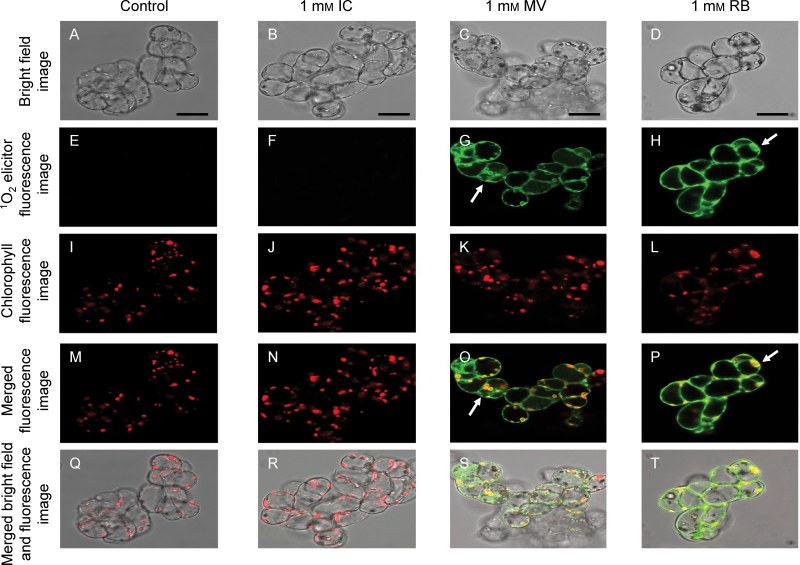
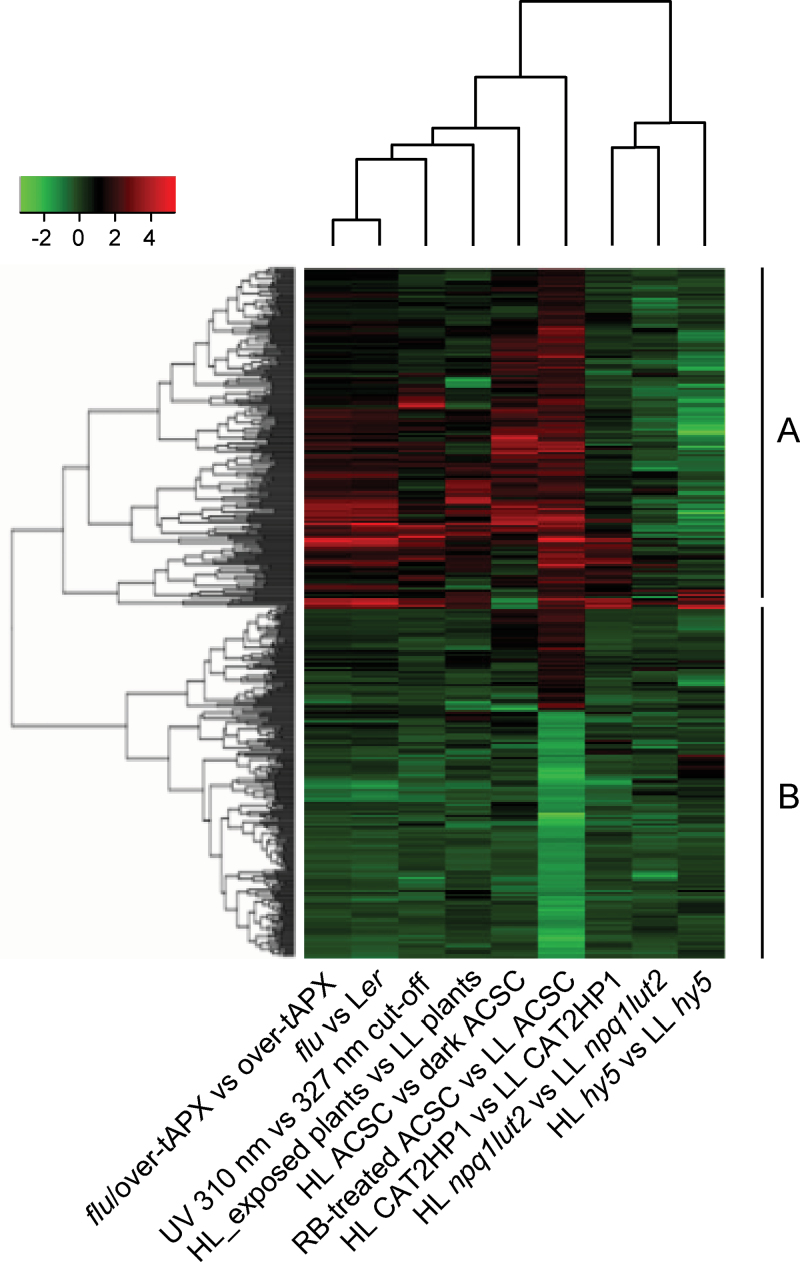
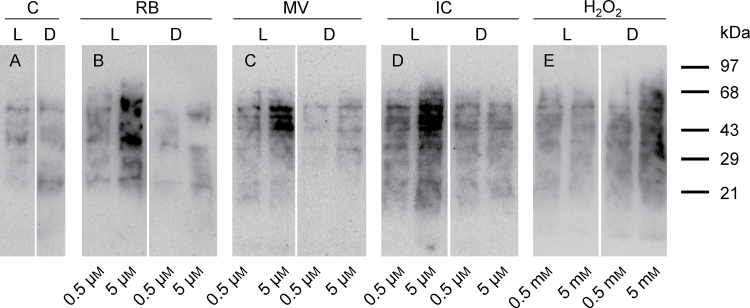
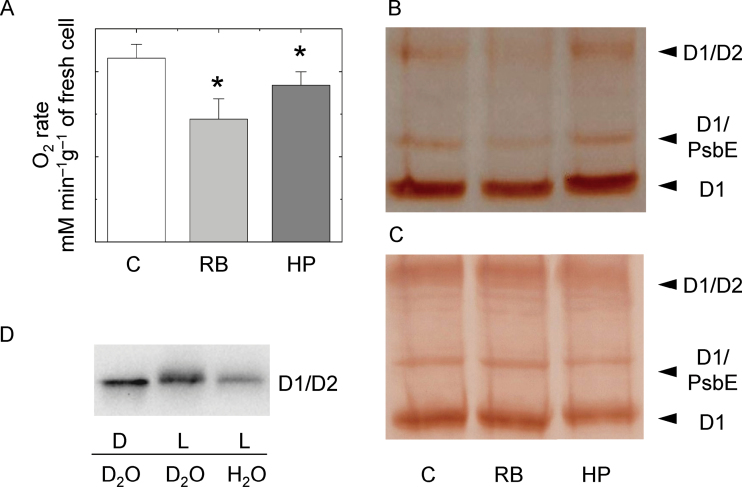
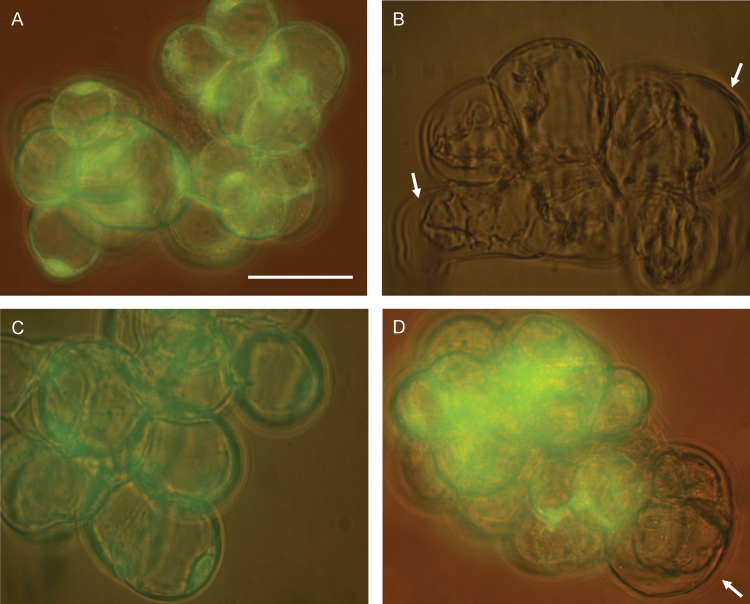
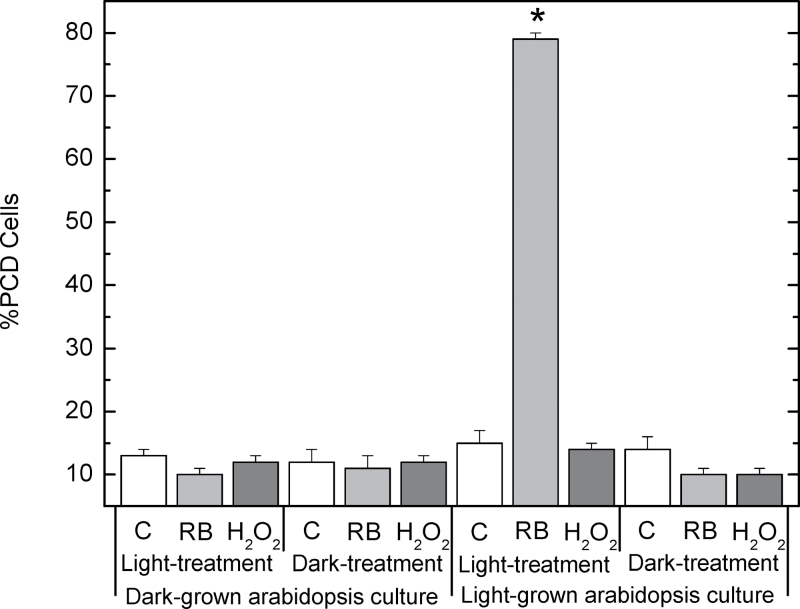
Light-grown Arabidopsis thaliana cell suspension culture (ACSC) were subjected to mild photooxidative damage with Rose Bengal (RB) with the aim of gaining a better understanding of singlet oxygen-mediated defence responses in plants. Additionally, ACSC were treated with H2O2 at concentrations that induced comparable levels of protein oxidation damage. Under low to medium light conditions, both RB and H2O2 treatments activated transcriptional defence responses and inhibited photosynthetic activity, but they differed in that programmed cell death (PCD) was only observed in cells treated with RB. When dark-grown ACSC were subjected to RB in the light, PCD was suppressed, indicating that the singlet oxygen-mediated signalling pathway in ACSC requires functional chloroplasts. Analysis of up-regulated transcripts in light-grown ACSC, treated with RB in the light, showed that both singlet oxygen-responsive transcripts and transcripts with a key role in hormone-activated PCD (i.e. ethylene and jasmonic acid) were present. A co-regulation analysis proved that ACSC treated with RB exhibited higher correlation with the conditional fluorescence (flu) mutant than with other singlet oxygen-producing mutants or wild-type plants subjected to high light. However, there was no evidence for the up-regulation of EDS1, suggesting that activation of PCD was not associated with the EXECUTER- and EDS1-dependent signalling pathway described in the flu mutant. Indigo Carmine and Methylene Violet, two photosensitizers unable to enter chloroplasts, did not activate transcriptional defence responses in ACSC; however, whether this was due to their location or to their inherently low singlet oxygen quantum efficiencies was not determined.
为了更好地理解植物中单线态氧介导的防御反应,将在光照下生长的拟南芥细胞悬浮培养物(ACSC)用孟加拉玫瑰红(RB)进行轻度光氧化损伤处理。此外,用能诱导相当程度蛋白质氧化损伤的浓度的过氧化氢(H₂O₂)处理ACSC。在低至中等光照条件下,RB和H₂O₂处理均激活了转录防御反应并抑制了光合活性,但不同的是,仅在用RB处理的细胞中观察到程序性细胞死亡(PCD)。当黑暗中生长的ACSC在光照下用RB处理时,PCD受到抑制,这表明ACSC中的单线态氧介导的信号通路需要功能正常的叶绿体。对光照下生长的ACSC在光照下用RB处理后上调转录本的分析表明,既存在单线态氧响应转录本,也存在在激素激活的PCD(即乙烯和茉莉酸)中起关键作用的转录本。共调控分析证明,用RB处理的ACSC与条件荧光(flu)突变体的相关性高于与其他产生单线态氧的突变体或经受高光的野生型植物的相关性。然而,没有证据表明EDS1上调,这表明PCD的激活与flu突变体中描述的EXECUTER和EDS1依赖性信号通路无关。靛蓝胭脂红和亚甲基紫这两种无法进入叶绿体的光敏剂,在ACSC中未激活转录防御反应;然而,这是由于它们的位置还是由于其固有的低单线态氧量子效率尚不确定。