Department of Microbiology, The University of Hong Kong, Hong Kong Special Administrative Region, China.
Department of Microbiology, The University of Hong Kong, Hong Kong Special Administrative Region, China; State Key Laboratory of Emerging Infectious Diseases, The University of Hong Kong, Hong Kong Special Administrative Region, China; Research Centre of Infection and Immunology, The University of Hong Kong, Hong Kong Special Administrative Region, China.
Virology. 2014 Apr;454-455:197-205. doi: 10.1016/j.virol.2014.02.018. Epub 2014 Mar 7.
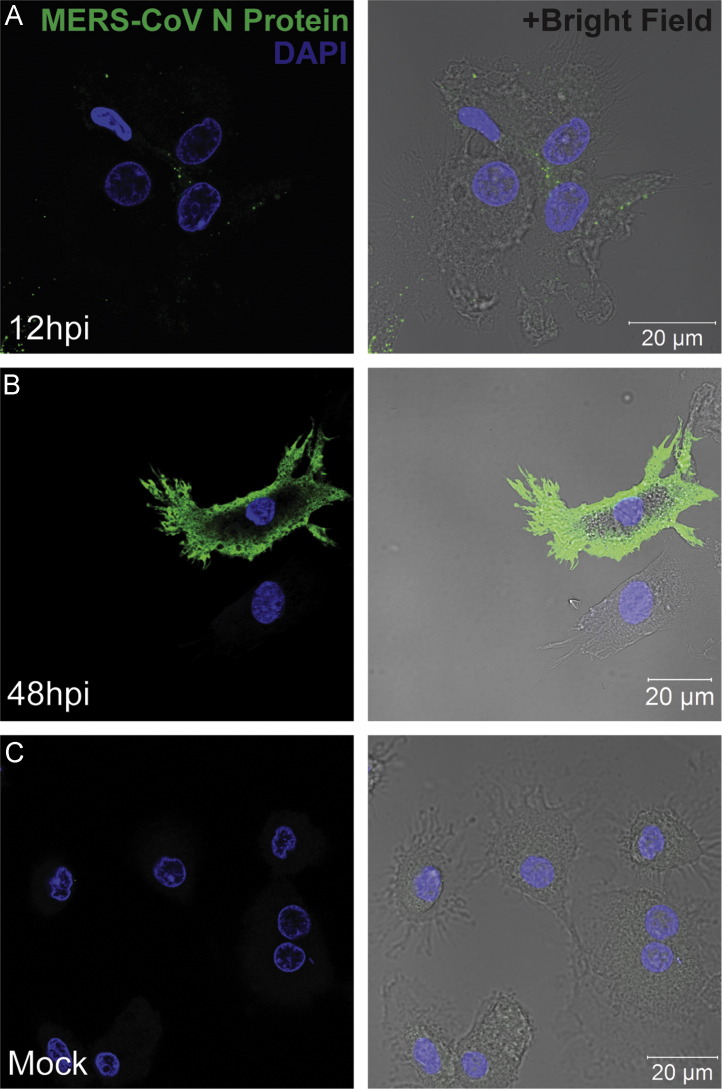
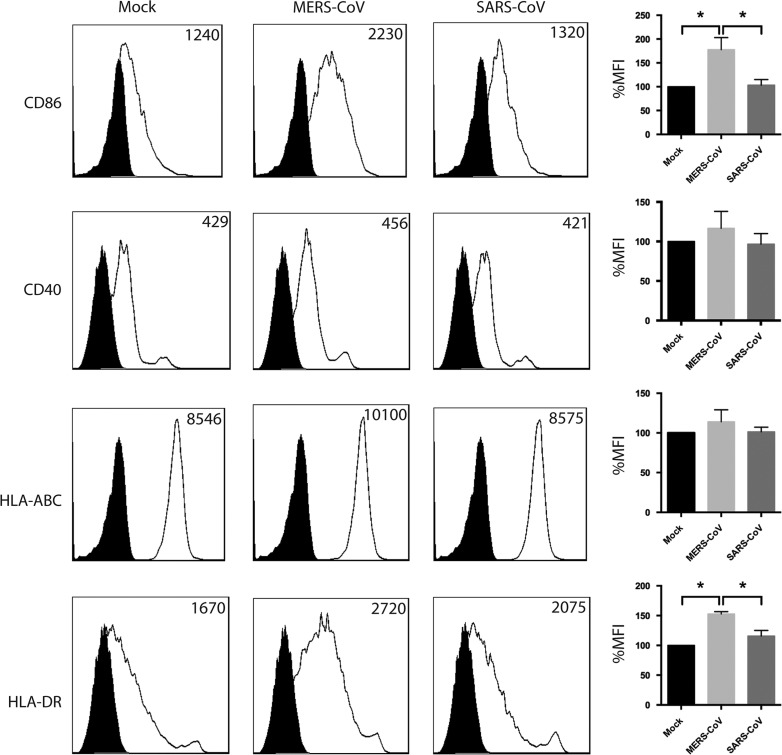
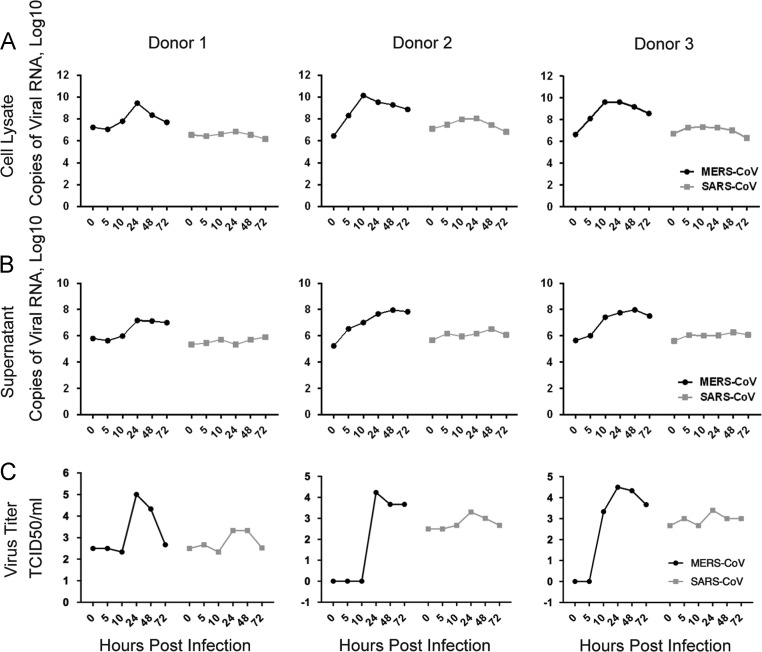
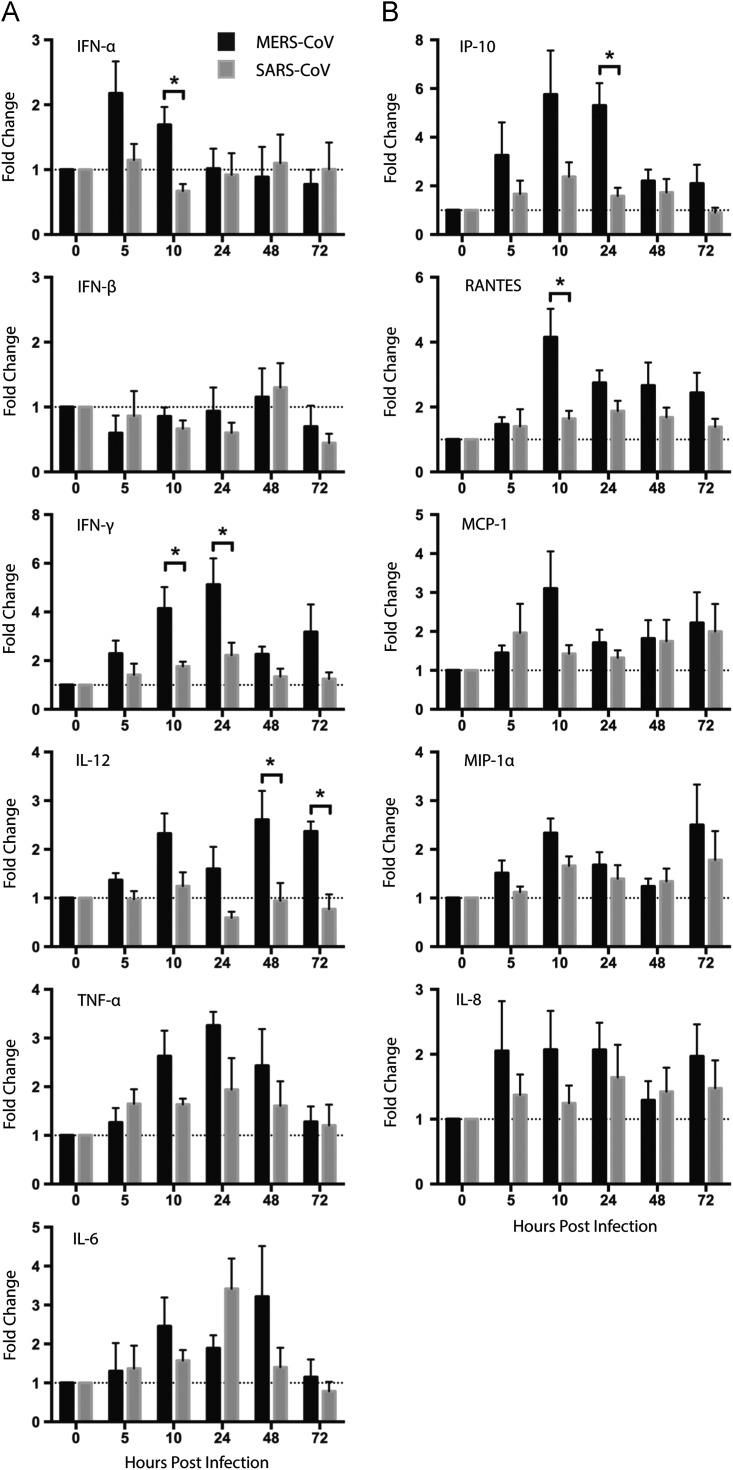
The Middle East respiratory syndrome coronavirus (MERS-CoV) closely resembled severe acute respiratory syndrome coronavirus (SARS-CoV) in disease manifestation as rapidly progressive acute pneumonia with multi-organ dysfunction. Using monocyte-derived-dendritic cells (Mo-DCs), we discovered fundamental discrepancies in the outcome of MERS-CoV- and SARS-CoV-infection. First, MERS-CoV productively infected Mo-DCs while SARS-CoV-infection was abortive. Second, MERS-CoV induced significantly higher levels of IFN-γ, IP-10, IL-12, and RANTES expression than SARS-CoV. Third, MERS-CoV-infection induced higher surface expression of MHC class II (HLA-DR) and the co-stimulatory molecule CD86 than SARS-CoV-infection. Overall, our data suggests that the dendritic cell can serve as an important target of viral replication and a vehicle for dissemination. MERS-CoV-infection in DCs results in the production of a rich combination of cytokines and chemokines, and modulates innate immune response differently from that of SARS-CoV-infection. Our findings may help to explain the apparent discrepancy in the pathogenicity between MERS-CoV and SARS-CoV.
中东呼吸综合征冠状病毒(MERS-CoV)在疾病表现上与严重急性呼吸综合征冠状病毒(SARS-CoV)非常相似,表现为迅速进展的急性肺炎伴多器官功能障碍。我们使用单核细胞衍生的树突状细胞(Mo-DC)发现了 MERS-CoV 和 SARS-CoV 感染结果的根本差异。首先,MERS-CoV 可有效感染 Mo-DC,而 SARS-CoV 感染则失败。其次,MERS-CoV 诱导的 IFN-γ、IP-10、IL-12 和 RANTES 表达水平明显高于 SARS-CoV。第三,MERS-CoV 感染诱导的 MHC Ⅱ类(HLA-DR)和共刺激分子 CD86 的表面表达水平高于 SARS-CoV 感染。总的来说,我们的数据表明树突状细胞可作为病毒复制的重要靶标和传播载体。MERS-CoV 感染 DC 会产生丰富的细胞因子和趋化因子组合,并以不同于 SARS-CoV 感染的方式调节先天免疫反应。我们的发现可能有助于解释 MERS-CoV 和 SARS-CoV 之间明显不同的致病性。