Salimi Vahid, Abbasi Simin, Zahraei Seyed Mohsen, Fatemi-Nasab Ghazal, Adjaminezhad-Fard Fatemeh, Shadab Azadeh, Ghavami Nastaran, Zareh-Khoshchehre Raziyeh, Soltanshahi Rambod, Bont Louis, Mokhtari-Azad Talat
Department of Virology, School of Public Health, Tehran University of Medical Sciences, Tehran, Iran; National Reference Laboratory for Measles and Rubella, School of Public Health, Tehran University of Medical Sciences, Tehran, Iran.
Department of Virology, School of Public Health, Tehran University of Medical Sciences, Tehran, Iran.
PLoS One. 2014 Apr 15;9(4):e94846. doi: 10.1371/journal.pone.0094846. eCollection 2014.
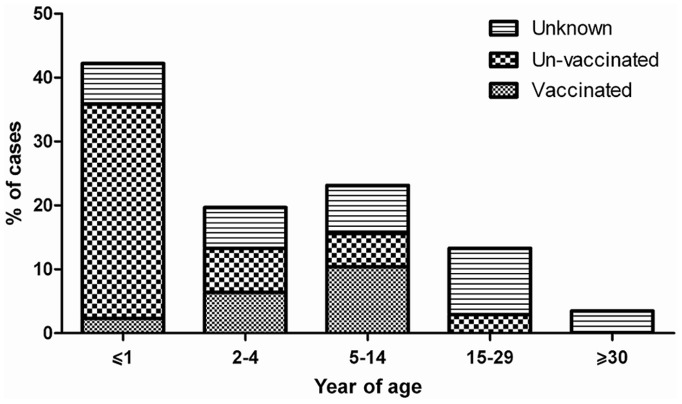
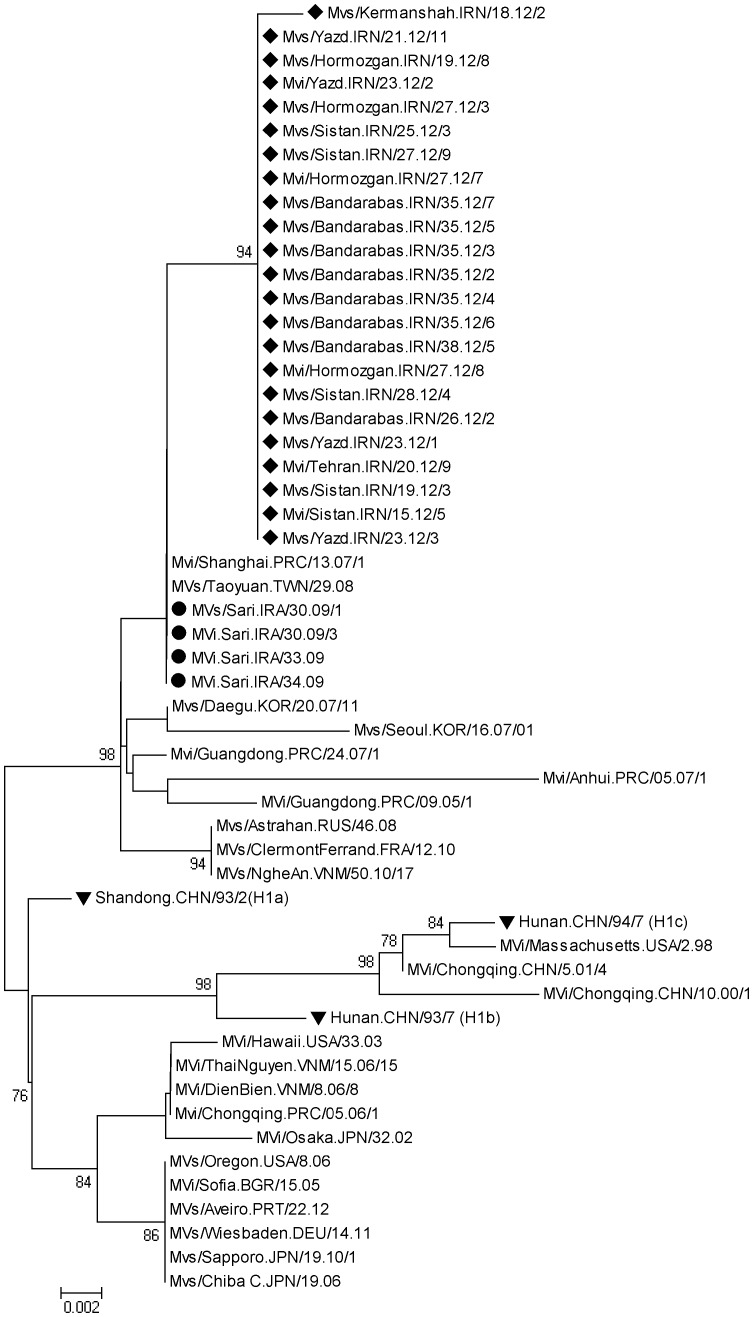
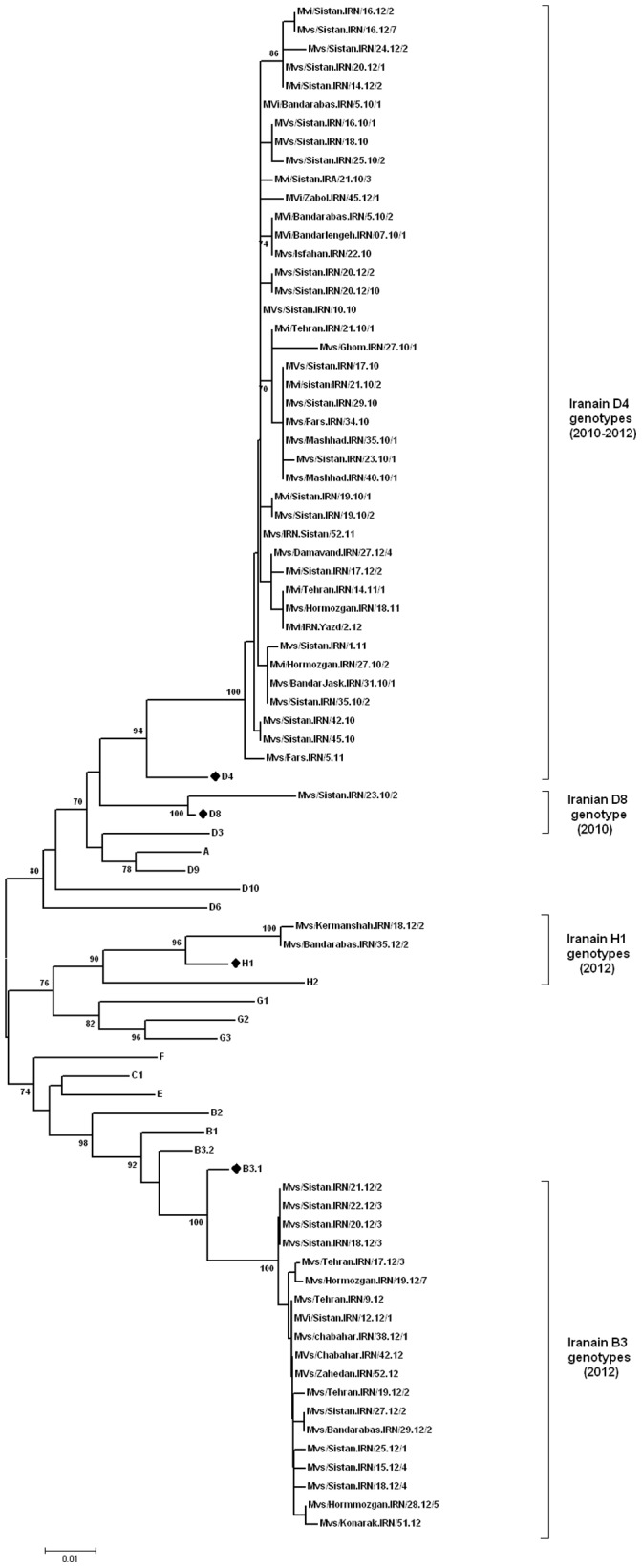
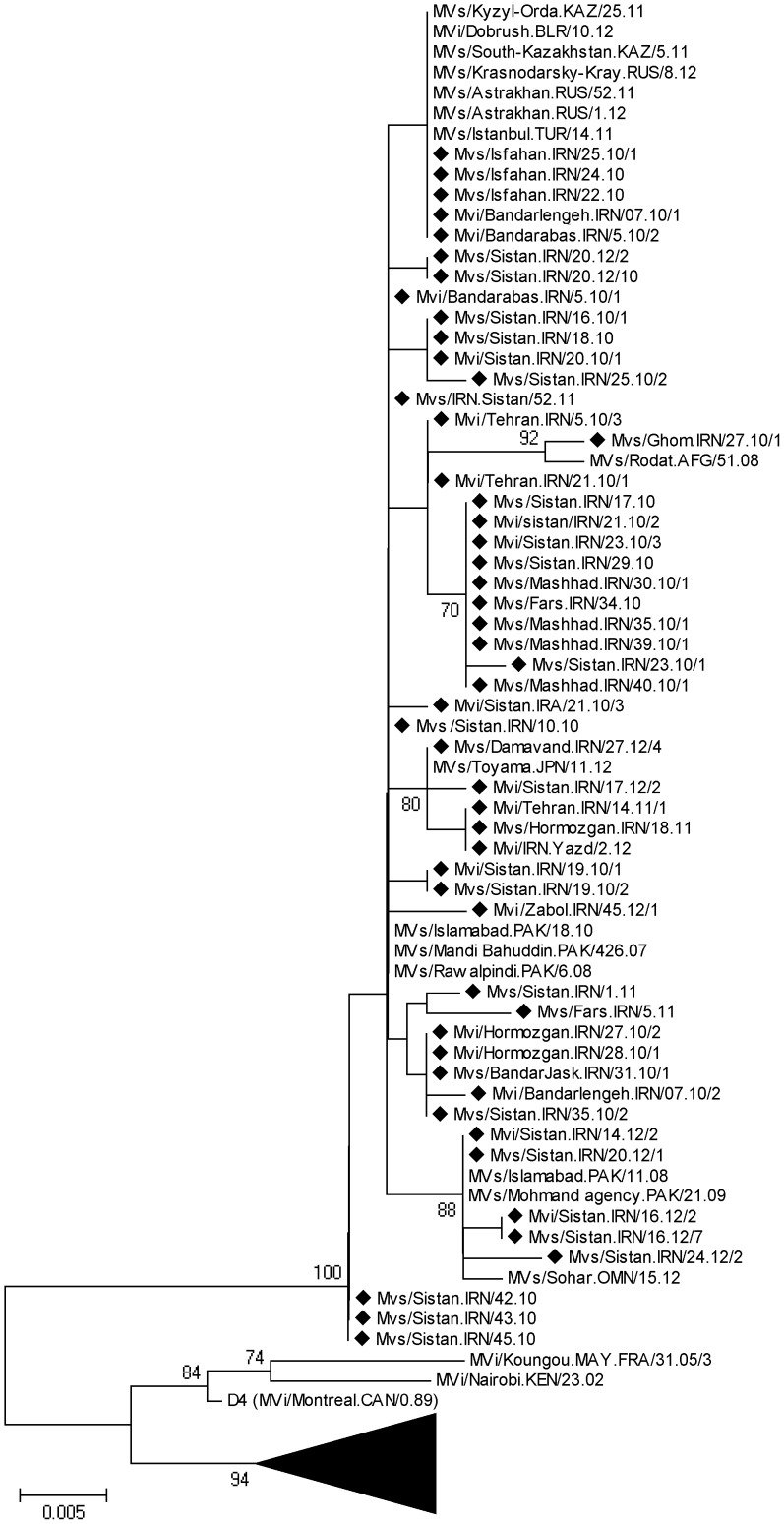
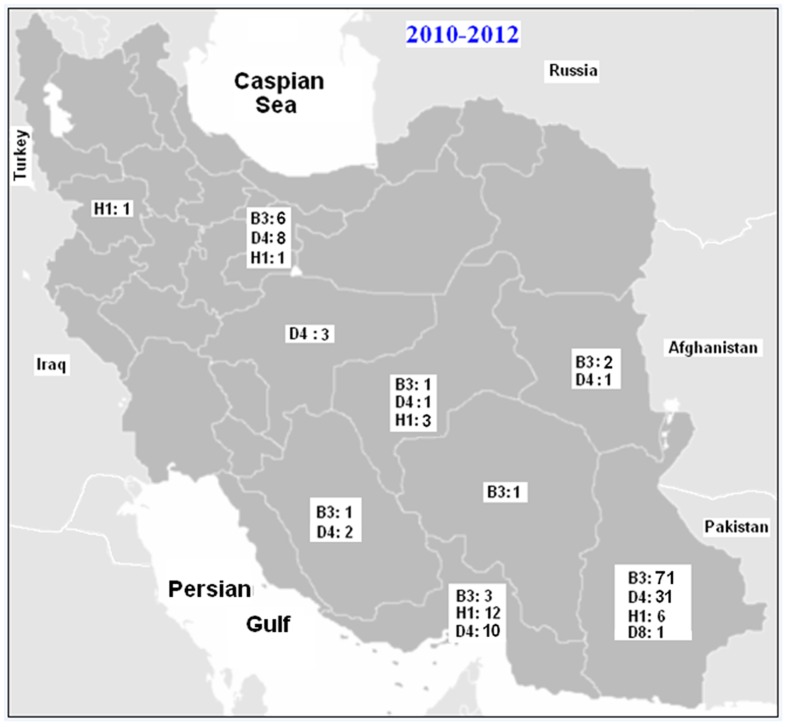
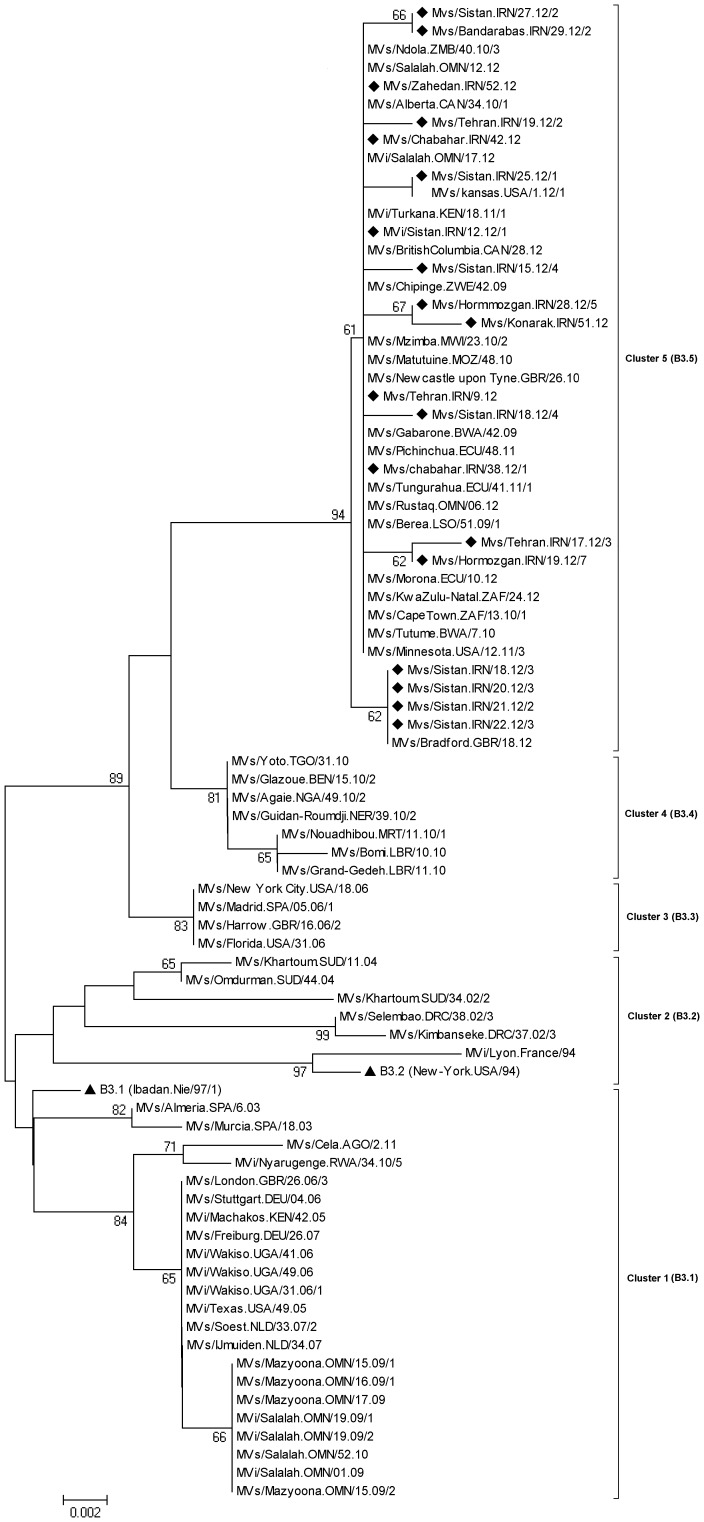
Measles virus (MV) causes small and large outbreaks in Iran. Molecular assays allow identifying and the sources of measles imported from neighboring countries. We carried out a phylogenetic analysis of measles virus circulating in Iran over the period 2010-2012. Specimens from suspected cases of measles were collected from different regions of Iran. Virus isolation was performed on urine and throat swabs. Partial nucleoprotein gene segments of MV were amplified by RT-PCR. PCR products of 173 samples were sequenced and analyzed. The median age of confirmed cases was 2 years. Among all confirmed cases, 32% had unknown vaccination status, 20% had been vaccinated, and 48% had not been vaccinated. Genotypes B3 and D8 (for the first time), H1 and D4 were detected mainly in unvaccinated toddlers and young children. Genotype B3 became predominant in 2012 and was closely related to African strains. H1 strains were also found in small and large outbreaks during 2012 but were not identical to Iranian H1-2009 strains. A majority of the Iranian D4 strains during 2010-2012 outbreaks were linked to the D4 strain identified in the Pakistan in 2007. We identified a single case in 2010 belonging to D8 genotype with 99.7% identity to Indian isolates. Although the vaccination program is currently good enough to prevent nationwide epidemics and successfully decreased measles incidence in Iran, the fraction of protected individuals in the population was not high enough to prevent continuous introduction of cases from abroad. Due to increasing number of susceptible individuals in some areas, sustained transmission of the newly introduced viral genotype remains possible.
麻疹病毒(MV)在伊朗引发了小规模和大规模的疫情。分子检测有助于识别从邻国输入麻疹的源头。我们对2010年至2012年期间在伊朗传播的麻疹病毒进行了系统发育分析。从伊朗不同地区收集了疑似麻疹病例的样本。对尿液和咽拭子进行病毒分离。通过逆转录聚合酶链反应(RT-PCR)扩增MV的部分核蛋白基因片段。对173个样本的聚合酶链反应产物进行测序和分析。确诊病例的中位年龄为2岁。在所有确诊病例中,32%的疫苗接种状况不明,20%已接种疫苗,48%未接种疫苗。B3和D8基因型(首次)、H1和D4基因型主要在未接种疫苗的幼儿和儿童中被检测到。B3基因型在2012年成为优势基因型,并且与非洲毒株密切相关。2012年期间在小规模和大规模疫情中也发现了H1毒株,但与2009年伊朗的H1毒株并不相同。2010 - 2012年疫情期间,大多数伊朗D4毒株与2007年在巴基斯坦鉴定出的D4毒株有关。我们在2010年发现了1例属于D8基因型的病例,与印度分离株的同源性为99.7%。尽管目前的疫苗接种计划足以预防全国性的疫情,并且成功降低了伊朗的麻疹发病率,但人群中受保护个体的比例还不足以防止国外病例的持续输入。由于一些地区易感个体数量的增加,新引入的病毒基因型仍有可能持续传播。