Kosaraju Jayasankar, Chinni Santhivardhan, Roy Partha Deb, Kannan Elango, Antony A Shanish, Kumar M N Satish
Department of Pharmacology, JSS College of Pharmacy, Udhagamadalam, Tamil Nadu, India.
Indian J Pharmacol. 2014 Mar-Apr;46(2):176-80. doi: 10.4103/0253-7613.129312.
The present study investigates the neuroprotective activity of ethanol extract of Tinospora cordifolia aerial parts against 6-hydroxy dopamine (6-OHDA) lesion rat model of Parkinson's disease (PD).
T. cordifolia ethanol extract (TCEE) was standardized with high performance thin layer chromatography using berberine. Experimental PD was induced by intracerebral injection of 6-OHDA (8 μg). Animals were divided into five groups: sham operated, negative control, positive control (levodopa 6 mg/kg) and two experimental groups (n = 6/group). Experimental groups received 200 and 400 mg/kg of TCEE once daily for 30 days by oral gavage. Biochemical parameters including dopamine level, oxidative stress, complex I activity and brain iron asymmetry ratio and locomotor activity including skeletal muscle co-ordination and degree of catatonia were assessed.
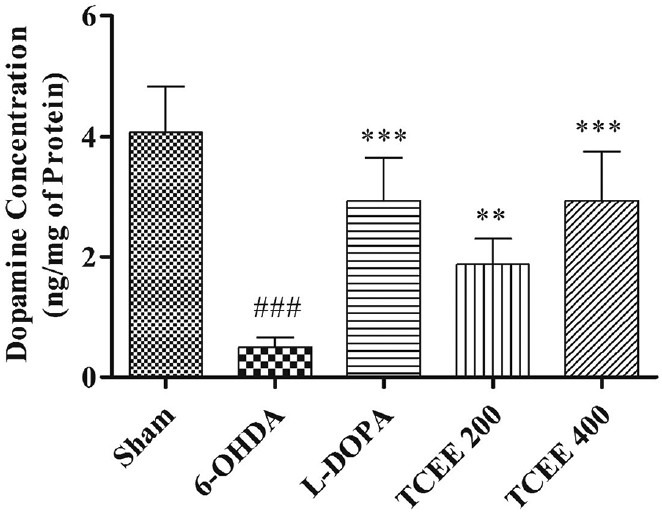
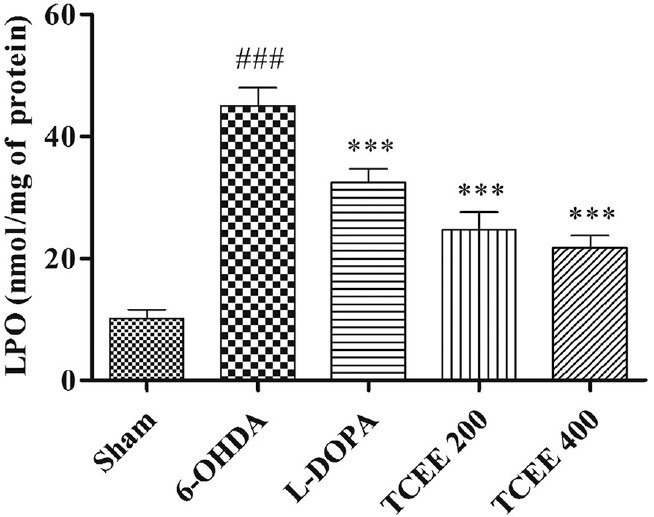
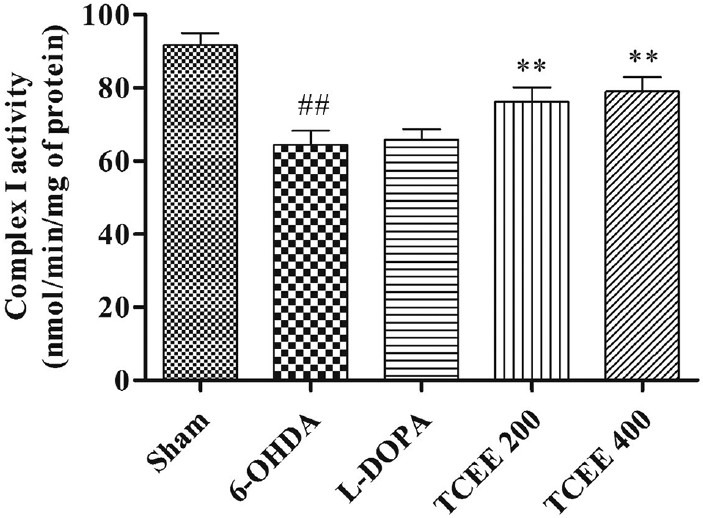
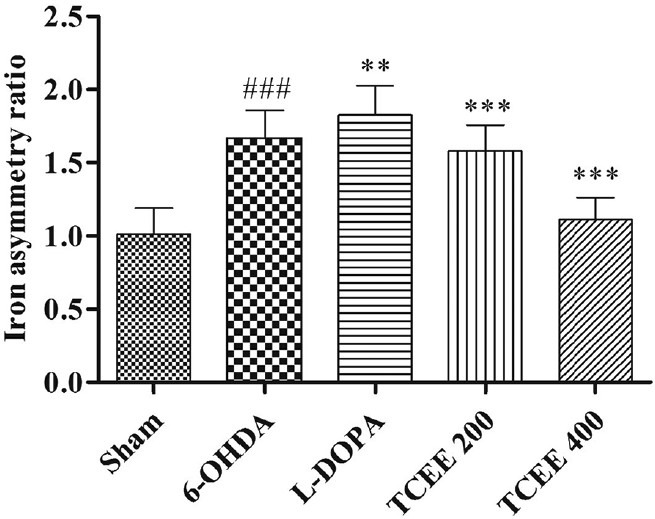
TCEE exhibited significant neuroprotection by increasing the dopamine levels (1.96 ± 0.20 and 2.45 ± 0.40 ng/mg of protein) and complex I activity (77.14 ± 0.89 and 78.50 ± 0.96 nmol/min/mg of protein) at 200 and 400 mg/kg respectively when compared with negative control group. Iron asymmetry ratio was also significantly attenuated by TCEE at 200 (1.57 ± 0.18) and 400 mg/kg (1.11 ± 0.15) when compared with negative control group. Neuroprotection by TCEE was further supported by reduced oxidative stress and restored locomotor activity in treatment groups.
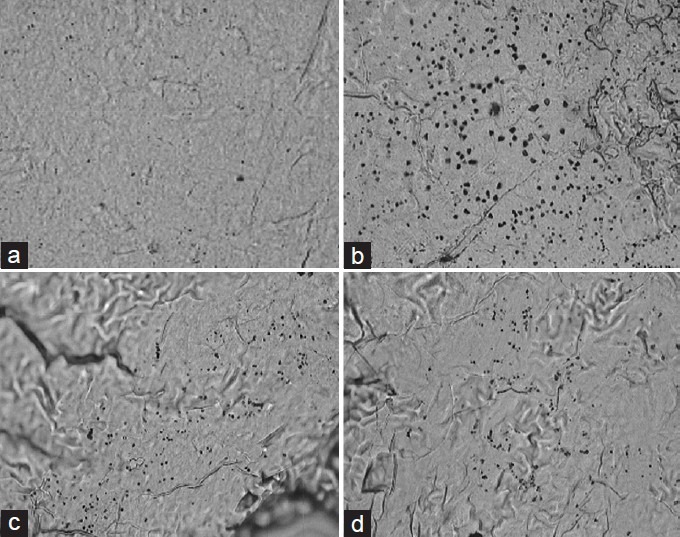
Results show that TCEE possess significant neuroprotection in 6-OHDA induced PD by protecting dopaminergic neurons and reducing the iron accumulation.
本研究探讨毛叶锡生藤地上部分乙醇提取物对帕金森病(PD)6-羟基多巴胺(6-OHDA)损伤大鼠模型的神经保护活性。
使用小檗碱通过高效薄层色谱法对毛叶锡生藤乙醇提取物(TCEE)进行标准化。通过脑内注射6-OHDA(8μg)诱导实验性PD。将动物分为五组:假手术组、阴性对照组、阳性对照组(左旋多巴6mg/kg)和两个实验组(每组n = 6)。实验组通过口服灌胃,每天一次给予200和400mg/kg的TCEE,持续30天。评估包括多巴胺水平、氧化应激、复合物I活性和脑铁不对称比等生化参数,以及包括骨骼肌协调性和紧张症程度在内的运动活性。
与阴性对照组相比,TCEE分别在200和400mg/kg时通过提高多巴胺水平(分别为1.96±0.20和2.45±0.40ng/mg蛋白质)和复合物I活性(分别为77.14±0.89和78.50±0.96nmol/min/mg蛋白质)表现出显著的神经保护作用。与阴性对照组相比,TCEE在200mg/kg(1.57±0.18)和400mg/kg(1.11±0.15)时也显著降低了铁不对称比。治疗组氧化应激降低和运动活性恢复进一步支持了TCEE的神经保护作用。
结果表明,TCEE在6-OHDA诱导的PD中具有显著的神经保护作用,可保护多巴胺能神经元并减少铁积累。