Willem Lander, Stijven Sean, Vladislavleva Ekaterina, Broeckhove Jan, Beutels Philippe, Hens Niel
Centre for Health Economics Research & Modeling of Infectious Diseases, Vaccine and Infectious Disease Institute, University of Antwerp, Antwerp, Belgium; Department of Mathematics and Computer Science, University of Antwerp, Antwerp, Belgium; Interuniversitary Institute for Biostatistics and statistical Bioinformatics, Hasselt University, Diepenbeek, Belgium.
Department of Mathematics and Computer Science, University of Antwerp, Antwerp, Belgium; Department of Information Technology, Gent University-iMinds, Gent, Belgium.
PLoS Comput Biol. 2014 Apr 17;10(4):e1003563. doi: 10.1371/journal.pcbi.1003563. eCollection 2014 Apr.
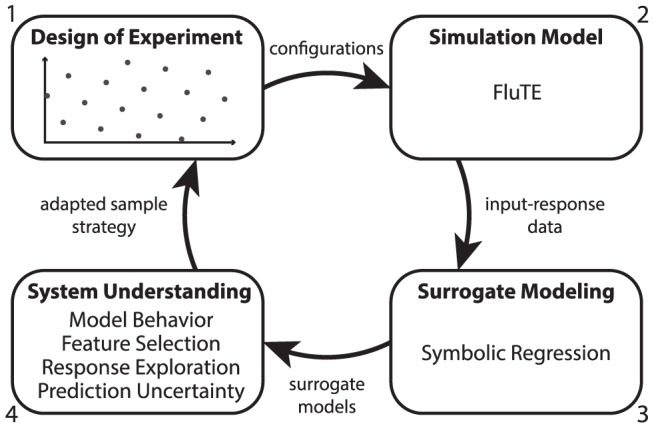
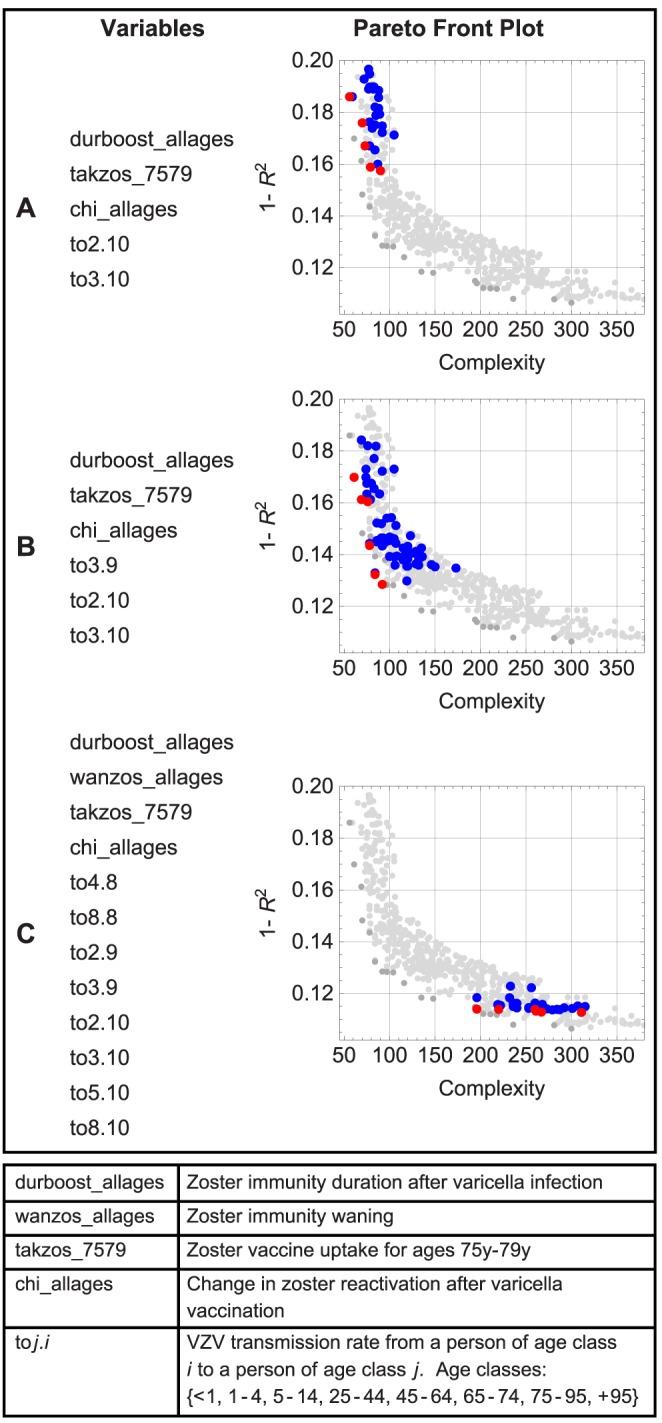
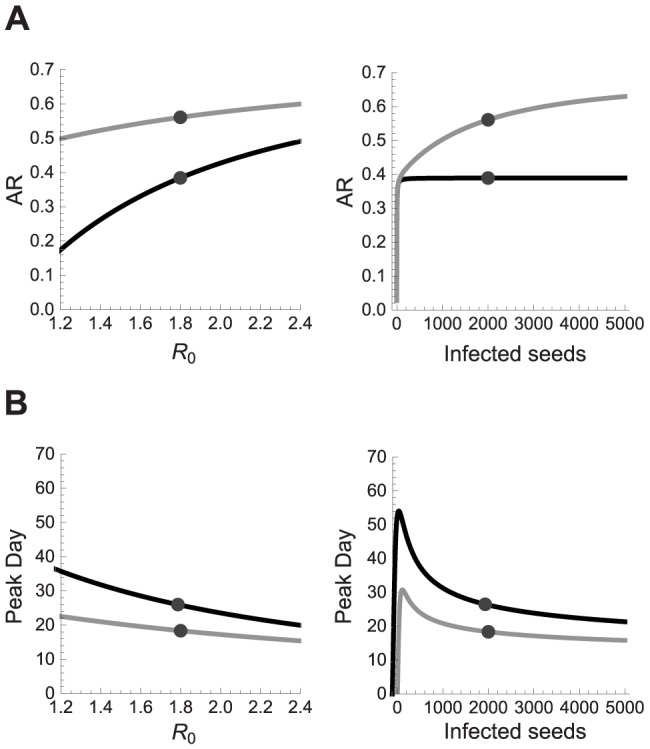
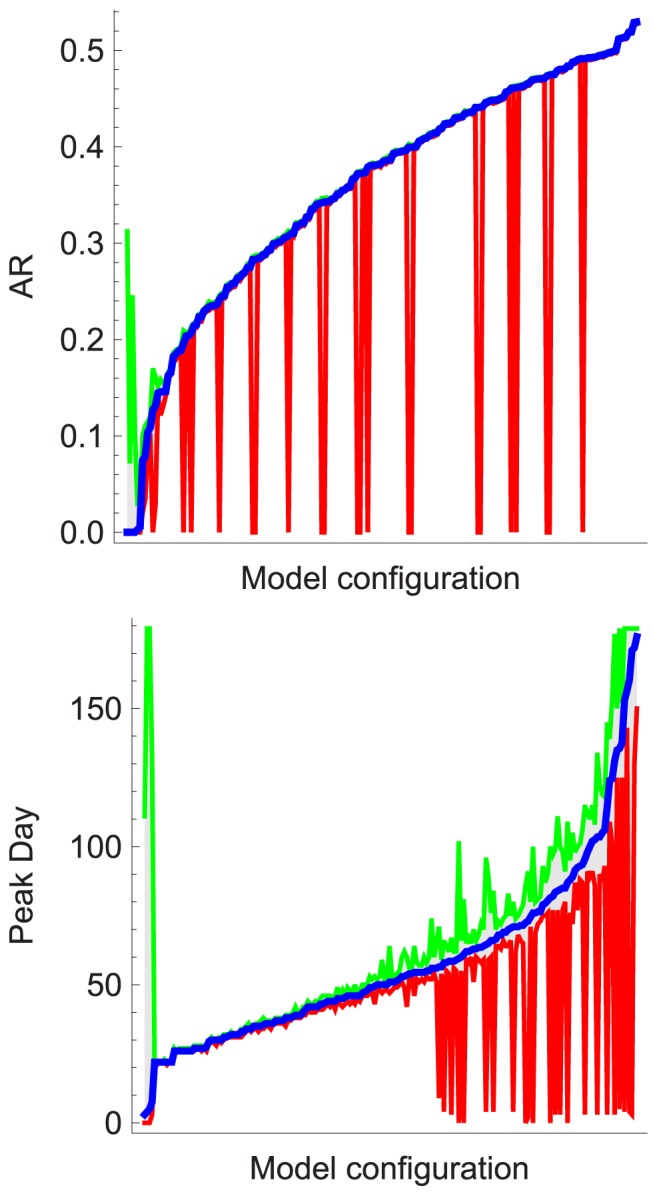
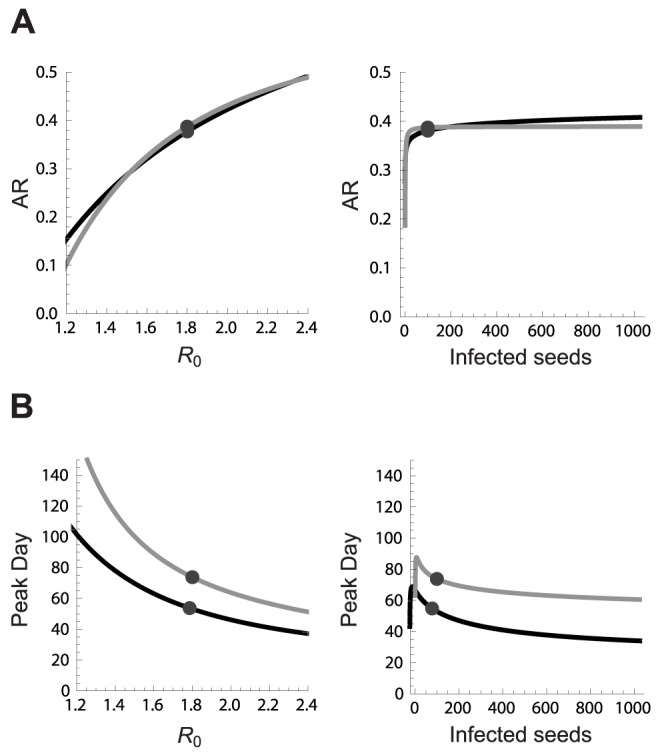
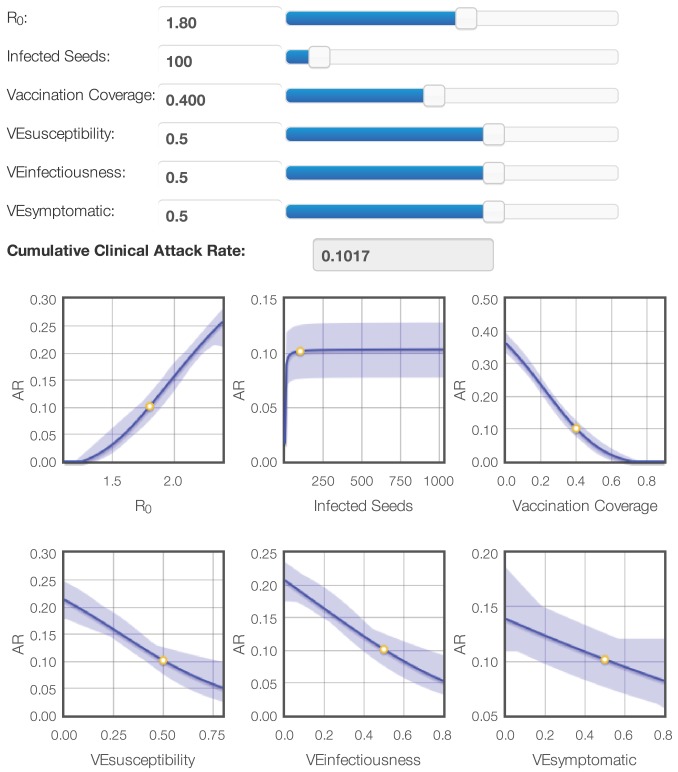
Modeling plays a major role in policy making, especially for infectious disease interventions but such models can be complex and computationally intensive. A more systematic exploration is needed to gain a thorough systems understanding. We present an active learning approach based on machine learning techniques as iterative surrogate modeling and model-guided experimentation to systematically analyze both common and edge manifestations of complex model runs. Symbolic regression is used for nonlinear response surface modeling with automatic feature selection. First, we illustrate our approach using an individual-based model for influenza vaccination. After optimizing the parameter space, we observe an inverse relationship between vaccination coverage and cumulative attack rate reinforced by herd immunity. Second, we demonstrate the use of surrogate modeling techniques on input-response data from a deterministic dynamic model, which was designed to explore the cost-effectiveness of varicella-zoster virus vaccination. We use symbolic regression to handle high dimensionality and correlated inputs and to identify the most influential variables. Provided insight is used to focus research, reduce dimensionality and decrease decision uncertainty. We conclude that active learning is needed to fully understand complex systems behavior. Surrogate models can be readily explored at no computational expense, and can also be used as emulator to improve rapid policy making in various settings.
建模在政策制定中发挥着重要作用,尤其是对于传染病干预措施而言,但此类模型可能很复杂且计算量很大。需要进行更系统的探索以全面了解系统。我们提出一种基于机器学习技术的主动学习方法,即迭代代理建模和模型引导实验,以系统地分析复杂模型运行的常见和边缘表现。符号回归用于具有自动特征选择的非线性响应面建模。首先,我们使用基于个体的流感疫苗接种模型来说明我们的方法。在优化参数空间后,我们观察到疫苗接种覆盖率与群体免疫增强的累积发病率之间存在反比关系。其次,我们展示了在一个确定性动态模型的输入 - 响应数据上使用代理建模技术,该模型旨在探索水痘 - 带状疱疹病毒疫苗接种的成本效益。我们使用符号回归来处理高维度和相关输入,并识别最具影响力的变量。所提供的见解用于聚焦研究、降低维度并减少决策不确定性。我们得出结论,需要主动学习来全面理解复杂系统行为。代理模型可以在不耗费计算资源的情况下轻松探索,并且还可以用作模拟器以在各种情况下改进快速政策制定。