Bao Aili, Zhao Zhuqing, Ding Guangda, Shi Lei, Xu Fangsen, Cai Hongmei
Microelement Research Center, Huazhong Agricultural University, Wuhan, China; Key Laboratory of Arable Land Conservation (Middle and Lower Reaches of Yangtse River), Ministry of Agriculture, Huazhong Agricultural University, Wuhan, China.
Microelement Research Center, Huazhong Agricultural University, Wuhan, China; Key Laboratory of Arable Land Conservation (Middle and Lower Reaches of Yangtse River), Ministry of Agriculture, Huazhong Agricultural University, Wuhan, China; National Key Laboratory of Crop Genetic Improvement, Huazhong Agricultural University, Wuhan, China.
PLoS One. 2014 Apr 17;9(4):e95581. doi: 10.1371/journal.pone.0095581. eCollection 2014.
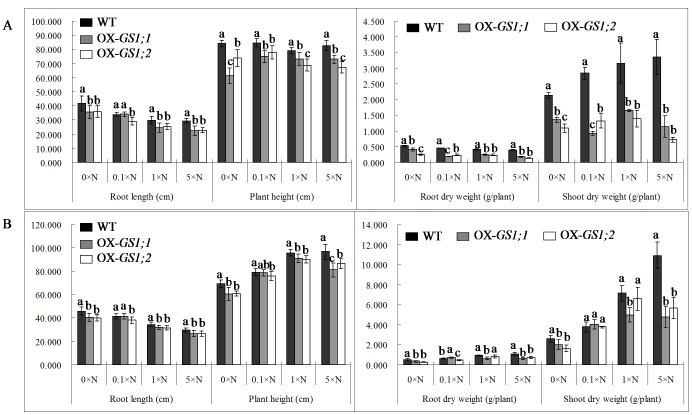
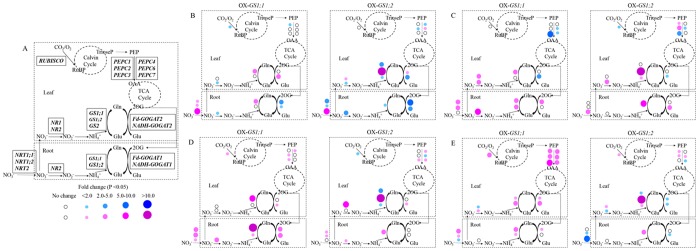
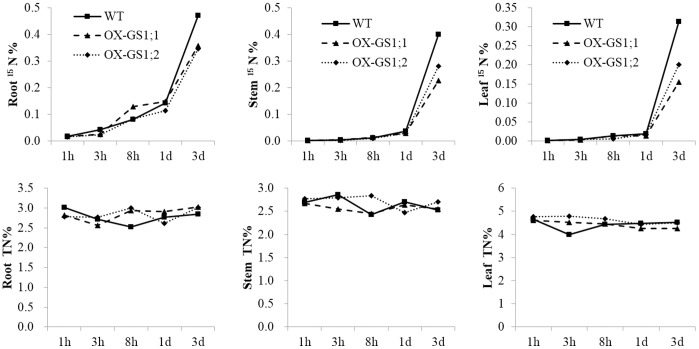
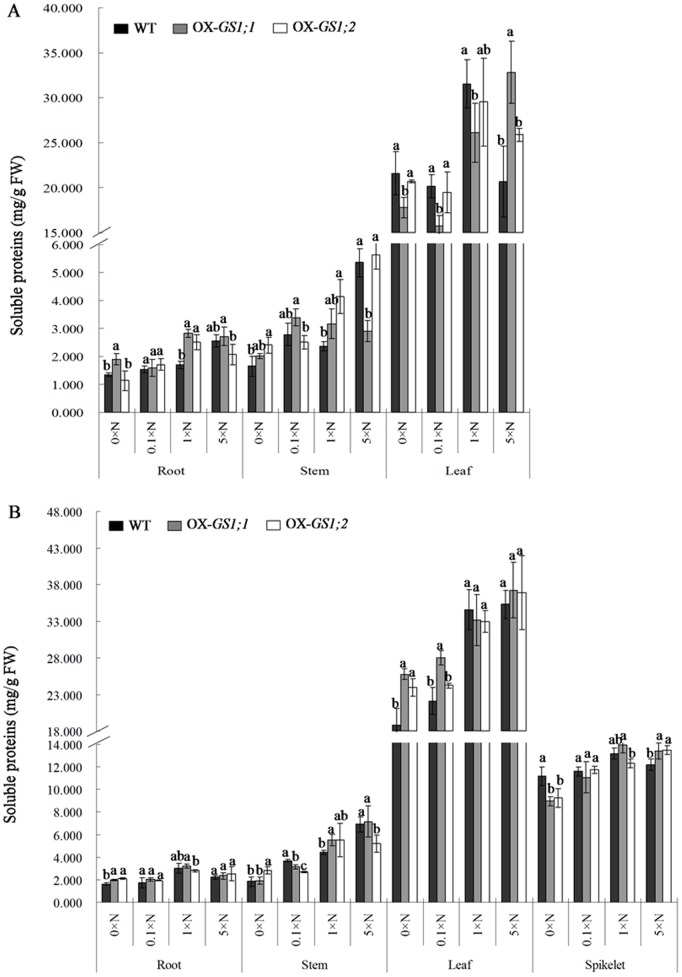
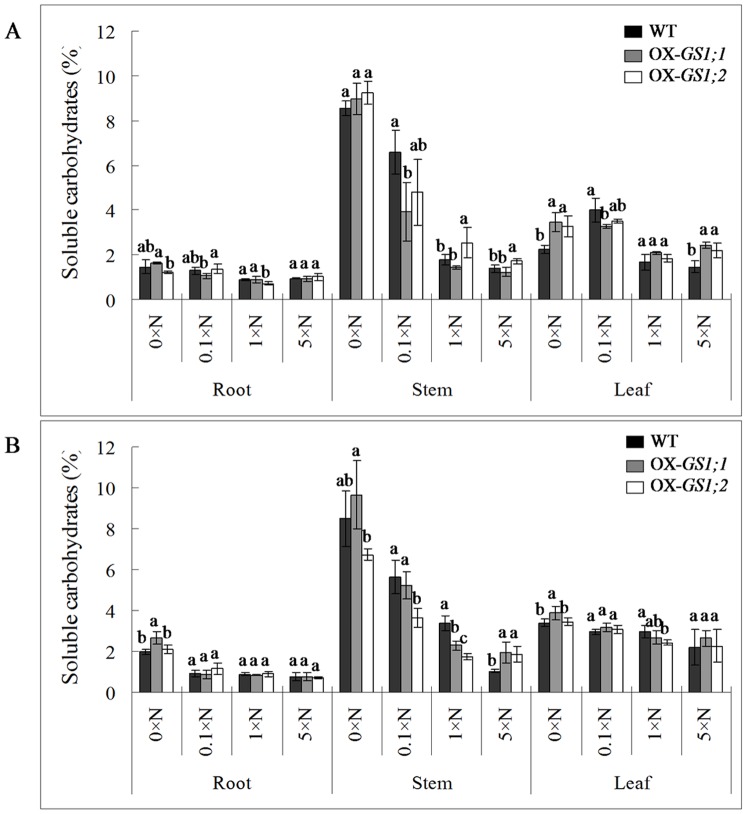
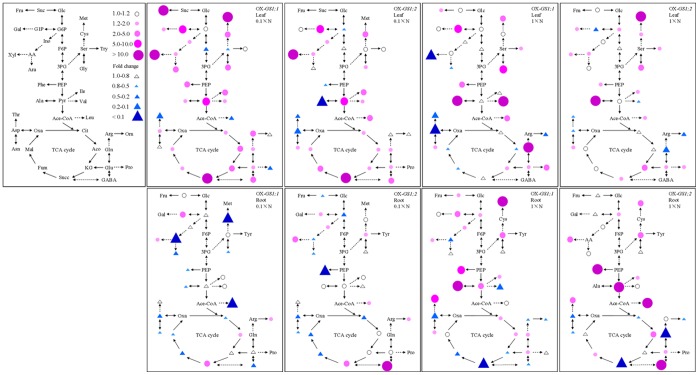
Maintaining an appropriate balance of carbon to nitrogen metabolism is essential for rice growth and yield. Glutamine synthetase is a key enzyme for ammonium assimilation. In this study, we systematically analyzed the growth phenotype, carbon-nitrogen metabolic status and gene expression profiles in GS1;1-, GS1;2-overexpressing rice and wildtype plants. Our results revealed that the GS1;1-, GS1;2-overexpressing plants exhibited a poor plant growth phenotype and yield and decreased carbon/nitrogen ratio in the stem caused by the accumulation of nitrogen in the stem. In addition, the leaf SPAD value and photosynthetic parameters, soluble proteins and carbohydrates varied greatly in the GS1;1-, GS1;2-overexpressing plants. Furthermore, metabolite profile and gene expression analysis demonstrated significant changes in individual sugars, organic acids and free amino acids, and gene expression patterns in GS1;1-, GS1;2-overexpressing plants, which also indicated the distinct roles that these two GS1 genes played in rice nitrogen metabolism, particularly when sufficient nitrogen was applied in the environment. Thus, the unbalanced carbon-nitrogen metabolic status and poor ability of nitrogen transportation from stem to leaf in GS1;1-, GS1;2-overexpressing plants may explain the poor growth and yield.
维持碳氮代谢的适当平衡对水稻生长和产量至关重要。谷氨酰胺合成酶是铵同化的关键酶。在本研究中,我们系统分析了过表达GS1;1和GS1;2的水稻植株以及野生型植株的生长表型、碳氮代谢状态和基因表达谱。我们的结果表明,过表达GS1;1和GS1;2的植株表现出较差的植株生长表型和产量,并且由于茎中氮的积累导致茎中碳/氮比降低。此外,过表达GS1;1和GS1;2的植株中叶片SPAD值、光合参数、可溶性蛋白质和碳水化合物有很大变化。此外,代谢物谱和基因表达分析表明,过表达GS1;1和GS1;2的植株中单个糖类、有机酸和游离氨基酸以及基因表达模式有显著变化,这也表明这两个GS1基因在水稻氮代谢中发挥的不同作用,特别是在环境中施用充足氮的情况下。因此,过表达GS1;1和GS1;2的植株中碳氮代谢状态失衡以及氮从茎向叶运输的能力较差可能解释了其生长和产量不佳的原因。