Wuehr Max, Kugler Guenter, Schniepp Roman, Eckl Maria, Pradhan Cauchy, Jahn Klaus, Huppert Doreen, Brandt Thomas
German Center for Vertigo and Balance Disorders (DSGZ), University of Munich, Munich, Germany.
German Center for Vertigo and Balance Disorders (DSGZ), University of Munich, Munich, Germany ; Institute for Clinical Neurosciences, University of Munich, Munich, Germany.
Physiol Rep. 2014 Feb 18;2(2):e00232. doi: 10.1002/phy2.232. eCollection 2014 Feb 1.
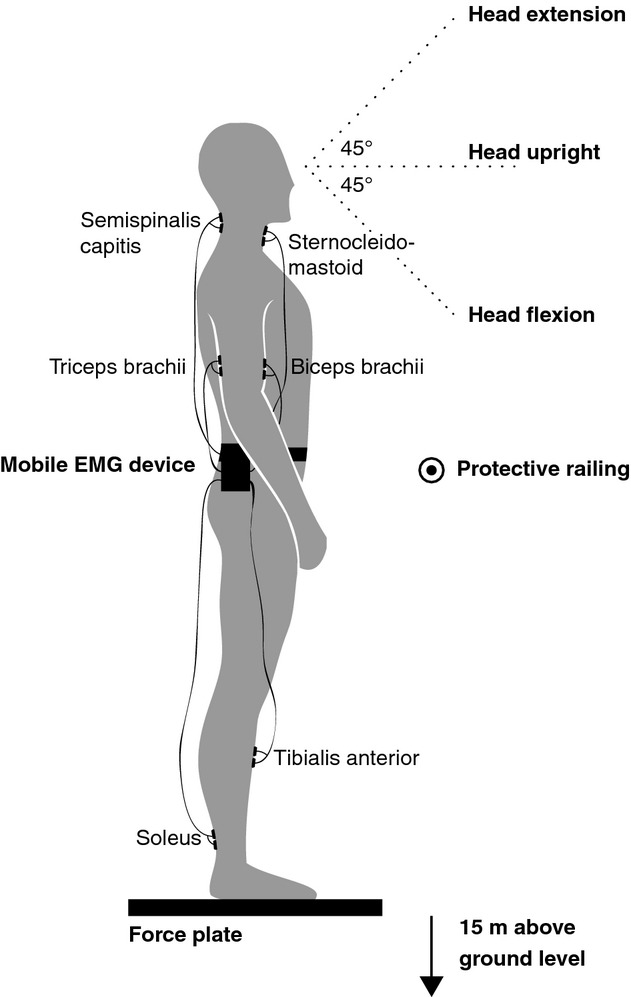
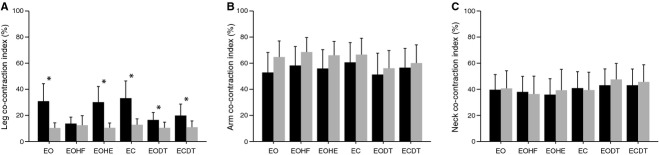
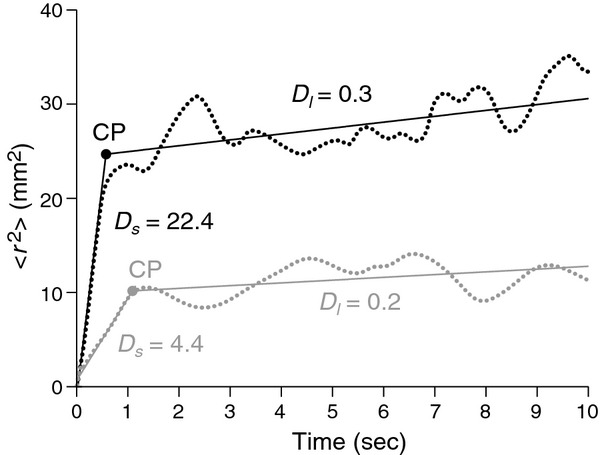
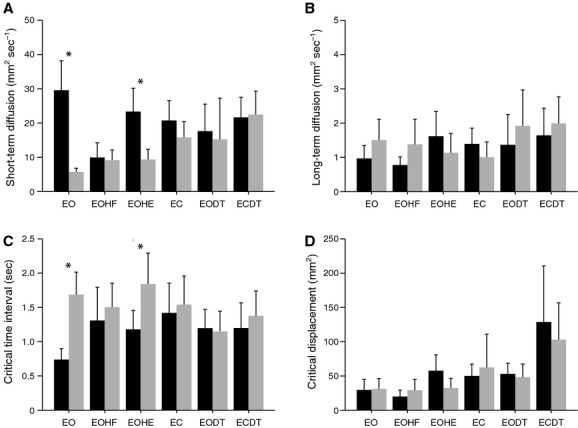
Fear of heights occurs when a visual stimulus causes the apprehension of losing balance and falling. A moderate form of visual height intolerance (vHI) affects about one third of the general population and has relevant consequences for the quality of life. A quantitative evaluation of balance mechanisms in persons susceptible to vHI during height exposure is missing. VHI-related changes in postural control were assessed by center-of-pressure displacements and electromyographic recordings of selected leg, arm, and neck muscles in 16 subjects with vHI while standing at heights on an emergency balcony versus standing in the laboratory at ground level. Characteristics of open- and closed-loop postural control were analyzed. Body sway and muscle activity parameters were correlated with the subjective estimates of fear at heights. During height exposure, (1) open-loop control was disturbed by a higher diffusion activity (P < 0.001) and (2) the sensory feedback threshold for closed-loop control was lowered (P < 0.010). Altered postural control was predominantly associated with increased co-contraction of leg muscles. Body sway and leg and neck muscle co-contraction correlated with the severity of subjective anxiety (P < 0.050). Alterations in postural control diminished if there were nearby stationary contrasts in the visual surrounding or if subjects stood with eyes closed. The performance of a cognitive dual task also improved impaired balance. Visual heights have two behavioral effects in vHI subjects: A change occurs in (1) open- and closed-loop postural control strategy and (2) co-contraction of anti-gravity leg and neck muscles, both of which depend on the severity of evoked fear at heights.
当视觉刺激引发失去平衡和坠落的担忧时,就会出现恐高症。一种中度形式的视觉性恐高症(vHI)影响着约三分之一的普通人群,并对生活质量产生相关影响。目前尚缺乏对vHI易感人群在高度暴露期间平衡机制的定量评估。通过压力中心位移以及对16名患有vHI的受试者在紧急阳台上高处站立与在实验室地面站立时所选腿部、手臂和颈部肌肉的肌电图记录,评估了与vHI相关的姿势控制变化。分析了开环和闭环姿势控制的特征。身体摆动和肌肉活动参数与对高处恐惧的主观估计相关。在高度暴露期间,(1)开环控制受到更高扩散活动的干扰(P < 0.001),(2)闭环控制的感觉反馈阈值降低(P < 0.010)。姿势控制改变主要与腿部肌肉共同收缩增加有关。身体摆动以及腿部和颈部肌肉共同收缩与主观焦虑的严重程度相关(P < 0.050)。如果视觉环境中有附近的静止对比物,或者受试者闭眼站立,姿势控制的改变就会减弱。执行认知双重任务也改善了受损的平衡。视觉高度对vHI受试者有两种行为影响:(1)开环和闭环姿势控制策略发生变化,(2)抗重力腿部和颈部肌肉共同收缩,这两者都取决于高处诱发恐惧的严重程度。