Pinheiro Vitor B, Holliger Philipp
MRC Laboratory of Molecular Biology, Francis Crick Avenue, Cambridge, CB2 0QH, UK.
MRC Laboratory of Molecular Biology, Francis Crick Avenue, Cambridge, CB2 0QH, UK.
Trends Biotechnol. 2014 Jun;32(6):321-8. doi: 10.1016/j.tibtech.2014.03.010. Epub 2014 Apr 15.
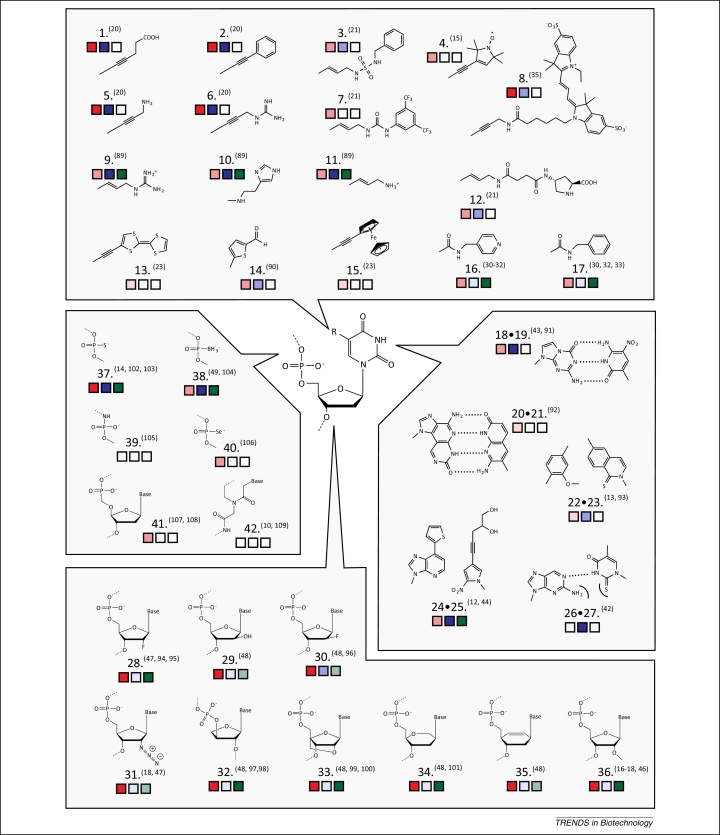
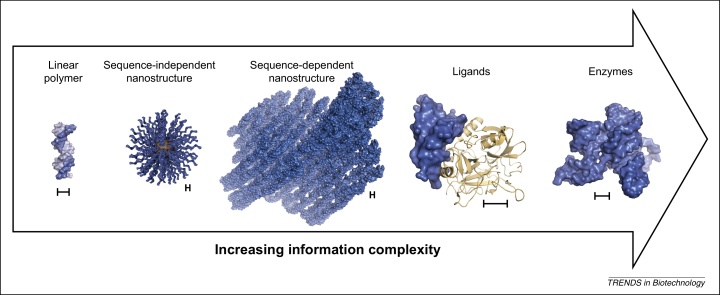
Nucleic acids display remarkable properties beyond information storage and propagation. The well-understood base pairing rules have enabled nucleic acids to be assembled into nanostructures of ever increasing complexity. Although nanostructures can be constructed using other building blocks, including peptides and lipids, it is the capacity to evolve that sets nucleic acids apart from all other nanoscale building materials. Nonetheless, the poor chemical and biological stability of DNA and RNA constrain their applications. Recent advances in nucleic acid chemistry and polymerase engineering enable the synthesis, replication, and evolution of a range of synthetic genetic polymers (XNAs) with improved chemical and biological stability. We discuss the impact of this technology on the generation of XNA ligands, enzymes, and nanostructures with tailor-made chemistry.
核酸展现出了超越信息存储和传播的显著特性。人们熟知的碱基配对规则使核酸能够组装成复杂度不断增加的纳米结构。尽管纳米结构可以使用包括肽和脂质在内的其他构建模块来构建,但核酸区别于所有其他纳米级建筑材料的特性是其进化能力。然而,DNA和RNA较差的化学和生物稳定性限制了它们的应用。核酸化学和聚合酶工程的最新进展使得一系列具有更高化学和生物稳定性的合成遗传聚合物(XNA)得以合成、复制和进化。我们讨论了这项技术对生成具有定制化学性质的XNA配体、酶和纳米结构的影响。