Taketomi Yoshitaka, Miki Yoshimi, Murakami Makoto
Laboratory of Microenvironmental and Metabolic Health Sciences, Center for Disease Biology and Integrative Medicine, Graduate School of Medicine, The University of Tokyo (UTokyo), 7-3-1 Hongo, Bunkyo-ku, Tokyo 113-8655, Japan.
Lipid Metabolism Project, Center for Basic Technology Research, Tokyo Metropolitan Institute of Medical Science (TMIMS), 1-5-8 Kamikitazawa, Setagaya-ku, Tokyo 156-8506, Japan.
Metabolites. 2022 Apr 14;12(4):352. doi: 10.3390/metabo12040352.
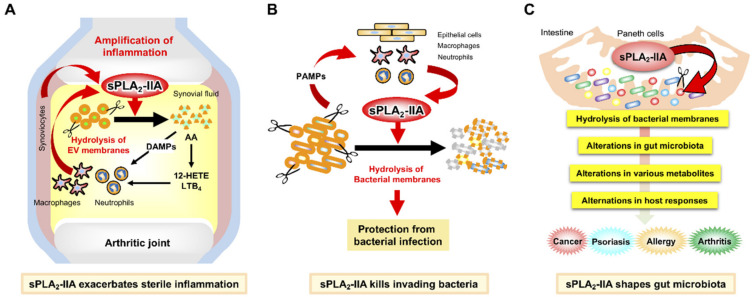
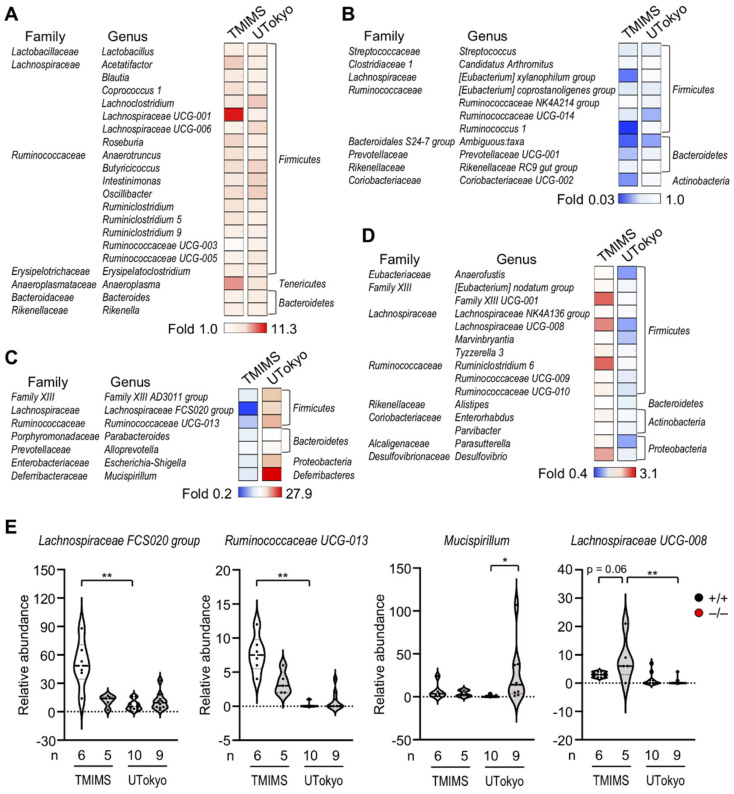
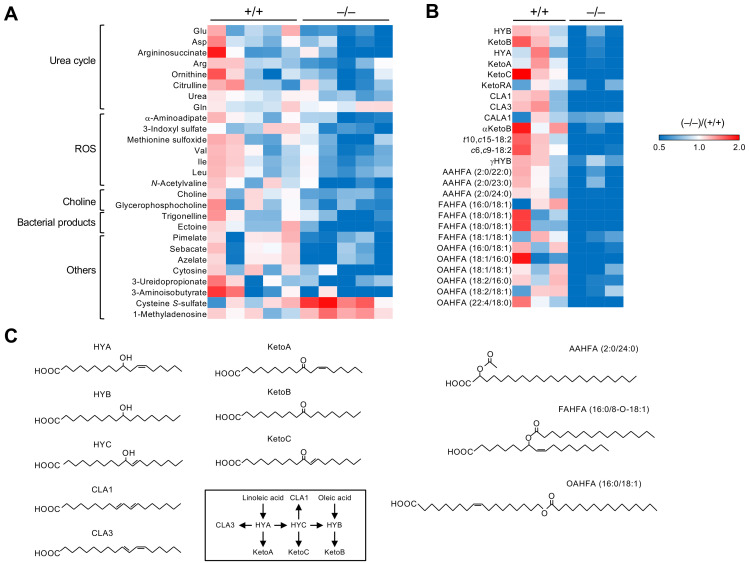
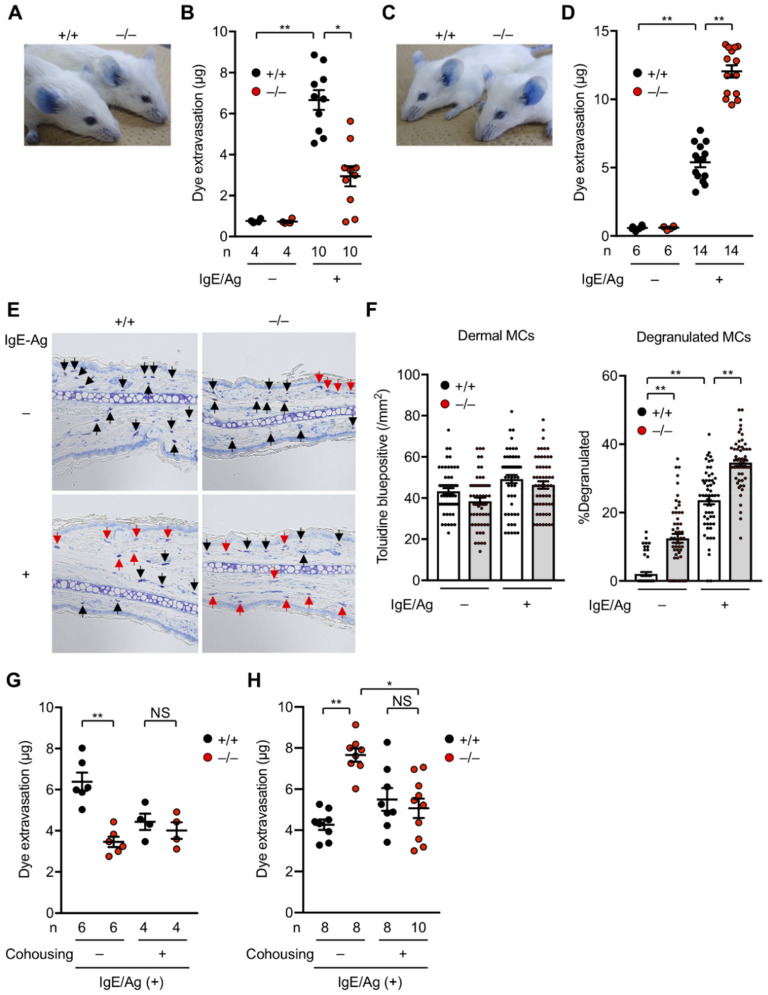
Among the phospholipase A (PLA) superfamily, the secreted PLA (sPLA) family contains 11 mammalian isoforms that exhibit unique tissue or cellular distributions and enzymatic properties. Current studies using sPLA-deficient or -overexpressed mouse strains, along with mass spectrometric lipidomics to determine sPLA-driven lipid pathways, have revealed the diverse pathophysiological roles of sPLAs in various biological events. In general, individual sPLAs exert their specific functions within tissue microenvironments, where they are intrinsically expressed through hydrolysis of extracellular phospholipids. Recent studies have uncovered a new aspect of group IIA sPLA (sPLA-IIA), a prototypic sPLA with the oldest research history among the mammalian PLAs, as a modulator of the gut microbiota. In the intestine, Paneth cell-derived sPLA-IIA acts as an antimicrobial protein to shape the gut microbiota, thereby secondarily affecting inflammation, allergy, and cancer in proximal and distal tissues. Knockout of intestinal sPLA-IIA in BALB/c mice leads to alterations in skin cancer, psoriasis, and anaphylaxis, while overexpression of sPLA-IIA in -null C57BL/6 mice induces systemic inflammation and exacerbates arthritis. These phenotypes are associated with notable changes in gut microbiota and fecal metabolites, are variable in different animal facilities, and are abrogated after antibiotic treatment, co-housing, or fecal transfer. These studies open a mechanistic action of this sPLA and add the sPLA family to the growing list of endogenous factors capable of affecting the microbe-host interaction and thereby systemic homeostasis and diseases.
在磷脂酶A(PLA)超家族中,分泌型磷脂酶A(sPLA)家族包含11种哺乳动物亚型,它们具有独特的组织或细胞分布以及酶学特性。目前利用sPLA缺陷或过表达小鼠品系进行的研究,以及通过质谱脂质组学来确定sPLA驱动的脂质途径的研究,揭示了sPLA在各种生物学事件中的多种病理生理作用。一般来说,个体sPLA在组织微环境中发挥其特定功能,在该环境中它们通过水解细胞外磷脂而固有表达。最近的研究发现了IIA组sPLA(sPLA-IIA)的一个新方面,它是哺乳动物PLA中研究历史最久的典型sPLA,可作为肠道微生物群的调节剂。在肠道中,潘氏细胞衍生的sPLA-IIA作为一种抗菌蛋白来塑造肠道微生物群,从而继而影响近端和远端组织中的炎症、过敏和癌症。敲除BALB/c小鼠肠道中的sPLA-IIA会导致皮肤癌、银屑病和过敏反应的改变,而在sPLA-IIA基因敲除的C57BL/6小鼠中过表达sPLA-IIA会诱发全身炎症并加重关节炎。这些表型与肠道微生物群和粪便代谢物的显著变化有关,在不同的动物设施中有所不同,并且在抗生素治疗、共同饲养或粪便移植后会消除。这些研究揭示了这种sPLA的作用机制,并将sPLA家族添加到能够影响微生物-宿主相互作用从而影响全身稳态和疾病的内源性因子不断增加的列表中。