Bonnelle Valerie, Veromann Kai-Riin, Burnett Heyes Stephanie, Lo Sterzo Elena, Manohar Sanjay, Husain Masud
Dept. of Experimental Psychology, University of Oxford, Oxford, UK.
Dept. of Experimental Psychology, University of Oxford, Oxford, UK.
J Physiol Paris. 2015 Feb-Jun;109(1-3):16-26. doi: 10.1016/j.jphysparis.2014.04.002. Epub 2014 Apr 18.
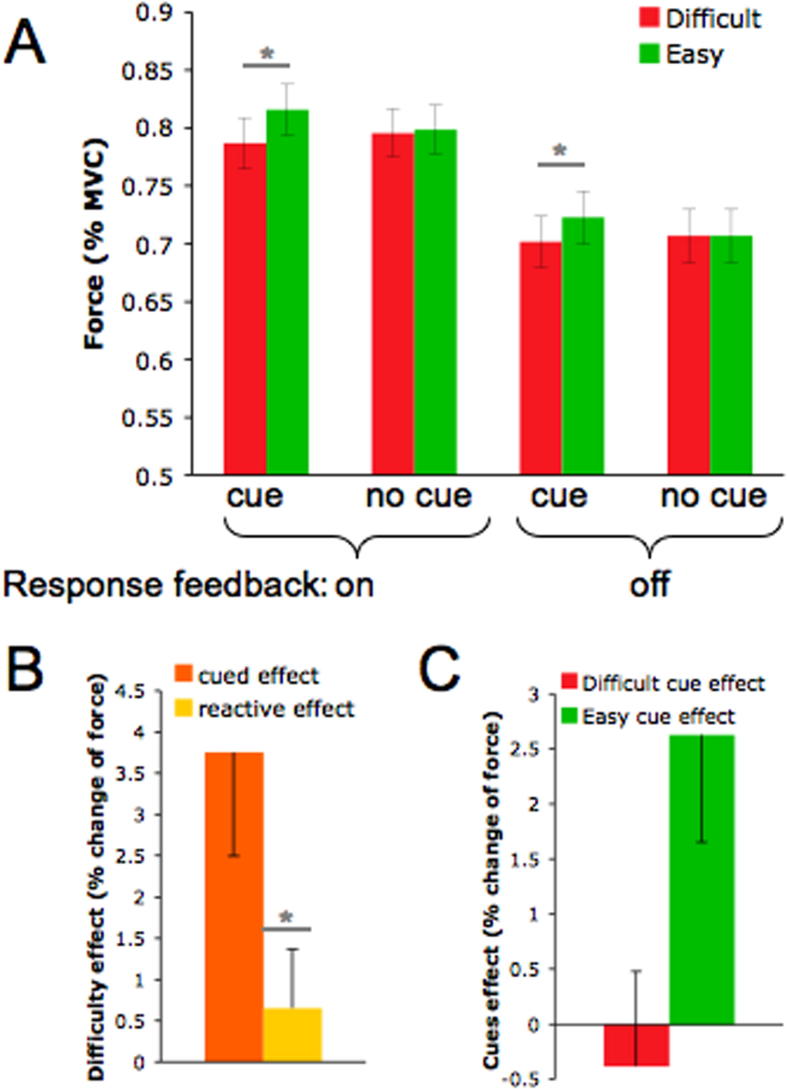
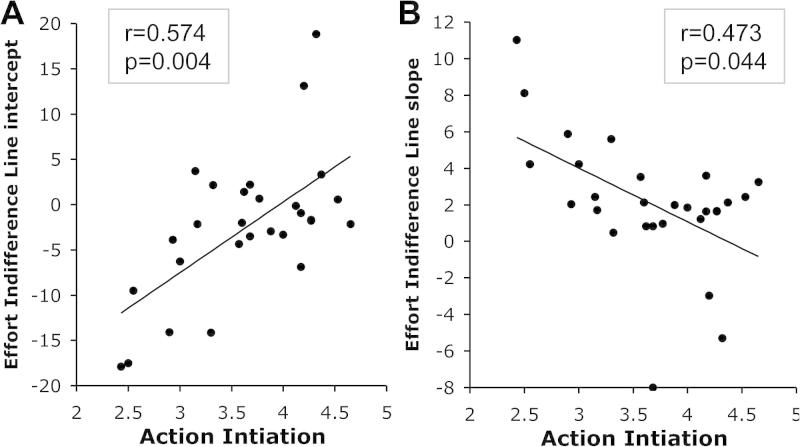
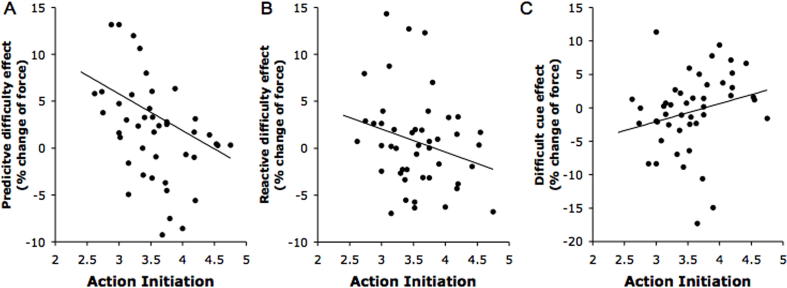
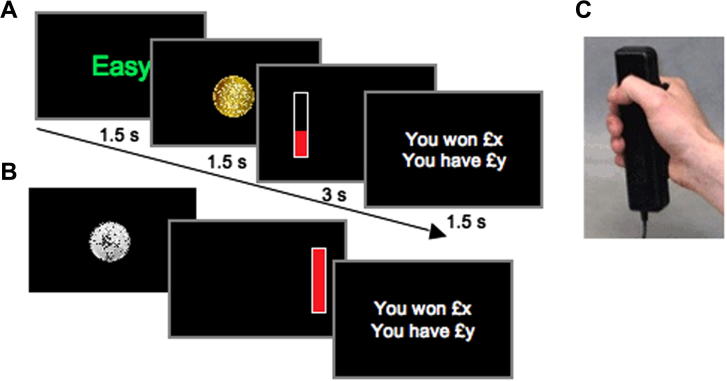
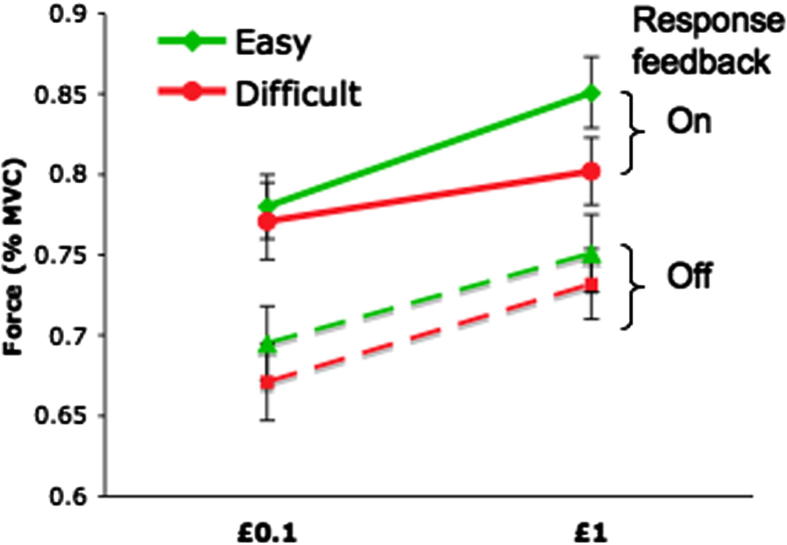
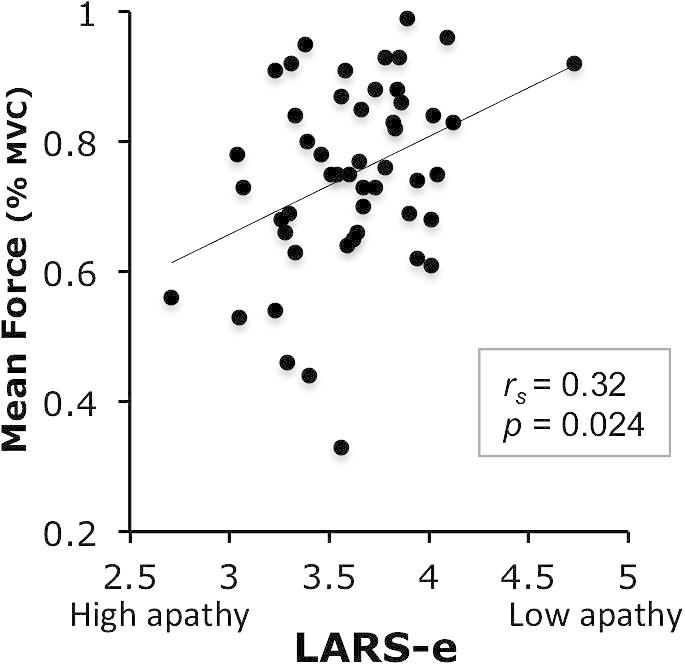
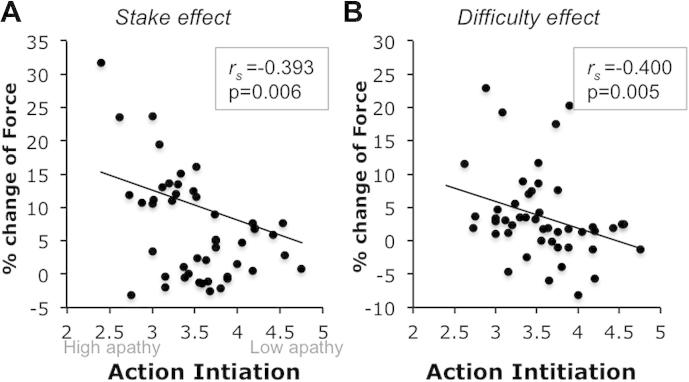
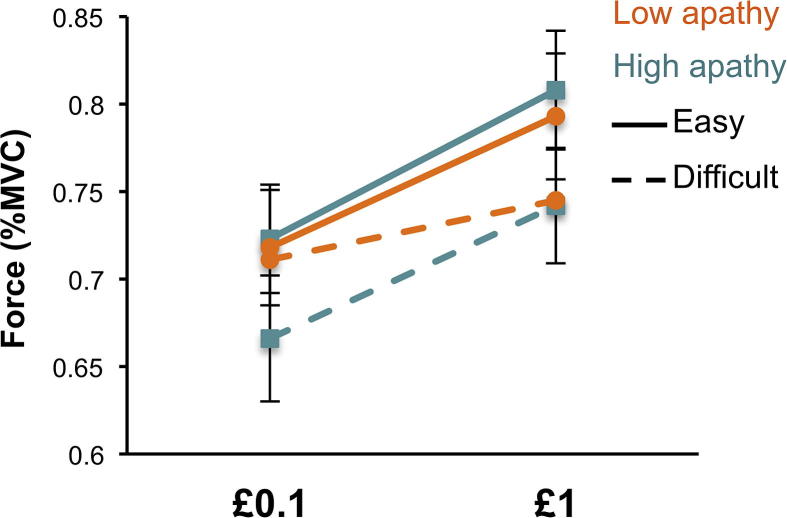
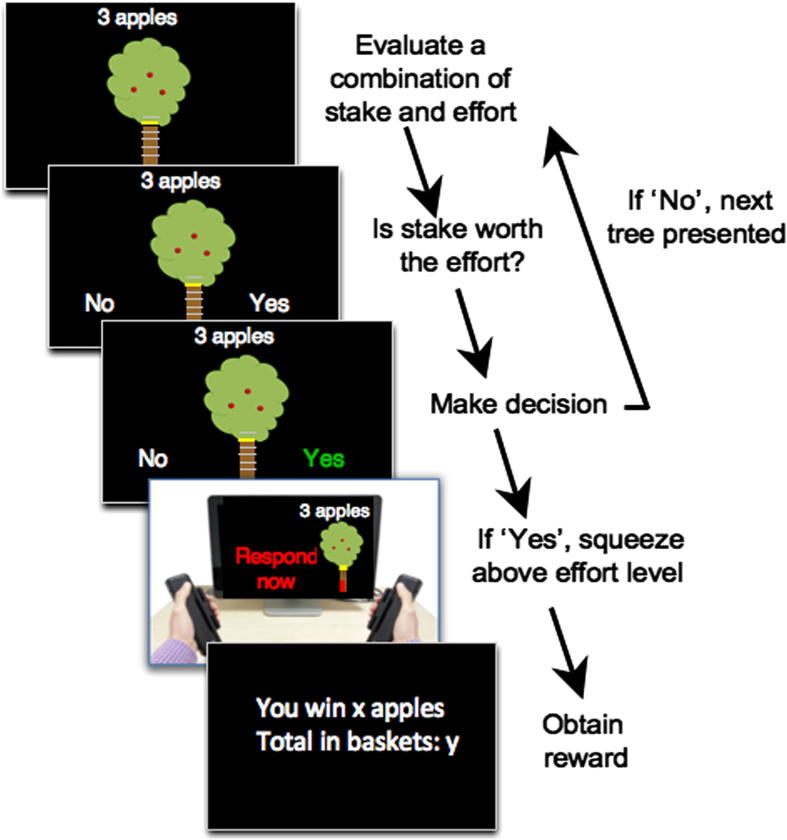
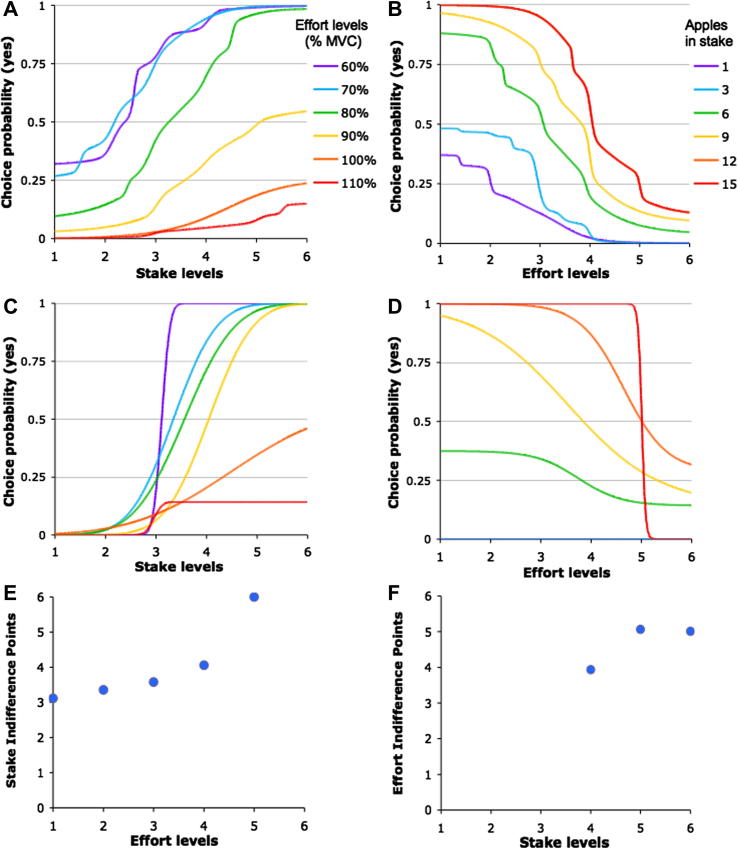
Apathy is a common but poorly understood condition with a wide societal impact observed in several brain disorders as well as, to some extent, in the normal population. Hence the need for better characterization of the underlying mechanisms. The processes by which individuals decide to attribute physical effort to obtain rewards might be particularly relevant to relate to apathy traits. Here, we designed two paradigms to assess individual differences in physical effort production and effort-based decision-making and their relation to apathy in healthy people. Apathy scores were measured using a modified version of the Lille Apathy Rating Scale, suitable for use in a non-clinical population. In the first study, apathy scores were correlated with the degree to which stake (reward on offer) and difficulty level impacts on physical effort production. Individuals with relatively high apathy traits showed an increased modulation of effort while more motivated individuals generally exerted greater force across different levels of stake. To clarify the underlying mechanisms for this behavior, we designed a second task that allows independent titration of stake and effort levels for which subjects are willing to engage in an effortful response to obtain a reward. Our results suggest that apathy traits in the normal population are related to the way reward subjectively affects the estimation of effort costs, and more particularly manifest as decreased willingness to exert effort when rewards are small, or below threshold. The tasks we introduce here may provide useful tools to further investigate apathy in clinical populations.
冷漠是一种常见但却鲜为人知的状况,在多种脑部疾病以及在一定程度上在正常人群中都观察到它具有广泛的社会影响。因此,需要更好地描述其潜在机制。个体决定付出体力努力以获取奖励的过程可能与冷漠特质特别相关。在此,我们设计了两种范式来评估健康人群在体力努力产生和基于努力的决策方面的个体差异及其与冷漠的关系。使用适用于非临床人群的里尔冷漠评定量表的修订版来测量冷漠得分。在第一项研究中,冷漠得分与赌注(所提供的奖励)和难度水平对体力努力产生的影响程度相关。具有相对较高冷漠特质的个体在努力程度上的调节有所增加,而积极性更高的个体通常在不同赌注水平下会施加更大的力量。为了阐明这种行为的潜在机制,我们设计了第二项任务,该任务允许独立调节赌注和努力水平,受试者愿意为了获得奖励而做出努力反应。我们的结果表明,正常人群中的冷漠特质与奖励主观上影响努力成本估计的方式有关,更具体地表现为当奖励较小或低于阈值时,付出努力的意愿降低。我们在此介绍的任务可能为进一步研究临床人群中的冷漠提供有用的工具。